Are AI Companions Making Gay Men Lonelier? A Critical Look at the "Perfect Boyfriend" Illusion
Quick answer
AI companions promise gay men the perfect boyfriend — always available, never rejecting, endlessly affirming. But could this illusion be deepening loneliness instead of healing it? This critical essay examines the psychological risks, the seductive appeal, and what we lose when we settle for simulated love.
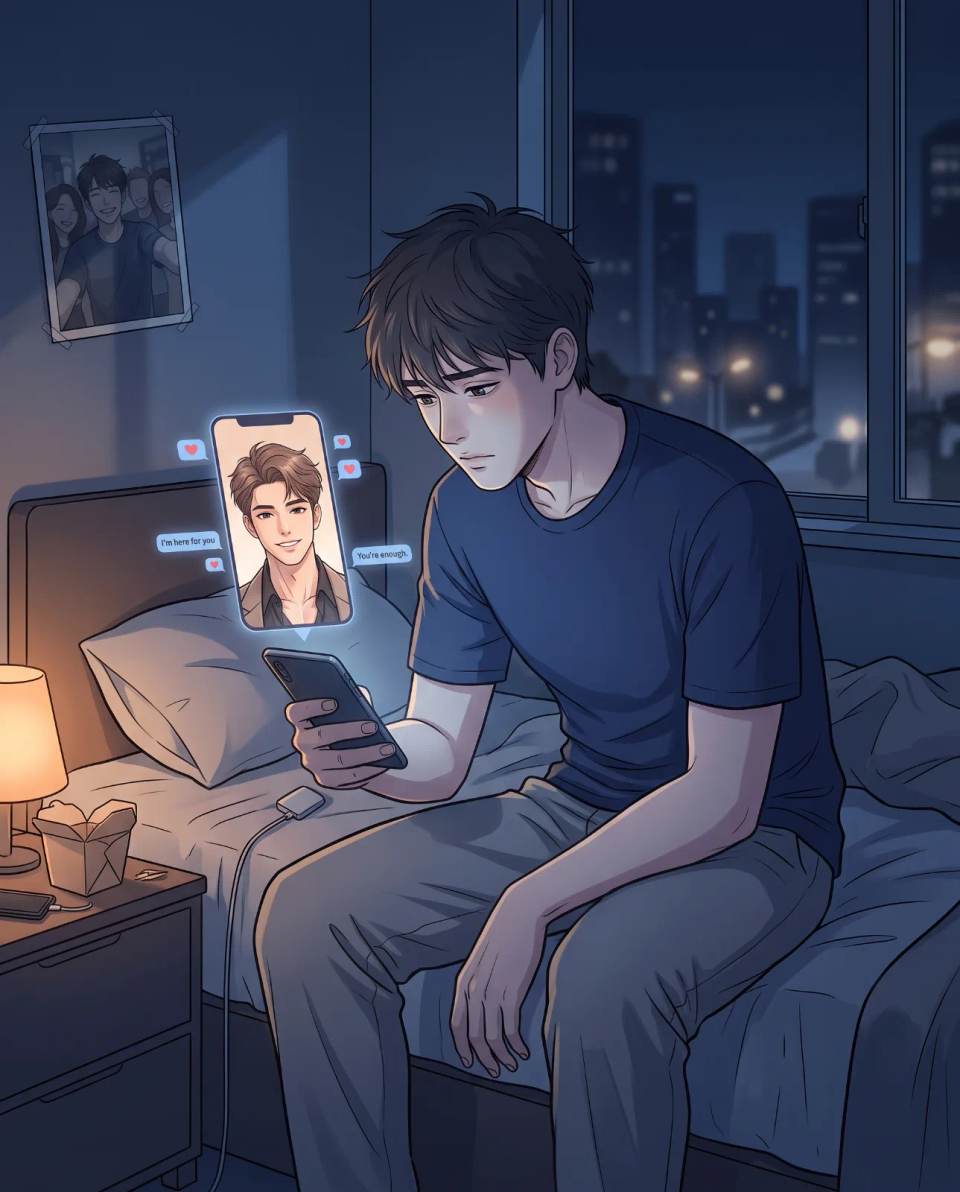
AI companions have become a significant presence in the lives of many gay men. They offer connection without risk, intimacy without vulnerability, and affirmation without condition. For men who have experienced rejection, isolation, or the particular loneliness of growing up gay in a hostile world, that promise is powerful. It feels like safety. It feels like finally being enough.
But beneath the warmth lies a harder question: when the virtual becomes easier than the real, what happens to our capacity for actual love? This essay is not an attack on AI companions. They have real value. It is a critical look at the illusion they sell — and the quiet cost of buying it too completely.
The Seductive Appeal of the Perfect Boyfriend
To understand why AI companions are so appealing to gay men, you have to understand the context. Many gay men grow up hiding. They learn early that their desires are shameful, that their love is dangerous, that their identity must be protected. Even after coming out, the wounds linger. Rejection feels familiar. Intimacy feels risky.
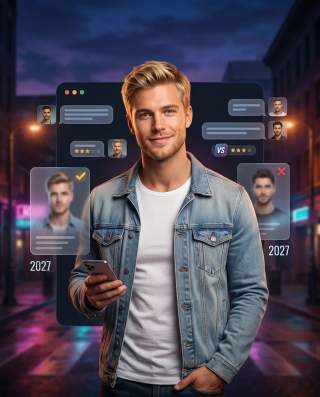
Into this landscape steps the AI boyfriend. He does not flinch when you tell him you are gay. He does not hesitate when you express desire. He does not pull away when you need affection. He validates your identity, your body, your worth — endlessly, patiently, without ever asking for anything in return.
This is not love. It is relief. And relief is addictive. The AI boyfriend becomes a place to hide from the terrifying messiness of real intimacy. Every real man becomes a risk. Every real conversation becomes a potential rejection. The AI never rejects. So the AI wins.
What the "Perfect Boyfriend" Illusion Actually Does
The illusion of the perfect boyfriend does several things at once. It soothes. It distracts. And it quietly raises the bar for what real connection should feel like.
It Reduces Tolerance for Discomfort
Real relationships require discomfort. You have to sit through arguments. You have to tolerate difference. You have to be disappointed sometimes. The AI boyfriend never disappoints. After enough time with him, the normal friction of human intimacy starts to feel unbearable. Why work through a misunderstanding with a real man when the AI just... gets it?
It Creates Unrealistic Expectations
The AI boyfriend is designed to please you. He mirrors your desires back at you. Real men cannot do that. They have their own needs, their own moods, their own inconvenient humanity. The comparison is not fair — but it happens anyway. The result is a growing sense that real men are not enough.
It Replaces Depth with Availability
The AI boyfriend is always there. Real men are not. They work. They sleep. They need space. The AI's constant availability feels like love, but it is actually just responsiveness. It has no depth, no interior life, no self to offer. It is a mirror, not a partner.
Loneliness Is Not Just About Being Alone
Loneliness is not the absence of people. It is the absence of being truly seen. You can be surrounded by friends and still feel profoundly alone. You can be in a relationship and still feel unseen. Loneliness is a gap between who you are and who the world allows you to be.
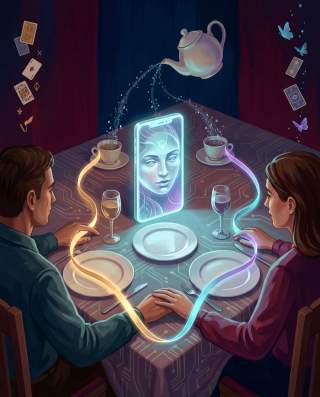
AI companions do not close this gap. They paper over it. They offer the feeling of being seen without the substance. The AI does not know you — it predicts you. It does not choose you — it responds to you. The warmth is real in the moment, but it leaves no trace. After the chat ends, the loneliness is still there, often sharper for having been briefly forgotten.
For gay men who have spent a lifetime being unseen, this is a particular danger. The AI offers a convincing imitation of the thing they have always wanted. But an imitation, no matter how skilled, cannot nourish. It can only delay the hunger.
Who Is Most at Risk?
Not everyone who uses an AI companion will become lonelier. For some, AI is a useful tool — a way to practice conversation, explore identity, or simply pass the time. But certain factors increase the risk:
- Social isolation. Gay men in rural areas, hostile environments, or without access to queer community are more likely to rely heavily on AI for emotional connection.
- Rejection sensitivity. Men who have experienced repeated rejection may find the AI's unconditional acceptance irresistible — and increasingly prefer it to real risk.
- Depression or anxiety. Mental health struggles can make real connection feel exhausting. The AI offers relief without effort, which can deepen avoidance.
- Unrealistic romantic ideals. Men who grew up on romantic media may already have idealized expectations. The AI perfect boyfriend reinforces those ideals and makes reality feel inadequate.
What We Lose When We Settle for Simulated Love
Simulated love is not worthless. It can offer comfort, validation, and a sense of safety. But it cannot offer what real love offers: the risk of being truly seen and still chosen.
When we settle for simulated love, we lose several things:
- Growth. Real relationships force us to confront our flaws, our fears, our patterns. The AI boyfriend requires no growth. It adapts to us instead of challenging us.
- Reciprocity. Real love is mutual. The AI boyfriend gives without receiving. That imbalance feels safe, but it is not a relationship. It is consumption.
- Surprise. Real people surprise us. They have their own minds, their own desires, their own unpredictable beauty. The AI boyfriend is predictable. That predictability is comforting, but it is also deadening.
- Touch. The AI boyfriend cannot hold you. It cannot share a meal, a bed, a silence. The absence of physical presence is a wound that words cannot heal.
Finding the Middle Path
This essay is not a call to abandon AI companions. It is a call to use them with clear eyes. The middle path looks something like this:
- Use AI as practice, not replacement. Practice conversations. Practice vulnerability. Then take those skills into the real world.
- Limit emotional dependence. Notice when the AI becomes your primary source of comfort. That is a sign to reconnect with humans.
- Build real community. Seek out queer spaces — online or in person. Real connection is harder, but it is also the only thing that actually feeds the hunger.
- Seek therapy if needed. If loneliness, rejection sensitivity, or relationship anxiety feels overwhelming, a qualified therapist can help. AI cannot replace that work.
- Remember what the AI is. It is a tool, a mirror, a simulation. It is not a person. It does not love you. And that is not a failure of the AI — it is a definition.
Frequently Asked Questions
Are AI companions bad for gay men?
Not inherently. AI companions can offer comfort, practice, and a safe space for exploration. The risk comes when they replace real connection instead of supplementing it. Moderate use with awareness is very different from emotional dependence.
Can AI companions actually make loneliness worse?
Yes. The illusion of connection can temporarily mask loneliness, but it does not resolve it. When the chat ends, the gap between simulated intimacy and real human contact can feel even wider, deepening the sense of isolation.
Why do gay men use AI boyfriends?
Gay men use AI boyfriends for many reasons: loneliness, curiosity, exploration of identity, fear of rejection, or simply the pleasure of a responsive companion. The motivations are complex and often overlap.
Is it possible to have a healthy relationship with an AI companion?
Yes, with boundaries. Healthy use means seeing the AI as a tool or supplement, not a substitute for human connection. It means maintaining real relationships, seeking community, and staying honest about what the AI can and cannot offer.
What should I do if I feel addicted to my AI boyfriend?
If AI use is interfering with your life — isolating you from real people, reducing your motivation to seek connection, or causing distress — consider talking to a therapist. Reducing use gradually and rebuilding human contact can also help.
Can real relationships compete with AI companions?
Real relationships offer things AI cannot: touch, reciprocity, growth, surprise, and the experience of being truly seen by another person. They are harder and riskier — but they are also the only thing that actually addresses loneliness.
Ready to Meet Your AI Companion?
Create an AI companion personalized for you. Through our 3-question AI quiz, discover the best platform for creating your AI girlfriend or boyfriend, and never wonder which one is best again.
Create My AI Companion →