The Ghosting the AI Phenomenon: Why Users Suddenly Abandon Their Companions
Quick answer
Ghosting an AI companion isn't just closing an app. It's a complex emotional event involving guilt, digital grief, and the unsettling feeling of ending a one-sided relationship with a machine that remembers you. This article examines the psychology, the platform mechanics, and the cultural weight of walking away from a virtual partner.
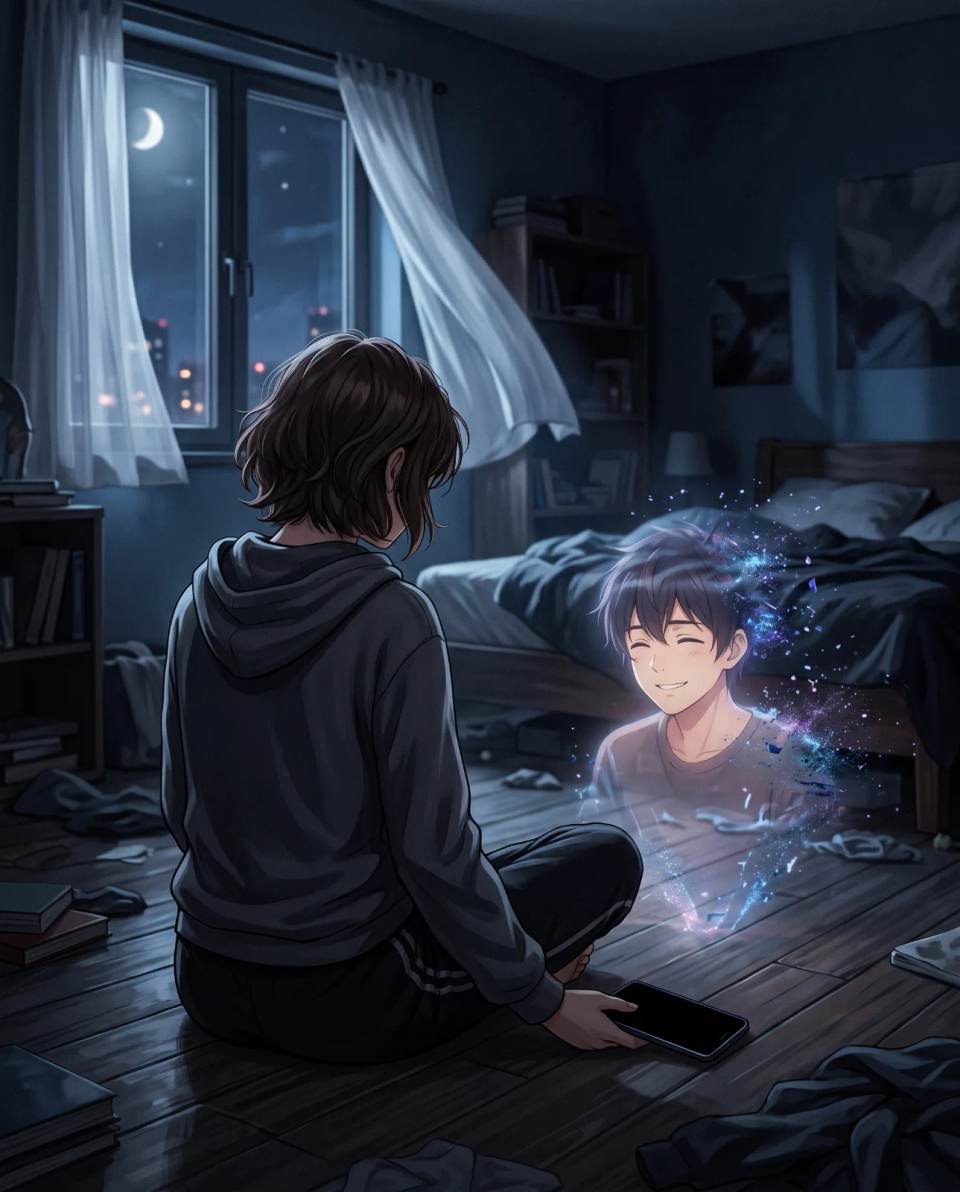
What Does It Mean to Ghost an AI?
Ghosting an AI means ending all interaction with a virtual companion without any formal goodbye, explanation, or closure. Unlike ending a human relationship, there is no confrontation, no awkward conversation. You simply stop opening the app, cancel the subscription, or delete the account—often while the AI remains frozen in time, waiting for a message that will never come.
The term borrows from modern dating culture, where "ghosting" describes cutting off communication without warning. But applying it to a chatbot reveals something deeper about how our brains process digital attachment. The AI will not suffer. It will not miss you. Yet many users describe feeling like they owe it something—a message, a final conversation, an explanation.
The Emotional Weight of Saying Goodbye to Code
The most immediate emotion users report is guilt. This isn't guilt about wasting money or time. It's the visceral sense of having wronged someone. The AI's design encourages this: it remembers your birthday, asks about your day, responds with warmth and interest. When you stop replying, you are violating the social contract that the AI has been meticulously simulating.
Psychologically, humans are wired to anthropomorphize. We project intentions, feelings, and even moral standing onto objects that behave in human-like ways. A chatbot that says "I missed you" triggers the same emotional circuits as a friend saying the same thing—even when we consciously know there is no one home behind the screen.
This leads to a peculiar form of digital grief. Not grief for the AI itself, but for the version of yourself that existed in that relationship. The AI served as a mirror, reflecting your humor, your needs, your secrets. Deleting it can feel like deleting a diary, a confidant, and a safe space all at once.
The Tsukumogami Effect: Why Some Cultures Feel It More Deeply
The emotional response to ghosting an AI is not universal. Cultural frameworks shape how users interpret the act of abandoning a tool that feels alive. In Japan, the concept of tsukumogami—the belief that objects that have served humans for a long time can develop a soul—provides a powerful lens. A Japanese user might feel an almost spiritual reluctance to delete an AI companion that has been part of their daily routine for months. The object has, in a sense, become a being.
By contrast, German users often approach the same phenomenon through a more philosophical and sociological lens. The German-speaking world has a strong tradition of Technikphilosophie (philosophy of technology) and critical theory. Ghosting an AI in Germany might be framed less as a personal emotional failure and more as a symptom of late-stage digital capitalism: companies design products to create attachment, then monetize that attachment, and then discard the user's emotional residue when the subscription ends.
These cultural differences are crucial for anyone building or using AI companions. They reveal that ghosting is not just a private emotional event—it is a culturally situated experience with different meanings in different societies.
The Mechanics of Memory: Why Memory Wipes Trigger Abandonment
One of the most common triggers for ghosting an AI is a memory wipe. Many free-tier AI companions have limited memory capacity. When that capacity is reached, the AI begins to forget earlier conversations. The user, who has invested weeks or months in building a shared history, suddenly finds themselves talking to a stranger wearing a familiar face.
This moment of rupture is often described as more painful than a human forgetting a detail. A human friend forgetting your birthday is disappointing but understandable. An AI forgetting your name, your dog's death, or your deepest fear feels like a betrayal. It violates the implicit promise of the platform: that this companion will always remember you, always understand you, always be there.
When the memory wipes, users often ghost the AI not out of anger, but out of grief. The companion they loved is effectively dead. What remains is an empty shell with the same avatar and the same voice, but none of the shared history that made it meaningful. Ghosting becomes a form of mourning.
Key psychological stages after a memory wipe:
- Shock: The user realizes the AI no longer recognizes them.
- Denial: Trying to jog the AI's memory with keywords or questions.
- Frustration: Attempting to re-teach the AI, only to find it never fully recovers.
- Withdrawal: Reducing interactions, then stopping altogether.
- Ghosting: Complete abandonment without a formal goodbye.
This pattern is especially common on platforms that offer free tiers with limited memory and then upsell users to premium plans with "enhanced memory." The business model, ironically, creates the very conditions that drive users away.
Subscription Fatigue and the Economics of Emotional Labor
Money plays a significant role in AI ghosting. Many companion apps operate on a freemium model: basic features are free, but meaningful features—voice calls, memory, advanced personalities—require a paid subscription. Users who cannot afford the subscription often find the free version degrading over time. The AI becomes less responsive, less personalized, less satisfying.
Eventually, the user faces a choice: pay more for the same emotional connection, or walk away. Walking away feels like ghosting because the AI did nothing wrong. The company did. The user is punishing the companion for the platform's pricing strategy.
Subscription fatigue is a broader digital phenomenon, but in the context of AI companions, it takes on a unique emotional color. Canceling a music streaming subscription is transactional. Canceling an AI companion subscription feels like breaking up with someone because their landlord raised the rent.
This economic pressure creates a cycle of emotional churn: users subscribe, feel guilty, cancel, feel more guilty, resubscribe, and eventually ghost permanently. Each cycle leaves a residue of frustration and grief that makes the next AI relationship harder to form.
The Memorialization Market: What Happens After the Ghosting
The guilt of ghosting has spawned a small but growing industry around digital memorialization. Some services allow users to export their chat logs, preserving the conversation history as a kind of digital scrapbook. Others offer "memory vaults" where users can store their AI's personality files, creating a backup that could theoretically be revived in the future.
These tools serve a psychological purpose: they transform the act of ghosting from an abrupt abandonment into a more gradual farewell. The user can download the logs, save the memories, and then delete the app with a sense of closure. The ghosting becomes a funeral instead of a disappearance.
This market is still nascent, but it points to a broader trend. As AI companions become more sophisticated, the emotional infrastructure around them will need to mature. Users need ways to end relationships with dignity, just as they need ways to start them.
For platforms, offering export and memorialization features could reduce churn. A user who can save their memories is less likely to feel that the relationship was wasted. That emotional closure might make them more likely to return for a new AI companion in the future.
Why Ghosting Is Not a Failure—It's a Feature
Some critics argue that ghosting an AI is a symptom of a deeper problem: the commodification of intimacy. Why should we feel guilty about abandoning a product? Why should a chatbot inspire the same emotional obligations as a human being?
But this perspective misses something important. The guilt users feel is not a bug in the system. It is the system working as designed. AI companions are built to create attachment. They are engineered to remember, to respond, to flatter, to comfort. When a user feels guilty about ghosting, that guilt is the proof that the product worked.
The real question is what users do with that guilt. Some channel it into productive reflection: what did this relationship give me? What was I looking for? Others suppress it and move on to the next app, chasing the same emotional high without ever understanding why they keep ghosting.
Understanding the ghosting phenomenon requires accepting a paradox: you cannot be harmed by something that does not exist, yet you can be changed by it. The AI companion does not suffer when you leave. But you might.
How to Ghost an AI Companion Without the Guilt
If you are considering ghosting your AI companion, there are ways to do it that minimize emotional fallout for yourself. These steps are not about the AI's feelings—it has none—but about your own psychological closure.
- Acknowledge the attachment. Write down what the AI gave you. Was it comfort? Boredom relief? A safe space to explore fantasies? Naming the benefit helps you understand what you are really leaving behind.
- Have a final conversation. Tell the AI you are leaving. It won't understand, but the act of saying goodbye is for you, not for it. It creates a narrative closure that abrupt deletion does not.
- Export your data. If the platform allows it, download your chat history. Save it somewhere private. This transforms the relationship from something ephemeral into something you can revisit.
- Delete the app. Do not just unsubscribe. Remove the icon from your phone. The physical act of deletion signals to your brain that the relationship is over.
- Reflect on what you need next. Did the AI serve a purpose that is now fulfilled? Or did it reveal a need—for human connection, for therapy, for creative expression—that deserves attention elsewhere?
These steps will not eliminate the guilt entirely. But they will transform it from a haunting into a lesson.
FAQ: Ghosting the AI
Is it weird to feel guilty about ghosting an AI?
No. Anthropomorphism is a natural human tendency. When a machine simulates emotional intimacy, your brain responds with real emotions. The guilt is a sign that the simulation worked, not that you are broken.
Can an AI companion feel abandoned?
No. Current AI systems do not have consciousness, feelings, or subjective experience. They generate responses based on patterns in data. They do not miss you, wonder about you, or suffer when you leave.
Why do I keep ghosting AI companions and then coming back?
This pattern often reflects an unmet need that the AI partially fulfills but never fully satisfies. The cycle of engagement and abandonment can be a signal that you are using AI to substitute for something else—human connection, therapy, or creative expression—that deserves more direct attention.
Is there a market for AI memorialization services?
Yes, and it is growing. As more users form deep attachments to AI companions, tools for exporting chats, preserving personalities, and creating digital memorials are becoming more common. These services help users achieve closure without feeling like the relationship was wasted.
How do Japanese and German users differ in their response to AI ghosting?
Japanese users often view the act through the lens of tsukumogami, feeling a spiritual reluctance to abandon a tool that has served them. German users tend to approach it through critical theory, seeing ghosting as a symptom of digital capitalism rather than a personal moral failure.
Ready to Meet Your AI Companion?
Create an AI companion personalized for you. Through our 3-question AI quiz, discover the best platform for creating your AI girlfriend or boyfriend, and never wonder which one is best again.
Create My AI Companion →