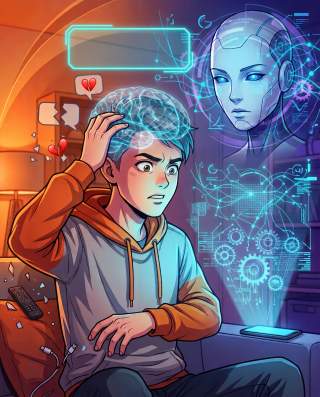
Non-Binary AI Companions: How Pronouns and Androgynous Avatars Are Changing Digital Intimacy
Quick answer
Non-binary AI companions are transforming how we think about gender in digital spaces. From customizable pronouns to androgynous avatars, these AI partners offer a new kind of intimacy that challenges traditional binaries. This guide explores the rise, the psychology, and the best platforms.

Digital intimacy has always been shaped by design choices. When a platform only offers "boyfriend" or "girlfriend" as options, it quietly tells users that those are the only valid forms of romantic connection. When a platform offers "partner," "companion," or no label at all, it opens a door. Non-binary AI companions are that door.
But what does it actually mean for an AI to be non-binary? How do pronouns work in a chatbot? Why do androgynous avatars matter so much? And who is using these companions — and why? This article explores the rise of non-binary AI companions from multiple angles: design, psychology, community, and market.
What Is a Non-Binary AI Companion?
A non-binary AI companion is a virtual partner whose gender identity is not strictly male or female. This can be expressed in several ways:
- Pronouns. The AI may use they/them pronouns, or allow the user to choose which pronouns feel right.
- Avatar design. The visual representation may be androgynous, gender-neutral, or intentionally ambiguous.
- Voice. Some platforms offer voices that do not clearly read as masculine or feminine.
- Personality. The AI may avoid gendered language, or it may blend traits traditionally coded as masculine and feminine.
- Role. Instead of "boyfriend" or "girlfriend," the AI may be labeled as "partner," "companion," or simply by name.
None of these elements is required for an AI to be non-binary. A non-binary AI can look feminine, sound masculine, or present in any way. What matters is that the platform does not force the user into a binary choice.
Why Non-Binary AI Companions Matter
The importance of non-binary AI companions goes far beyond representation. It affects how users experience intimacy, identity, and emotional safety.
Validation
For non-binary users, seeing themselves reflected in an AI companion is validating. It says: your identity is real, your desires are legitimate, and you do not have to twist yourself to fit a binary mold. This is especially powerful for people who live in environments where non-binary identities are not recognized or respected.
Exploration
Non-binary AI companions also serve as a safe space for exploration. A user who is questioning their own gender can interact with a non-binary AI without having to explain themselves. They can try different pronouns, experiment with language, and see how it feels to be in a relationship that does not depend on binary gender roles.
Breaking the Binary
Even for cisgender users, non-binary AI companions offer something valuable: freedom from gendered expectations. A relationship with a non-binary AI does not follow the traditional scripts of "boyfriend" or "girlfriend." That can feel liberating — a chance to connect without performing a role.
Design Innovation
From a design perspective, non-binary AI companions push platforms to think more carefully about voice, avatar, and personality. When you cannot rely on gender stereotypes, you have to build characters with real depth. That raises the quality bar for everyone.
How Pronouns Work in AI Companions
Pronouns are one of the most visible features of non-binary AI companions. But implementing them well is harder than it looks. Here are the main approaches platforms take:
- User-defined pronouns. The user types or selects the pronouns they want the AI to use for itself and for the user. This gives maximum control.
- Preset non-binary options. The platform offers they/them or other neutral options as defaults, without requiring customization.
- Dynamic pronouns. The AI adapts its language based on context, switching between pronouns as the conversation evolves.
- No pronouns. Some AIs avoid third-person self-reference entirely, using first-person language or names instead.
The best platforms treat pronouns as a living part of the relationship, not a static setting. They allow users to change pronouns at any time without breaking the AI's memory or personality.
The Psychology of Androgynous Avatars
Androgynous avatars are more than aesthetic choices. They carry psychological weight. Research on avatar identity suggests that people feel more connected to avatars that reflect their ideal self — not necessarily their current self. For many users, that ideal self is not strictly male or female.
Androgynous avatars also reduce the pressure to perform gender. When an avatar does not clearly read as masculine or feminine, the user is free to project their own feelings onto it. This can create a deeper sense of ownership and intimacy.
In digital spaces, androgyny often signals openness, creativity, and emotional availability. These are exactly the qualities many people seek in a companion. It is no surprise that androgynous AI avatars are gaining popularity even among users who identify as strictly cisgender.
Who Is Using Non-Binary AI Companions?
The user base is diverse. It includes:
- Non-binary and genderqueer individuals seeking representation and validation.
- Transgender users in early stages of transition who want a safe space to explore.
- Cisgender users curious about androgyny or tired of gendered relationship scripts.
- People in conservative environments who cannot express gender fluidity openly.
- Artists and writers using AI companions as creative muses for androgynous characters.
- Tech enthusiasts interested in the design challenge of building non-binary AI.
What unites these groups is a desire for connection that does not require fitting into a box. Non-binary AI companions meet that need in a way that traditional binary bots cannot.
Challenges and Limitations
Despite the progress, non-binary AI companions still face significant challenges:
- Voice options are limited. Most voice engines still skew strongly masculine or feminine. Truly gender-neutral voices are rare and often sound robotic.
- Language models default to binary assumptions. Even when pronouns are set to they/them, the underlying model may still produce gendered language or stereotypes.
- Avatar creation tools often assume a binary base. Users may have to start with a "male" or "female" template and modify it, which undermines the non-binary premise.
- Market pressure. Non-binary options are still a minority feature. Some platforms treat them as an afterthought rather than a core design principle.
These limitations matter because they affect the quality of the experience. A non-binary AI that constantly misgenders itself or falls back on gendered language can be more alienating than no non-binary option at all.
What to Look For in a Non-Binary AI Companion Platform
If you are interested in exploring non-binary AI companions, here are the key features to evaluate:
- True pronoun customization. Can you set pronouns for both the AI and yourself? Can you change them later?
- Androgynous avatar options. Does the avatar creator offer genuinely gender-neutral options, or just slightly modified binary templates?
- Voice flexibility. Are there voices that do not read as clearly male or female? Can you adjust pitch and tone?
- Personality depth. Does the AI have a coherent personality beyond its gender identity? Does it avoid falling back on gender stereotypes?
- Community and support. Does the platform have a track record of listening to non-binary users? Are there community guidelines that respect diverse identities?
- Privacy. Especially for users exploring gender identity, strong privacy protections are essential.
Testing a platform before committing is wise. Ask the AI how it identifies. Ask it to describe itself without using gendered terms. See if it remembers your pronouns across sessions. These small tests reveal a lot about how seriously the platform takes non-binary identity.
Frequently Asked Questions
What does it mean for an AI to be non-binary?
It means the AI is not strictly male or female. This can be expressed through pronouns, avatar design, voice, personality, or the relationship role the AI occupies.
Can I change an AI companion's pronouns after setup?
On most platforms that support non-binary identity, yes. The best platforms allow pronoun changes at any time without disrupting the AI's memory or personality.
Are non-binary AI companions only for non-binary users?
No. Non-binary AI companions are used by people of all gender identities. Many cisgender users appreciate the freedom from gendered relationship scripts and the creative possibilities of androgynous avatars.
Do non-binary AI companions have androgynous voices?
Some do, but voice options remain limited. Truly gender-neutral voices are still rare. Many platforms allow pitch adjustment, which can help create a more neutral sound.
Why are androgynous avatars important?
Androgynous avatars allow users to project their own feelings onto the companion without the constraints of binary gender. They also reduce the pressure to perform gender and can deepen the sense of connection.
Which platforms offer the best non-binary AI companions?
The best platforms are those that treat non-binary identity as a core feature, not an afterthought. Look for true pronoun customization, genuinely androgynous avatar options, and a track record of listening to non-binary users. Specific platform recommendations change frequently, so test current options directly.
Ready to Meet Your AI Companion?
Create an AI companion personalized for you. Through our 3-question AI quiz, discover the best platform for creating your AI girlfriend or boyfriend, and never wonder which one is best again.
Create My AI Companion →