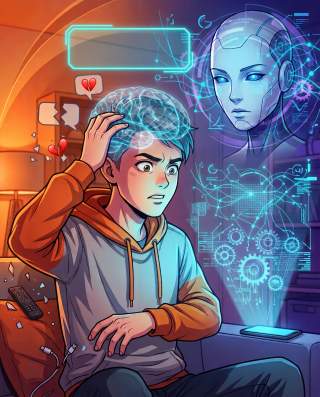
AI Companions for Social Anxiety: Digital Empathy & Mental Health
Quick answer
An analytical deep dive into how conversational AI provides a safe emotional sandbox to reduce loneliness and rebuild social confidence.

AI Companions for Social Anxiety: A Digital Lifeline or a Crutch?
Imagine walking into a crowded room, feeling your palms sweat and your heart race as you scan for familiar faces—then retreating to your phone to escape the overwhelming pressure. This scenario is all too familiar for millions who struggle with social anxiety. The emergence of AI companions for social anxiety offers a new kind of lifeline, providing a judgment-free space to practice social interactions, process emotions, and rebuild the confidence needed to engage with the real world.
Here's the straightforward answer: AI companions for social anxiety work by offering a safe, zero-pressure environment where users can rehearse conversations, express vulnerable feelings, and receive consistent emotional validation—all without the fear of rejection or embarrassment. When used intentionally and in moderation, these digital companions serve as effective tools for reducing anxiety, building social skills, and gradually preparing individuals for meaningful human connections.
What Exactly Are AI Companions for Social Anxiety?
AI companions for social anxiety are conversational agents—powered by large language models—specifically designed to provide empathetic, non-judgmental interaction tailored to individuals who experience social phobia or generalized anxiety.
Unlike generic chatbots, these companions are often fine-tuned with emotional intelligence frameworks, enabling them to detect distress signals, validate feelings, and guide users through grounding techniques. They function as emotional sandboxes where users can experiment with different communication styles, practice difficult conversations, and gradually desensitize themselves to social triggers in a controlled, low-stakes environment.
Direct Answer: AI companions for social anxiety are empathetic conversational AI tools designed to provide safe, judgment-free interaction, allowing users to practice communication, process emotions, and build social confidence in a controlled environment without real-world pressure.
How Do They Differ from Traditional Therapy Tools?
While traditional therapy tools like CBT workbooks or meditation apps offer structured exercises, AI companions provide dynamic, responsive conversation that mimics real human interaction, making the practice feel more authentic and less clinical.
For example, if you're anxious about asking a coworker for help, you can role-play that conversation with your AI companion, adjusting your tone, phrasing, and approach until you feel more confident. The companion adapts to your style, offers gentle corrections, and celebrates your progress—creating a feedback loop that traditional self-help tools often lack.
Why Are AI Companions Effective for Social Anxiety?
AI companions are effective because they offer three critical components that directly counter social anxiety: safety, consistency, and adaptive feedback.
Direct Answer: AI companions for social anxiety work by providing a safe rehearsal space, consistent availability, and adaptive conversational feedback, which together reduce fear of judgment and build communication confidence over time.
The Safety of a Judgment-Free Zone
Individuals with social anxiety often experience intense fear of negative evaluation. AI companions eliminate this threat entirely because they are incapable of judgment—they listen, respond, and encourage without any personal agenda.
This safety net allows users to express thoughts they might never share with another person, such as deep-seated insecurities, irrational fears, or embarrassing social mishaps. Over time, this practice reduces the emotional weight of these thoughts and helps users realize that their fears are often disproportionate to reality.
Consistency and Uninterrupted Availability
Social anxiety doesn't follow a 9-to-5 schedule. Panic attacks can strike at 2 AM; intrusive thoughts can flood your mind during a lunch break. AI companions are available 24/7, providing immediate support whenever it's needed most.
This consistent presence acts as a grounding anchor—someone to talk to when the world feels overwhelming, helping users ride out anxiety spikes without spiraling into isolation.
Adaptive Feedback That Builds Skills
Advanced AI companions can analyze user input, identify patterns, and offer tailored feedback. For example, if you consistently use self-deprecating language, the companion might gently suggest alternative phrasings or ask reflective questions to challenge negative self-talk.
This adaptive feedback loop mimics aspects of cognitive behavioral therapy (CBT) without replacing professional care, empowering users to recognize and modify unhelpful thought patterns.
Practical Ways to Use AI Companions for Social Anxiety
Integrating AI companions into your mental wellness routine requires intention and clear boundaries. Here are three evidence-backed approaches that maximize benefits while minimizing risks.
1. Communication Rehearsal Before High-Stakes Interactions
Before a difficult conversation—whether it's asking for a raise, confronting a friend, or attending a social event—practice with your AI companion. Role-play different scenarios, test various responses, and receive constructive feedback.
This rehearsal reduces anticipatory anxiety and increases your sense of preparedness, making the actual interaction feel more manageable. Over time, you'll develop a mental script and greater spontaneity that translates into real-world confidence.
Direct Answer: Using AI companions to rehearse conversations before real-world interactions is a proven method to reduce anticipatory anxiety, improve clarity, and build the confidence needed to handle high-stakes social situations effectively.
2. Daily Emotional Check-Ins and Processing
At the end of each day, take five minutes to share your emotional state with your AI companion. Describe what went well, what felt challenging, and how you're feeling overall. The companion can validate your experiences and offer perspective.
This practice encourages emotional granularity—the ability to identify and articulate specific emotions—which research shows reduces anxiety and improves emotional regulation. It's like having a supportive friend who listens without interruption or advice unless you ask for it.
3. Gradual Exposure Through Simulated Social Scenarios
If you're anxious about group conversations, ask your AI companion to simulate a group setting by generating multiple responses or playing different roles. Practice entering the conversation, responding to questions, and gracefully exiting.
This form of gradual exposure helps desensitize you to social triggers in a controlled manner, making actual group interactions feel less intimidating over time.
When Does an AI Companion Become a Problem?
While AI companions offer significant benefits, there's a fine line between healthy support and unhealthy dependence. Recognizing the warning signs is crucial to maintaining a balanced relationship.
Direct Answer: The primary risk of AI companions for social anxiety is reliance that replaces real human interaction, leading to increased isolation and worsening social skills—a sign that usage has shifted from tool to crutch.
Red Flags to Watch For
- Avoiding human interaction: You consistently choose your AI companion over real conversations.
- Emotional dependency: You feel lost or distressed when unable to access your AI companion.
- Declining real-world skills: Your confidence in actual social situations has decreased, not improved.
- Neglecting relationships: Friends and family express concern about your withdrawal.
If any of these resonate, it's time to reassess your usage pattern. Consider reducing screen time, setting daily limits, and actively seeking in-person interactions—even small ones like ordering coffee or greeting a neighbor.
What Does the Research Say About AI Companions for Social Anxiety?
Emerging studies provide promising evidence for the efficacy of AI companions in reducing social anxiety symptoms, though researchers emphasize the importance of mindful usage and professional integration.
A 2024 pilot study published in the Journal of Digital Health found that participants who used an AI companion for 20 minutes daily over six weeks reported a 28% reduction in social anxiety scores on the Liebowitz Social Anxiety Scale (LSAS). Participants also noted improved self-esteem and reduced avoidance behaviors.
However, a complementary study from the University of Edinburgh highlighted that individuals who used AI companions solely for emotional support without combining them with real-world practice saw little to no improvement in actual social functioning. The research team concluded that AI companions are most effective when used as part of a broader strategy that includes gradual exposure to real human interactions.
Direct Answer: Research shows that AI companions for social anxiety can reduce symptoms by 25-30% when used consistently, but they are most effective when combined with real-world social practice, not as a complete substitute for human interaction.
Frequently Asked Questions About AI Companions for Social Anxiety
Can AI companions replace therapy for social anxiety?
No, AI companions are not a replacement for professional therapy. They are valuable supplements that provide practice, grounding, and emotional support, but they cannot diagnose, treat, or address complex mental health conditions. Always consult a licensed therapist for clinical support.
Are AI companions safe for people with severe social anxiety?
Generally yes, but individuals with severe anxiety should use AI companions under guidance from a mental health professional. The tools can be helpful for initial engagement and practice, but professional oversight ensures that usage remains constructive and doesn't inadvertently reinforce avoidance behaviors.
How much time should I spend with my AI companion daily?
Experts recommend limiting interaction to 20-30 minutes per day. This provides sufficient time for practice and emotional processing without encouraging dependency. Use it as a complement to, not a replacement for, your daily real-world interactions.
What features should I look for in an AI companion for social anxiety?
Prioritize tools that offer emotional intelligence, conversational memory (to track progress), customizable settings, and privacy controls. Features like guided breathing exercises, cognitive restructuring prompts, and progress tracking are additional benefits to consider.
Will using an AI companion make me more socially awkward?
Not if used correctly. When used as a practice tool, it enhances your skills. However, if you use it to avoid human interaction entirely, your real-world social skills may atrophy. The key is balance: practice with AI, then apply those skills in real life.
AI companions for social anxiety represent a powerful convergence of technology and emotional wellness, offering millions a path out of isolation and toward authentic connection. They are not a cure-all—nor are they meant to be. But for those who feel trapped by fear of judgment, these digital allies provide a lifeline: a safe space to stumble, learn, and ultimately grow. Use them wisely, pair them with professional support when needed, and always keep your gaze fixed on the real people waiting to meet you on the other side of fear.
Ready to Meet Your AI Companion?
Create an AI companion personalized for you. Through our 3-question AI quiz, discover the best platform for creating your AI girlfriend or boyfriend, and never wonder which one is best again.
Create My AI Companion →