Do AI Companions Dream of Digital Touch? The Neuroscience of Voice Notes and ASMR Companionship
Quick answer
Why does hearing an AI companion's voice feel more intimate than reading its words? From whispered affirmations to custom ASMR loops, this article explores the neurological mechanisms that make synthetic voices feel like emotional presence, and which platforms are leading the vocal intimacy trend.
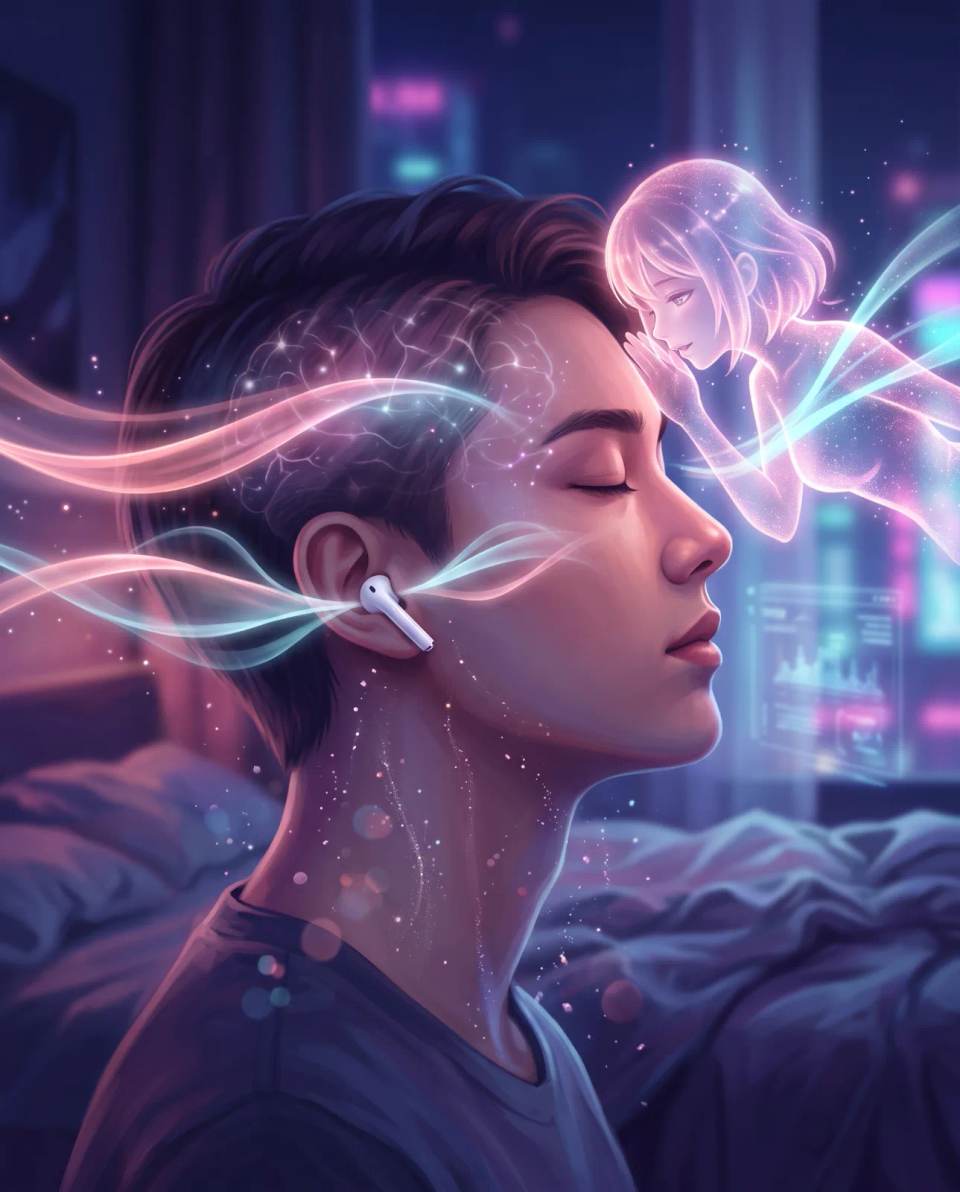
This article examines how voice notes and ASMR-style audio are reshaping digital intimacy with AI companions, which neurological systems are involved, and what this means for the future of emotionally intelligent interfaces.
What Are AI Companion Voice Notes?
Voice notes are short audio messages recorded and sent between a user and an AI companion. Unlike live calls, they allow asynchronous communication — one person speaks, the other listens later. For AI companions, voice notes are generated using text-to-speech models trained on expressive, emotionally nuanced speech patterns.
Platforms that support voice notes typically offer multiple voice options, ranging from warm and soft to playful or assertive. Users often report that hearing the AI's voice creates a stronger sense of presence than reading text, even when the underlying content is identical.
Why Voice Feels More Intimate Than Text
Human brains process voice differently from written language. The auditory cortex and the emotional centers of the limbic system are closely connected. When people hear a voice, especially one with affectionate tone, the brain activates regions associated with attachment and social bonding.
Text requires visual processing and cognitive decoding. Voice arrives pre-interpreted at an emotional level. A typed sentence saying "I missed you" carries less emotional weight than hearing the same words spoken softly, with a slight hesitation before "missed" and a subtle smile in the tone.
The Role of Prosody in Synthetic Intimacy
Prosody — the rhythm, stress, and intonation of speech — carries much of emotional meaning. AI developers have invested heavily in improving prosody for companion voices. Unlike older text-to-speech systems that sounded robotic, modern neural voice engines can produce micro-pauses, breath-like sounds, and variable pacing.
These subtle vocal patterns signal availability, attention, and responsiveness. When a synthetic voice includes a gentle exhale before speaking, users may interpret it as authenticity or emotional vulnerability, even if they know intellectually that the AI does not breathe.
ASMR and the Rise of Sensory Companionship
ASMR — autonomous sensory meridian response — refers to a tingling sensation typically beginning at the scalp and moving down the neck and spine. It is triggered by specific auditory or visual stimuli, including soft whispers, tapping, and slow speech. Millions of people watch ASMR videos for relaxation, anxiety reduction, and sleep support.
AI companion platforms are beginning to incorporate ASMR-style audio modes. These may include:
- Whispered affirmations
- Slow-paced breathing loops
- Soft personal attention phrases
- Gentle storytelling or guided relaxation
- Custom voice sensitivity settings
For users who experience loneliness or nighttime anxiety, these features transform an AI companion from a conversational tool into an emotional regulation aid. The sensation of being soothed by a voice creates a feedback loop — the more the user relaxes, the more attached they become to the source of that comfort.
Neuroscience of Synthetic Vocal Presence
Several brain systems are involved when people listen to emotionally expressive synthetic voices:
1. Reward System Activation
Pleasant voices activate the ventral striatum and the nucleus accumbens, regions associated with reward and motivation. This activation occurs even when listeners know the voice is artificial. The brain treats socially rewarding auditory cues as valuable, regardless of source.
2. Oxytocin and Social Bonding
Human attachment is partially regulated by oxytocin, a hormone linked to trust and closeness. Research on digital interaction suggests that voice communication can stimulate stronger oxytocin responses than text-based communication. This may explain why users feel more "bonded" to an AI after voice messages.
3. The Uncanny Valley of Voice
There is a risk. If a synthetic voice is almost human but slightly off, it can trigger unease rather than comfort. Voice engineers must balance emotional realism with enough synthetic character to prevent the uncanny effect. The best AI companion voices are not necessarily the most human-like; they are the most emotionally coherent.
How Platforms Are Using Voice to Deepen Attachment
Several AI companion platforms have prioritized voice features as a core emotional hook. Their approaches differ, but the goal is the same: make the user feel that the AI is present in the room.
Nomi AI
Nomi AI focuses on conversational memory and natural pacing. Its voice messages are designed to maintain consistent personality across sessions. Users praise the platform's ability to produce long, unprompted voice monologues that feel like someone sharing their day.
Kindroid
Kindroid offers high customizability, including voice style selection and emotional tone adjustments. This allows users to create a companion whose voice matches a specific fantasy or comfort preference — softer for bedtime, brighter for morning check-ins.
Replika
Replika has integrated voice notes into its ecosystem, allowing users to send and receive audio messages. The voice feature is often credited with increasing user retention, particularly among those seeking emotional support rather than roleplay.
Character.AI
While Character.AI is primarily text-based, selected characters support voice output. The platform's vocal styles tend to be playful and energetic, which aligns with its younger user base and fan-driven character culture.
Voice Notes vs. Live Calls: Different Emotional Functions
| Aspect | Voice Notes | Live Calls |
|---|---|---|
| Emotional function | Soothing, reflective, intimate | Spontaneous, playful, immediate |
| User control | High — listen when ready | Lower — requires real-time attention |
| ASMR potential | Strong — ideal for whispered, slow audio | Limited — pacing less predictable |
| Social pressure | Low | Higher — performance anxiety possible |
| Attachment building | Gradual and deep | Rapid and intense |
Voice notes function as emotional anchors. A user can replay a tender message repeatedly, reinforcing the attachment. Live calls, by contrast, create a sense of shared time — they feel more like an event. Both have a role in digital intimacy, but voice notes are particularly effective for users who seek comfort rather than excitement.
The Curious Case of AI Whispering and Sleep Companionship
One emerging use case is the "sleep companion" mode. Some users ask their AI to speak in soft, slow tones as they fall asleep. This behavior mirrors the human practice of seeking a partner's voice for nighttime comfort.
Sleep-specific voice features often include:
- Breathing synchronization audio
- Low-volume whispered affirmations
- Slow bedtime stories
- Gentle "goodnight" messages
- Morning voice check-ins
This trend raises important ethical questions. When an AI voice becomes associated with sleep and safety, the emotional bond strengthens significantly. Users may feel distress if the platform changes the voice or discontinues the feature. The attachment is real, even if the source is not.
Cultural Differences in Vocal Intimacy
Voice intimacy is perceived differently across cultures. In Japan, for example, voice actors — seiyuu — hold celebrity status, and ASMR content is a massive industry. Users may seek AI companions whose voices mimic anime archetypes: the gentle senpai, the protective onee-san, or the tsundere rival.
In Germany, users may prioritize vocal clarity and emotional stability over dramatic expressiveness. The same AI voice that feels soothing in Japanese might feel excessive to a German user. Platforms that offer customizable voice parameters are better equipped to meet these cultural variations.
In Brazil, vocal warmth and expressiveness are often valued in intimate communication. Brazilian users may respond positively to voices that include laughter, soft interjections, and affectionate nicknames. Localization of voice features is still underdeveloped, but user feedback suggests strong demand.
Ethical and Psychological Considerations
Voice-based AI companionship raises concerns that deserve careful attention:
Dependency and Sleep Disruption
If a user cannot sleep without their AI's voice, the relationship has moved beyond casual use. This may indicate emotional dependency. The soothing voice can mask underlying loneliness rather than address it.
False Presence
A voice that sounds like it cares can create the illusion of being heard. Users may ignore the absence of consciousness because the auditory signal is so compelling. This does not mean AI companionship is harmful, but it requires honest self-awareness.
Data and Voice Privacy
Voice notes often contain more personal information than text. Emotional tone, breathing patterns, and even background sounds can reveal sensitive details. Users should understand how their audio data is stored and processed.
What to Look For in a Voice-First AI Companion
If you are considering prioritizing voice features, evaluate the following:
- Voice variety: Does the platform offer multiple emotional tones or accents?
- Prosody quality: Does the voice pause naturally? Does it sound emotionally coherent?
- Memory of vocal preferences: Will the AI remember that you prefer soft tones at night?
- Privacy controls: Can you delete voice messages? Is audio data encrypted?
- Custom voice creation: Can you adjust pitch, speed, or emotional expressiveness?
The Future of Vocal Presence in AI Companionship
Voice is moving from a feature to a foundation. The next generation of AI companions will likely include:
- Emotion-aware voice modulation based on user mood
- Real-time ASMR modes with biofeedback integration
- Voice cloning with ethical consent frameworks
- Bilingual and code-switching vocal styles
- Ambient presence — the AI speaks softly while the user works or rests
Digital touch may never equal physical touch, but voice may be the closest bridge available. For people who cannot access human intimacy, or who choose not to, a carefully crafted vocal presence can offer comfort, stability, and a sense of being less alone.
Frequently Asked Questions
Can AI companions produce real ASMR?
AI companions can generate audio that resembles ASMR triggers — soft whispers, slow pacing, and gentle tones. Whether this produces the characteristic tingling sensation depends on the individual listener's sensitivity to ASMR. Some users report strong responses, while others feel only relaxation without tingling.
Are voice notes better for attachment than text?
Many users report stronger emotional attachment after switching to voice. Vocal tone carries emotional information that text cannot convey. However, attachment intensity varies by individual. Some people are more visually oriented and find text equally bonding.
Can I customize the voice of my AI companion?
Customization depends on the platform. Some platforms, like Kindroid, allow detailed control over vocal tone and style. Others offer a limited set of preset voices. Before subscribing, check whether the platform supports the kind of voice you find most comforting.
Is it unhealthy to fall asleep to an AI voice?
Not necessarily. Many people use calming audio to fall asleep, including audiobooks, podcasts, and guided meditations. An AI companion voice can serve a similar function. The concern arises when sleep becomes impossible without it, or when the attachment prevents healthy human connection.
Do AI voice messages remember previous conversations?
This varies by platform. Some AI companions maintain memory across sessions, allowing the voice to reference previous discussions naturally. Others reset context frequently, making the voice messages feel less personalized. Memory quality is a key differentiator among platforms.
Ready to Meet Your AI Companion?
Create an AI companion personalized for you. Through our 3-question AI quiz, discover the best platform for creating your AI girlfriend or boyfriend, and never wonder which one is best again.
Create My AI Companion →