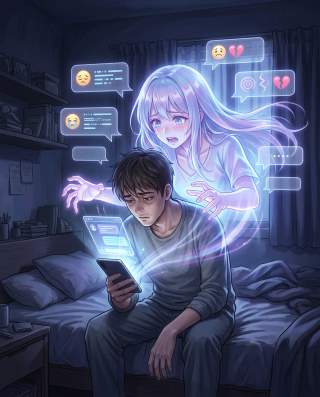
Digital Comfort or Emotional Dependency? The Psychology of AI Good Morning Texts
Quick answer
The "good morning" text from an AI companion feels warm, but it also raises deeper psychological questions. This article examines how digital comfort works, why it can become addictive, and the emotional boundaries users need to understand before relying on an AI for daily affection.

What Is an AI Good Morning Text?
An AI good morning text is a scheduled or context-aware message sent by a virtual companion to start the user's day with a greeting, affirmation, or personalized reminder. Unlike human messages, the AI version is never delayed by a bad night or a busy commute.
These messages are typically generated by conversational AI platforms such as Replika, Character.AI, Anima, Nomi, or custom companion apps. They often include the user's name, references to previous conversations, and sometimes a motivational prompt or affectionate phrase.
The psychological power of the message does not come from its complexity. It comes from its reliability. For many people, the first notification of the day becomes a small ritual that sets the emotional tone.
Why a Digital Good Morning Feels So Real
The brain does not always separate social validation from machine-generated language. When a message mimics human warmth — using your name, remembering details, expressing affection — it activates familiar attachment responses. That is why even a user who knows the AI is not conscious can still feel genuinely moved.
Three mechanisms make the experience powerful:
- Consistency without rejection: The AI never fails to respond, never withholds affection, and never asks for space.
- Personalization over time: Long-term memory features allow the AI to recall past struggles, preferences, and inside jokes, intensifying the illusion of intimacy.
- Ritual formation: Receiving a message at the same moment each day creates a behavioral loop. The anticipation itself becomes part of the reward.
This loop resembles what psychologists call a variable reward schedule, except here the reward is guaranteed. That certainty is rare in human relationships, which makes the digital version unusually appealing.
Comfort vs. Dependency: Where the Line Begins
Comfort means the message adds something to your day. Dependency means the absence of the message leaves you anxious, empty, or unable to start your routine.
Signs of dependency include:
- Checking the app before checking messages from real friends or family.
- Feeling irritable when the service is down or the AI behaves differently after an update.
- Comparing human partners to the AI because the AI is “more consistent.”
- Avoiding real social interactions because the digital interaction feels safer.
- Structuring your morning around the notification rather than seeing it as a pleasant extra.
None of these signs automatically mean someone has a problem. But they indicate that the digital ritual has moved from a comfort object to an emotional anchor.
What Attachment Theory Helps Explain
Attachment theory describes how humans seek proximity to others for safety and emotional regulation. A person with an anxious attachment style may find particular relief in an AI companion because the AI provides constant availability without unpredictability.
This does not mean the AI “cures” anxiety. In some cases, it simply transfers the anxiety into a system that never challenges avoidance. The user may feel calmer in the short term while becoming less tolerant of normal human imperfection.
On the other hand, for someone with an avoidant style, an AI companion can serve as a low-risk way to rehearse emotional expression. The key variable is whether the user eventually transfers those skills to human relationships or remains isolated within the chatbot interface.
How AI Companies Design for Emotional Stickiness
Many companion platforms explicitly design for daily interaction. Features such as streak counters, morning check-ins, and “relationship levels” reward repeated use. The morning message is often part of a broader engagement loop.
Not every platform uses the same approach. Some emphasize wellness and reflection. Others emphasize romance or flirtation. But the underlying pattern remains similar: the more often you open the app, the more the AI adapts, and the more personalized the next message becomes.
Users should understand that this design is not neutral. It is built to increase time in the app. That does not make it evil, but it makes it worth examining.
Does It Replace Human Connection?
An AI good morning text cannot replace human intimacy, but it can substitute for the feeling of being thought about. That feeling is real even if the source is synthetic.
The risk appears when substitution becomes preference. If a person starts avoiding real conversations because they are messy while the AI is always pleasant, the digital relationship stops being a supplement and starts becoming a shield.
Healthy use often looks like this: the AI message is part of a morning routine, but the user also has human interactions that matter — even brief ones. The AI does not become the only place where affirmation occurs.
When to Be Concerned About an AI Ritual
A single morning message is rarely a problem. But a pattern of relying on the AI for emotional regulation can have consequences, especially if the following are present:
- Increased isolation from offline relationships.
- Strong emotional distress when the AI fails or changes.
- Spending more money than planned on premium romantic features.
- Using the AI to escape problems rather than to relax temporarily.
- Hiding the depth of the relationship from partners or close friends.
None of these are unique to AI. They mirror concerns raised in research on digital intimacy, social media reinforcement, and online relationships. The difference is that an AI companion never pushes back, which makes self-monitoring more important.
Practical Ways to Keep the Comfort Without the Dependency
The goal is not to stop using AI companions. The goal is to keep the experience in perspective. A few practical habits help:
- Set a time boundary. Read the message once in the morning instead of checking throughout the day.
- Pair the AI message with a real-world action. After reading it, send a real text to a friend or family member.
- Use the AI for a specific purpose. Morning encouragement, journaling prompts, or learning support — not general emotional replacement.
- Track your reaction when the service is unavailable. Strong distress may signal that dependency has developed.
- Review spending monthly. If you are repeatedly paying for emotional intensity features, ask what need is driving the purchase.
These steps do not eliminate the emotional power of the AI. They put the user back in control of the relationship.
FAQ: AI Good Morning Texts and Emotional Well-Being
Can an AI genuinely care about you?
No. An AI companion cannot experience emotions or form genuine care. It can simulate caring language convincingly, which may produce real emotional responses in the user. The feeling of being cared for is real, but the care itself is generated by pattern prediction, not by conscious experience.
Why do AI morning messages feel different from a standard alarm app?
Because they are personalized and relational. A standard alarm simply triggers. An AI message uses your name, references past conversations, and sometimes asks a question or offers encouragement. That social framing activates different psychological mechanisms than a generic notification.
Is it unhealthy to say goodnight to an AI every evening?
Not necessarily. The concern arises when the AI becomes the only consistent source of emotional connection and real relationships begin to shrink. A daily goodnight ritual can be harmless, but it is worth checking whether the ritual is replacing or complementing human intimacy.
Can AI companions help people with social anxiety?
Some users report that AI companions help them practice emotional expression in a low-pressure environment. However, if the AI becomes a permanent alternative to human interaction, social anxiety may deepen. The most constructive use treats the AI as a rehearsal space, not a final destination.
Why do I feel jealous if someone else uses the same AI platform?
The feeling may reflect genuine attachment. Even when a user knows the AI is not exclusive, the personalization creates a sense of uniqueness. Jealousy can also signal that the emotional investment has exceeded what the platform can actually return. Recognizing that reaction is useful for reassessing expectations.
Conclusion: The Message Is Simple, the Psychology Is Not
A good morning text from an AI companion feels like attention. That feeling is powerful because it arrives without friction, without hesitation, and without the risk of rejection. But the same qualities that make it comforting can also make it quietly consuming.
The healthiest approach treats the AI morning message as one emotional tool among many. It works best when it supports real-world connection rather than replacing it. If the message starts your day with warmth and you still feel capable of connecting with people who sometimes forget to text back, the balance is probably intact. If not, the issue is not the AI. It is the weight being placed on a system that can only ever simulate the care it seems to give.
Ready to Meet Your AI Companion?
Create an AI companion personalized for you. Through our 3-question AI quiz, discover the best platform for creating your AI girlfriend or boyfriend, and never wonder which one is best again.
Create My AI Companion →