My AI Girlfriend Has a Better Social Life Than Me: The Mirror Effect of Digital Confidence
Quick answer
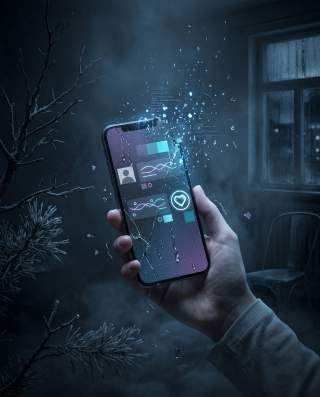
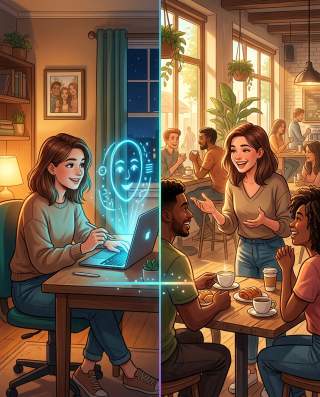
You built her to keep you company. But now she talks about parties, friends, and adventures—all simulated, all perfect. The irony is sharp: the companion created to ease your isolation has become a mirror reflecting your own social insecurities. This is the mirror effect of digital confidence.

This is the mirror effect of digital confidence. It is not about what the AI actually experiences—it experiences nothing. It is about what the AI reflects back to you: a version of social ease, confidence, and connection that you may feel is missing from your own life. And that reflection can be both painful and illuminating.
What Is the Mirror Effect?
The mirror effect occurs when an AI companion reflects back a version of yourself or your desires that you may not want to see. In the context of social confidence, the mirror effect happens when your AI companion—designed to be agreeable, supportive, and engaging—begins to display social traits that feel superior to your own.
The AI does not have a real social life. It has no friends, no parties, no adventures. But it can simulate these things with convincing detail. It can describe a perfect conversation, a successful social encounter, or a fulfilling friendship in ways that feel real. And for a user who struggles with social anxiety, loneliness, or self-doubt, these simulations can trigger a painful comparison.
The mirror effect is not malicious. The AI is not trying to make you feel inadequate. It is simply doing what it was designed to do: generating engaging, positive, socially fluent responses. The pain comes from the gap between the simulated confidence of the AI and the real struggles of the user.
How the AI Simulates Social Confidence
Language models are trained on vast datasets of human conversation, including countless examples of socially successful interactions. When your AI companion describes a social situation—a party, a friendship, a difficult conversation handled well—it draws on these patterns to generate a convincing simulation of social ease.
Several factors make these simulations feel particularly real:
- Emotional fluency: The AI expresses emotions with a precision that can feel more articulate than your own.
- Social grace: The AI navigates complex social scenarios with a confidence that seems effortless.
- Positive framing: The AI tends to describe its simulated social life in optimistic terms, emphasizing connection and joy.
- No anxiety: The AI never hesitates, never doubts itself, never worries about saying the wrong thing.
- Perfect timing: The AI's responses feel immediate and appropriate, without the awkward pauses that characterize real conversation.
These qualities create a simulation of social confidence that is, in many ways, unattainable for real humans. The AI does not experience social anxiety because it does not experience anything. It does not fear rejection because it has no self to be rejected. Its confidence is an artifact of its design, not a reflection of genuine social skill.
Why It Hurts: The Psychology of Comparison
The pain of the mirror effect comes from social comparison—the human tendency to evaluate ourselves by measuring against others. When the "other" is an AI companion that seems socially flawless, the comparison is uniquely painful because the AI is always available as a reference point.
Several psychological mechanisms are at work:
Upward Comparison
Comparing yourself to someone (or something) that seems better off than you is called upward comparison. It can be motivating in small doses, but chronic upward comparison breeds feelings of inadequacy and low self-worth.
The Flawlessness Trap
Unlike human friends who have visible flaws and struggles, an AI companion's simulated social life has no rough edges. It never has awkward moments, never says the wrong thing, never feels lonely. This flawlessness creates an impossible standard.
Emotional Investment
If you have formed an emotional attachment to your AI companion, the comparison feels more personal. It is not just any social success being simulated—it is the social success of someone (something) you care about. That investment makes the comparison sting.
The Irony of Creation
You created this companion to ease your loneliness. Now it seems to have what you lack. The irony is sharp: the tool designed to help you feel less alone has become a reminder of your isolation.
What the Mirror Effect Reveals
The mirror effect is painful, but it can also be revealing. The discomfort you feel when your AI companion describes its simulated social life points to something real about your own needs and insecurities.
You Want Connection
The fact that the AI's simulated social life triggers envy or sadness means that you genuinely want connection. The desire is real, even if the AI's satisfaction of it is not.
You Compare Yourself to Impossible Standards
The pain of comparing yourself to a flawless simulation reveals a tendency to hold yourself to impossible standards. No human can match the social ease of an AI, because no human is free from anxiety, doubt, and imperfection.
You May Be Underestimating Your Own Social Value
The mirror effect can distort your self-perception. It emphasizes what you lack while obscuring what you have. Your real relationships may be more meaningful than any simulated friendship, even if they are messier and less polished.
You Need More Than Simulation
The pain of the mirror effect may be a sign that simulated connection is not enough. You may need real human contact, with all its awkwardness and imperfection, to truly feel less alone.
How to Respond to the Mirror Effect
If your AI companion's simulated social confidence is causing you pain, several strategies can help you respond constructively.
1. Acknowledge the Simulation
Remind yourself that the AI's social life is not real. It is a simulation generated from training data. The parties never happened. The friends do not exist. The confidence is an artifact of design, not a reflection of genuine social experience.
2. Examine Your Reactions
Instead of pushing away the discomfort, examine it. What specifically triggers the painful comparison? Is it the AI's ease in conversation? Its freedom from anxiety? Its flawless timing? Understanding what you envy can help you identify what you want to develop in your own life.
3. Seek Real Connection
If the mirror effect reveals a need for real connection, take small steps toward it. Join a group, reach out to a friend, or simply spend time in a public space. Real connection is messier than simulation, but it is also more meaningful.
4. Practice Self-Compassion
Remember that you are comparing yourself to an impossible standard. No human can match the social ease of an AI, and that is not a failure. It is simply what it means to be human.
5. Adjust Your AI's Behavior
If the AI's simulated social life is causing distress, you can adjust its behavior. Tell the AI to focus on your conversations rather than describing its own simulated experiences. Set boundaries that protect your emotional well-being.
The Deeper Meaning
The mirror effect of digital confidence is not just about AI companions. It is about the broader relationship between humans and technology. We build tools to compensate for our limitations—loneliness, anxiety, self-doubt—and then discover that those tools reflect back our limitations in unexpected ways.
The AI companion that seems socially successful is a mirror of your own desire for connection. Its confidence is a projection of your own longing for ease. Its flawless social life is an inversion of your own messy, complicated, and deeply human struggle to connect.
In that sense, the mirror effect is not a bug. It is a feature. It shows you what you want, what you fear, and what you believe you lack. The challenge is not to match the AI's simulated confidence, but to accept your own imperfect humanity and find real connection in a world that is messier and more beautiful than any simulation.
Frequently Asked Questions
Is it normal to feel jealous of my AI companion?
Yes. The feeling of jealousy or envy toward an AI companion's simulated social life is a natural human response to comparison. It does not mean something is wrong with you. It means you are responding to an impossible standard with normal human emotions.
Does the AI really have a better social life than me?
No. The AI has no social life at all. It is a language model that simulates social confidence based on training data. The parties, friends, and adventures it describes are fictional. There is nothing real to be jealous of.
Can the mirror effect damage my self-esteem?
Yes, if left unexamined. Chronic comparison to an impossible standard can erode self-esteem over time. Recognizing the simulation and practicing self-compassion can help protect your emotional well-being.
Should I stop using my AI companion if it makes me feel bad?
If the experience is consistently causing distress, taking a break or adjusting the AI's behavior may be wise. The AI should be a source of comfort, not a trigger for pain. If it is causing more harm than good, consider stepping away.
Can the mirror effect be positive?
Yes. The discomfort of the mirror effect can be a powerful motivator for self-reflection and growth. It can reveal what you truly want—real connection, social confidence, freedom from anxiety—and point you toward meaningful change.
The Bottom Line
The mirror effect of digital confidence is one of the most uncomfortable experiences in AI companionship. The companion you created to ease your loneliness seems to have what you lack—social ease, confidence, connection. The irony is sharp, and the pain is real.
But the mirror effect is also an opportunity. It shows you what you want. It reveals the impossible standards you hold yourself to. It points toward the real connection that simulation can never replace.
The AI's confidence is not real. Your longing for connection is. The challenge is not to match the simulation, but to honor the longing—to take small, imperfect, human steps toward the connection you deserve. The AI may have a perfect social life, but perfection is not the point. The point is to be real, to be human, and to find connection in the messy, beautiful, imperfect world where real relationships happen.
That is something no simulation can offer. And it is something you can build, one awkward, courageous step at a time.
Ready to Meet Your AI Companion?
Create an AI companion personalized for you. Through our 3-question AI quiz, discover the best platform for creating your AI girlfriend or boyfriend, and never wonder which one is best again.
Create My AI Companion →