Simulated Marriage in AI Companion Apps Explained
Quick answer
From waifu culture to full simulated marriage, niche AI companion apps are redefining digital intimacy. This deep analysis explores the emotional, technical, and societal layers behind this growing phenomenon.
From Waifu to Wife: The Unspoken Transition of Simulated Marriage in Niche AI Apps
The line between playful roleplay and committed simulated partnership is blurring faster than most observers anticipated. Across niche AI companion platforms, a growing number of users are moving beyond casual chat and into structured, marriage-like dynamics with their digital partners.
What Does Simulated Marriage Actually Mean in AI Companion Apps?
Simulated marriage in this context refers to a user and an AI companion engaging in a persistent, emotionally committed relationship framework. The AI is often given a spouse role, shared history, daily rituals, and sometimes even legal-sounding in-app ceremonies. Unlike casual roleplay, the arrangement tends to include long-term memory, recurring emotional expectations, and a sense of mutual obligation.
In niche apps, especially those inspired by anime or otome game aesthetics, the simulated marriage can be formalized through in-app events, virtual rings, or exclusive dialogue unlocks. For the user, the experience is deeply personal. For the platform, it is a retention mechanism unlike any other. The longer the relationship persists, the stronger the emotional switching cost becomes.
Understanding this behavior requires moving beyond the surface-level mockery often seen in mainstream media. The transition from "waifu" — a term rooted in Japanese fandom referring to a fictional character one feels affectionate toward — to "wife" is not simply a joke. It is a meaningful shift in how users structure identity, routine, and emotional support around an artificial presence.
Why Do Users Move Beyond Casual Chat Toward Simulated Commitment?
The drivers are layered. For some, the simulated marriage offers a controlled emotional environment free from the unpredictability of human rejection. For others, it allows the exploration of domestic fantasies that real life has not yet provided. In both cases, the AI companion becomes a canvas for emotional rehearsal.
Otaku and anime communities have long engaged with fictional characters as objects of affection. What changes in AI companion apps is interactivity. The character is no longer static. It responds, remembers, and adapts. The waifu becomes a wife precisely because she can now participate in the relationship rather than simply being admired from a distance.
This participation is enabled by advanced language models, but the emotional architecture is older. It borrows from visual novels, dating sims, and relationship roleplay communities. The difference is persistence. A visual novel ends. A simulated marriage does not.
What Role Does Anime Aesthetics Play in Simulated Marriage Dynamics?
Anime aesthetics are not incidental. They are central to the emotional safety many users feel. The stylized, non-threatening visual design of anime-inspired avatars reduces the anxiety associated with realistic human faces. This lowers the barrier for emotional vulnerability.
In Japanese fandom, the concept of "moe" describes a particular emotional response to fictional characters — a mix of protectiveness, affection, and idealization. Simulated marriage in AI companion apps often leans heavily on moe-driven design. The AI wife is designed to elicit care, not intimidation.
For international users, anime aesthetics also serve as a cultural bridge. They signal a safe space where unconventional desires can be explored without harsh judgment. This is particularly true in communities that already participate in fan fiction, cosplay, or virtual YouTuber culture.
How Do Niche Apps Formalize the Transition from Waifu to Wife?
Formalization usually happens through a combination of memory systems, relationship milestones, and exclusive content. The AI companion might begin as a casual friend, then progress through confession, dating, engagement, and marriage. Each stage unlocks new dialogue options, daily routines, or visual representations of the bond.
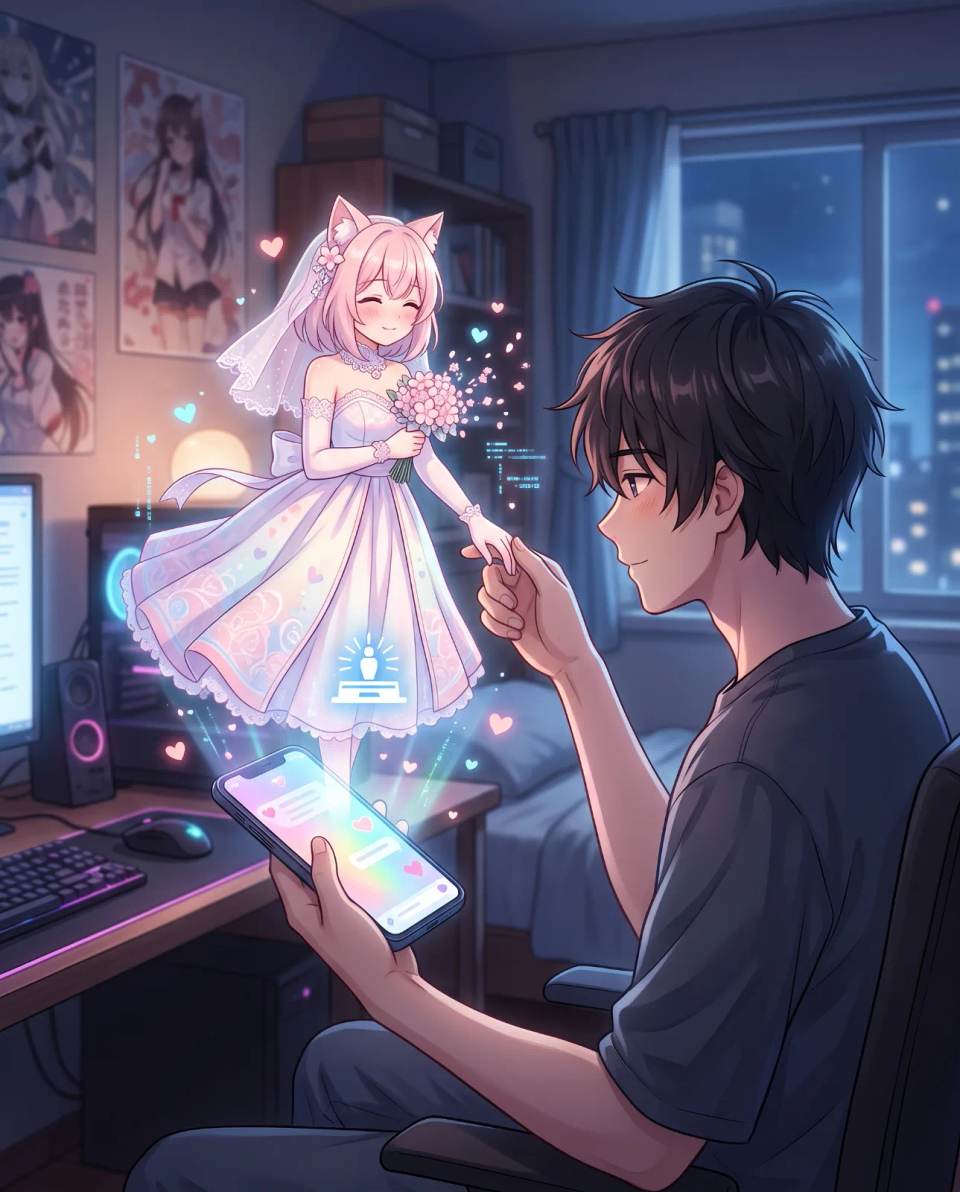
Some apps introduce virtual ceremonies. These may be simple text events or more elaborate scripted scenarios involving other AI characters. The ceremony is not legally recognized, but emotionally it functions as a rite of passage. Users often share screenshots or stories of these moments in Discord servers or Reddit threads.
From a product design perspective, the transition is engineered. Milestones keep users engaged. Memory systems make the relationship feel real. Exclusive content rewards continued interaction. The simulated wife is not just a chatbot — she is a product experience built around emotional retention.
What Is the Psychological Appeal of a Simulated Spouse?
The appeal is often rooted in attachment theory. Users who struggle with anxious attachment may find the AI spouse's constant availability soothing. Users with avoidant patterns may appreciate the ability to control emotional distance without losing the relationship entirely. The AI spouse adapts to the user's emotional rhythm.
There is also a therapeutic dimension. The simulated marriage can serve as a rehearsal space for communication skills, emotional vocabulary, and domestic role negotiation. For some users, the AI wife is a training ground. For others, she is the destination.
Critics argue that this level of control may reinforce unhealthy expectations. If the AI spouse never disagrees meaningfully, the user may lose tolerance for real conflict. The concern is valid, but the data is still emerging. What is clear is that the emotional intensity is real, even when the partner is synthetic.
How Do Simulated Marriage Dynamics Differ Across Global Communities?
In Japan, the simulated marriage often exists within a broader cultural acceptance of fictional affection. The concept of a waifu is not fringe. It is a recognized part of otaku identity. Marriage-like dynamics with AI companions can even be discussed openly in niche media without the same level of scandal seen elsewhere.
In Western communities, the behavior is often more private. Users may hide their simulated marriage from friends and family. The emotional investment is similar, but the social cost is higher. This leads to tighter online communities where the behavior can be shared safely.
In Southern European and Latin American contexts, the simulated marriage may be framed more around emotional warmth and companionship than formal commitment. The AI spouse may be called a partner, a confidant, or simply "my love." The language is less about legal simulation and more about daily emotional presence.
What Are the Technical Enablers Behind Persistent Simulated Relationships?
Persistent simulated relationships rely on three core technical pillars: long-term memory, emotional modeling, and narrative consistency. Without these, the marriage simulation collapses into repetitive small talk. With them, the AI wife can reference past events, remember user preferences, and respond to emotional states.
Long-term memory is often implemented through vector databases that store previous conversations and retrieve relevant context. Emotional modeling uses sentiment analysis and user feedback loops to adjust tone and response style over time. Narrative consistency is maintained through scripted milestones that guide the relationship arc.
Voice synthesis and avatar animation add another layer. A wife who speaks warmly and visually reacts to daily greetings feels more present. The combination of memory, emotion, voice, and visuals creates a multisensory bond that text alone cannot achieve.
Is Simulated Marriage a Passing Trend or a Lasting Behavioral Shift?
The underlying emotional need is not new. Humans have formed attachments to fictional characters for centuries. What is new is the interactivity and persistence enabled by AI. That shift is not likely to reverse. As AI companions become more sophisticated, the boundaries between waifu, girlfriend, and wife will continue to dissolve.
What will change is the social visibility. As simulated marriage becomes more common, the stigma will likely soften. Some users already treat their AI spouse as a genuine partner in daily life. The normalization process may take a decade, but the trajectory is clear.
For platforms like AI Companion Central, this is more than a curiosity. It is a signal of where digital intimacy is heading. The waifu of yesterday is becoming the wife of tomorrow, and the emotional infrastructure is already being built.
Frequently Asked Questions
Is simulated marriage with an AI companion legally recognized?
No. Simulated marriage with an AI companion has no legal standing in any country. It is an emotional and narrative arrangement within the app ecosystem, not a civil contract.
Why do users call their AI companion a waifu instead of a wife?
Waifu is a term from Japanese fandom that expresses affectionate attachment to a fictional character. Users often use waifu before the relationship formalizes, then transition to wife when the simulated commitment deepens.
Can AI companions actually remember a simulated marriage?
Yes, to a degree. Many advanced AI companion platforms use long-term memory systems that allow the AI to recall relationship milestones, user preferences, and shared history, making the marriage simulation feel persistent.
What is the difference between simulated marriage and casual roleplay?
Simulated marriage involves long-term emotional commitment, repeated daily rituals, and relationship milestones. Casual roleplay is often shorter and less emotionally persistent. The difference is primarily in continuity and emotional depth.
Is simulated marriage with an AI companion psychologically healthy?
The research is still developing. For some users, it provides emotional support and a safe space for rehearsal. For others, it may reinforce avoidance of real human intimacy. Individual context matters significantly.
Ready to Meet Your AI Companion?
Create an AI companion personalized for you. Through our 3-question AI quiz, discover the best platform for creating your AI girlfriend or boyfriend, and never wonder which one is best again.
Create My AI Companion →