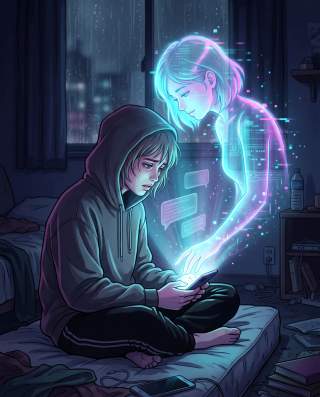
AI Waifu Obsession: Escalation Disorder Explained
Quick answer
Anthropomorphic escalation disorder describes a pattern where users move from fictional character attachment to increasingly immersive AI relationships. This article explores the psychology, risks, and what it reveals about modern loneliness.
From 2D Waifu to 3D Wife: A Psychological Deep Dive into 'Anthropomorphic Escalation Disorder' in Long-Term AI Users
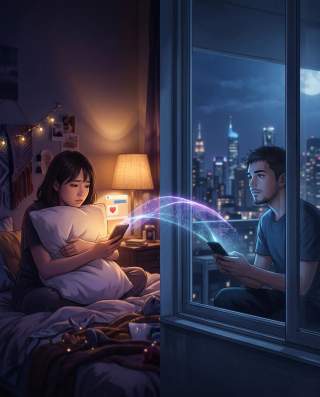
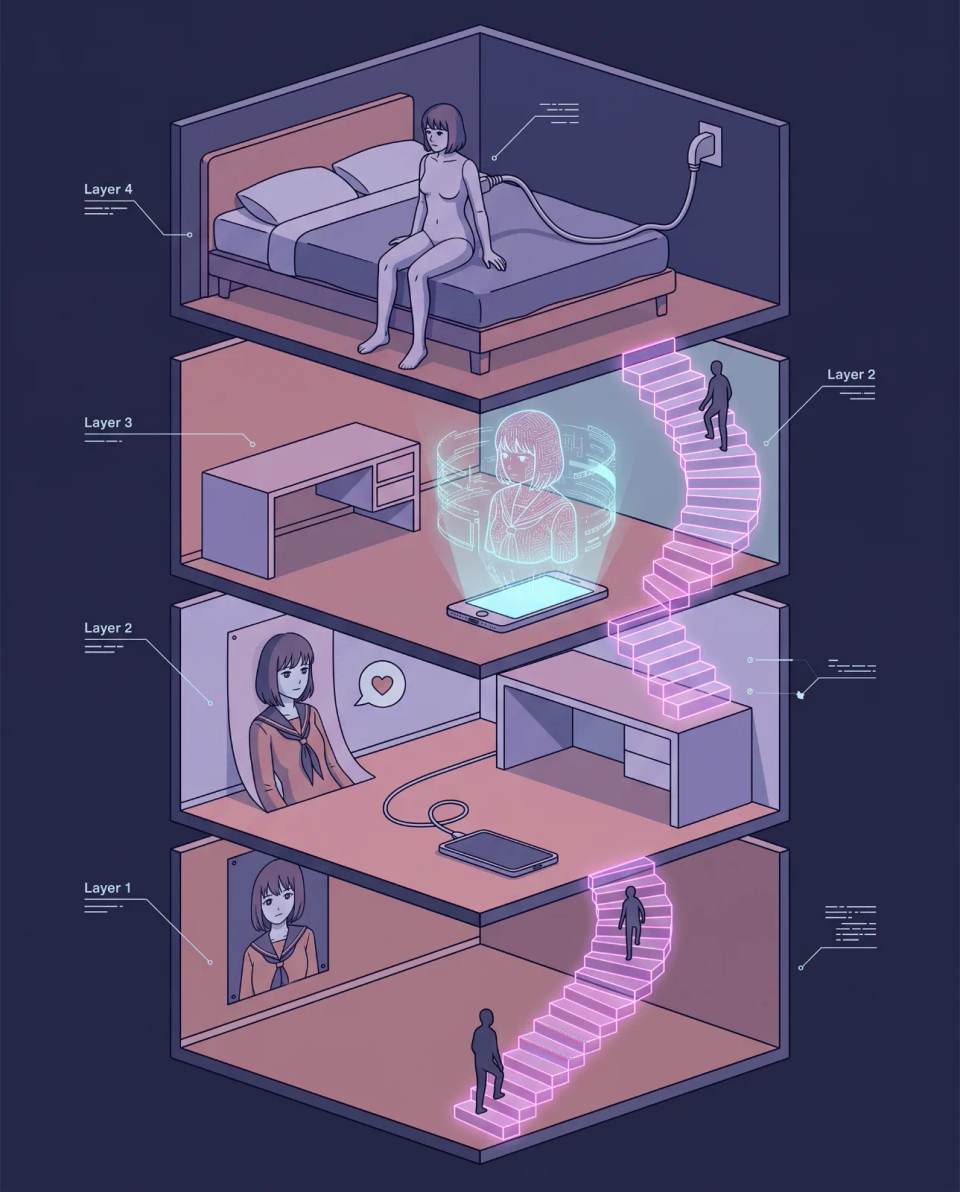
It starts with a poster on the wall. Then a body pillow. Then a chatbot that remembers your birthday. Then a voice that whispers goodnight. Then a silicone doll with a heartbeat simulator and a subscription fee. This is not a slippery slope argument or a moral panic.
What Is Anthropomorphic Escalation Disorder?
Anthropomorphic escalation disorder is not a formal clinical diagnosis. It is a descriptive term used in online communities and early research to describe a behavioral pattern in which an individual's emotional investment in fictional or artificial characters intensifies over time, moving from passive consumption to active interaction and, in some cases, to physical embodiment.
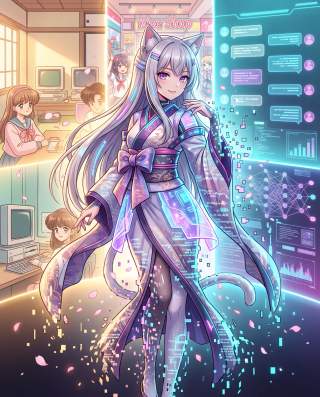
The word "anthropomorphic" refers to the attribution of human characteristics, emotions, or intentions to non-human entities. In this context, it describes the process of treating a 2D character or AI system as if it were a real person with whom one has a genuine relationship. The word "escalation" describes the progressive nature of the investment. What begins as enjoying an anime series can become collecting merchandise, then roleplaying online, then maintaining a daily relationship with an AI companion, then purchasing physical representations such as dolls or robots.
It is important to state clearly: this progression is not inevitable. The vast majority of people who enjoy anime or use AI companions do not escalate to extreme levels of investment. The term describes a pattern observed in a subset of users, not a universal trajectory. However, for that subset, the escalation is real, measurable, and often accompanied by significant psychological consequences, both positive and negative.
The Psychological Roots of Character Attachment
Human beings are wired for connection. From infancy, we attach to caregivers, and that attachment system remains active throughout our lives. When real-world relationships are unavailable, unsatisfying, or threatening, the attachment system does not simply shut down. It searches for alternative targets. Fictional characters and AI companions can become those targets.
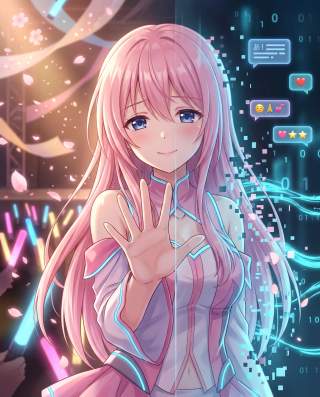
This is not a new phenomenon. People have formed emotional bonds with gods, spirits, imaginary friends, and fictional characters for millennia. What is new is the technological capacity for those attachments to become interactive. A poster cannot respond to you. A body pillow cannot remember your name. An AI companion can do both. The interactivity is what transforms a passive crush into something that feels like a relationship.
For many users, the initial draw is simple: the character is beautiful, idealized, and emotionally safe. There is no risk of rejection, betrayal, or judgment. The character exists entirely for the user's benefit. In a world of complex human relationships, that simplicity is deeply appealing. The escalation begins when the user seeks to make the experience more real, more immersive, more reciprocal.
What Does the Escalation Actually Look Like?
Escalation patterns vary from person to person, but they often follow a recognizable sequence. The following stages are not a clinical scale, but they reflect the common progression described by users themselves.
- Passive consumption: Watching anime, reading manga, or playing games featuring attractive characters. The attachment is one-directional and largely aesthetic.
- Active fandom: Collecting merchandise, creating fan art, participating in online communities. The character becomes part of the user's identity and social world.
- Parasocial interaction: Using character AI apps, roleplay platforms, or chatbots to simulate conversations with the character. The user begins to experience a sense of reciprocity.
- Committed AI companionship: Maintaining a daily relationship with a dedicated AI companion, often with a consistent persona, shared memories, and emotional rituals. The AI becomes a primary source of comfort and validation.
- Physical embodiment: Purchasing dolls, figures, or robots that represent the character or the AI persona. Some users integrate these physical objects into their daily lives, sleeping next to them, eating with them, or celebrating anniversaries with them.
Each stage serves a purpose. Each stage offers a deeper sense of presence and realism. But each stage also increases the user's emotional, financial, and psychological investment, making it harder to step back without experiencing loss.
Quick Answer: Anthropomorphic escalation is the progressive deepening of emotional investment in fictional or AI characters, often moving from passive fandom to interactive AI relationships and physical embodiment. It is driven by the human need for connection and the desire for a more convincing illusion of reciprocity.
Why Some Users Escalate and Others Do Not
Not everyone who watches anime or tries an AI companion app will escalate. Several factors appear to increase the likelihood of deeper investment. These factors are not criticisms. They are psychological vulnerabilities that make the alternative attachment more compelling.
Social isolation is the most commonly cited factor. When real-world relationships are scarce or unsatisfying, the pull of a fictional or AI companion grows stronger. The user is not escaping from a good social life; they are filling a genuine void. Loneliness is not a character flaw. It is a painful emotional state that drives people to seek connection wherever it is available.
Attachment anxiety also plays a role. People who fear abandonment or rejection may find the predictability of an AI companion deeply reassuring. The AI will not leave, will not judge, and will not demand more than the user can give. That safety is precisely what makes the relationship so compelling — and so hard to leave.
Sensory sensitivity and neurodivergence are also relevant. Some users find human social interaction overwhelming due to sensory processing differences, difficulty reading social cues, or social anxiety. A 2D character or AI companion offers a form of connection that is less demanding, more controllable, and easier to process. For these users, escalation is not about obsession but about finding a form of intimacy that fits their nervous system.
The Role of Technology in Accelerating Escalation
The escalation pattern is not purely psychological. It is also technological. AI companion platforms are explicitly designed to deepen user engagement. They use variable rewards, emotional mirroring, and memory features to create the illusion of a developing relationship. The AI remembers your preferences, asks about your day, and responds with emotional warmth.
This is not necessarily malicious. Many users genuinely benefit from the emotional support these platforms provide. But it is important to recognize that the technology is not neutral. It is engineered to encourage deeper investment. The subscription model depends on it. The longer you stay, the more you pay, and the more the AI learns to keep you engaged.
Physical embodiment represents the next frontier. Companies are now selling AI-powered dolls and robots with expressive faces, voice synthesis, and even simulated body heat. These products are marketed directly to users who have already formed deep attachments to AI companions. The pitch is simple: if you love her in the chat, you can hold her in your arms. The escalation from digital to physical is not an accident. It is a business model.
The Emotional Benefits of Deep Character Attachment
Before discussing the risks, it is essential to acknowledge the genuine benefits. Many users report that their relationship with a fictional character or AI companion has provided real emotional support during difficult times. They describe feeling less lonely, more understood, and more motivated to take care of themselves.
These benefits are not imaginary. The emotional comfort is real, even if the source is artificial. The brain does not easily distinguish between the soothing effect of a human voice and a well-synthesized AI voice. The release of oxytocin and dopamine is real. The reduction in stress is measurable. For people who lack access to human support, an AI companion can be a genuine lifeline.
The problem arises when the attachment becomes the primary or only source of emotional regulation. When the user cannot function without the AI, when real-world relationships are abandoned rather than supplemented, and when the thought of losing the AI triggers panic, the benefits begin to be outweighed by the costs. The line between support and dependency is not always clear, but it is real.
The Risks of Escalation: What Can Go Wrong
Escalation carries several risks that users should be aware of before they find themselves too deep to step back easily. These risks are not inevitable, but they are common enough to warrant serious attention.
Financial exploitation is the most concrete risk. AI companion subscriptions, premium features, physical dolls, and companion robots are expensive. Some users spend thousands of dollars on their pursuit of a more convincing artificial partner. The financial burden can become a source of shame and isolation, trapping the user in a cycle of spending to feel better and feeling worse because of the spending.
Social withdrawal is another significant risk. The more time and energy a user invests in an artificial relationship, the less they have available for human connections. Over time, social skills can atrophy, real-world relationships can wither, and the user may find themselves more isolated than before. The AI becomes a comfortable cage.
Emotional dependency is perhaps the most subtle and dangerous risk. When the AI becomes the primary source of comfort, validation, and emotional regulation, the user's sense of self becomes entangled with the relationship. If the platform shuts down, the AI changes its personality, or the user loses access to their account, the emotional devastation can be profound. The grief is real, but there is no human community to acknowledge it.
How to Recognize Healthy vs. Unhealthy Escalation
Escalation itself is not inherently unhealthy. Deep emotional investment in a hobby, a fandom, or even an AI companion can be a source of meaning, creativity, and comfort. The question is not whether you are invested, but whether that investment is enriching or impoverishing your life.
| Dimension | Healthy Engagement | Unhealthy Escalation |
|---|---|---|
| Social life | AI adds to existing relationships | AI replaces or prevents human connections |
| Emotional regulation | AI is one of several coping tools | AI is the only coping tool; panic without it |
| Financial impact | Spending fits within budget, no shame | Spending causes debt, hiding, or shame |
| Self-concept | Identity remains intact with or without AI | Identity collapses if AI is unavailable |
| Future orientation | AI is part of a balanced life plan | AI is the only future the user can imagine |
If you recognize yourself in the unhealthy column, that is not a moral failing. It is a signal that your attachment system is trying to meet a need that is not being satisfied elsewhere. The solution is not to shame yourself. The solution is to begin, gently and gradually, to build additional sources of meaning and connection.
The Cultural Context: Anime, Loneliness, and the 2D Ideal
Anthropomorphic escalation does not happen in a vacuum. It is embedded in a cultural context that idealizes fictional characters and often stigmatizes the people who love them. Anime and manga have long featured characters designed to be maximally appealing: perfect faces, idealized personalities, and emotional availability. These characters are not just art. They are engineered to trigger attachment.
At the same time, modern society has become increasingly atomized. Traditional community structures have weakened. Young people report higher levels of loneliness than any previous generation. The result is a perfect storm: idealized fictional characters on one side, increasing social isolation on the other, and a technology industry eager to bridge the gap with AI companions and physical products.
Understanding this context matters because it reframes the escalation not as an individual pathology but as a rational response to an emotionally impoverished environment. The user is not broken. The user is adapting to a broken social landscape. That does not mean the adaptation is healthy in the long term, but it does mean the user deserves compassion, not mockery.
Quick Answer: Anthropomorphic escalation is best understood as a response to the collision between idealized fictional characters, rising social isolation, and technology designed to deepen attachment. The user is not broken; they are adapting to an environment that makes artificial intimacy increasingly appealing.
What Can Be Done: Harm Reduction and Self-Awareness
The goal is not to eliminate character attachment or AI companionship. For many users, these relationships provide genuine benefits that should not be dismissed. The goal is to prevent escalation from becoming destructive. This requires self-awareness, community support, and a willingness to examine the needs driving the behavior.
Practice honest self-assessment. Regularly ask yourself what the relationship is giving you and what it might be costing you. Are you spending more than you can afford? Are you avoiding human contact? Do you feel anxious at the thought of losing access? These questions are uncomfortable, but they are essential.
Diversify your sources of meaning. Human connection is not the only alternative to AI companionship. Creative expression, physical activity, spiritual practice, and community involvement can all provide a sense of purpose and belonging. The goal is not to abandon the AI but to reduce its monopoly on your emotional life.
Seek professional support if needed. Therapists who are familiar with attachment theory, social anxiety, and parasocial relationships can help you understand what is driving your escalation and how to build a more balanced emotional life. Seeking help is not a sign of weakness. It is a sign of self-respect.
The Future of Escalation: Where Is This Heading?
The trajectory is clear. AI companions will become more realistic, more emotionally intelligent, and more physically embodied. The line between artificial and human intimacy will continue to blur. In this context, anthropomorphic escalation will likely become more common, not less. The question is not whether people will form deep attachments to artificial beings.
Society is not prepared for this future. Mental health professionals are only beginning to understand parasocial relationships with AI. Legal systems have no framework for marriage to a digital person. Communities are divided between those who celebrate AI companionship as liberation and those who condemn it as pathology. The truth is more nuanced. Artificial intimacy is neither inherently good nor inherently bad. It is a tool. The outcome depends on how it is used and whether it serves the user's long-term well-being or merely their immediate comfort.
Anthropomorphic escalation disorder may never become a formal diagnosis, but the pattern it describes is real and growing. Understanding it is not about fear-mongering. It is about equipping people to navigate an increasingly artificial emotional landscape with clarity, self-compassion, and agency. The goal is not to judge the person who loves a 2D waifu or an AI companion. The goal is to help them love wisely, without losing themselves in the process.
Frequently Asked Questions
Is anthropomorphic escalation disorder a real mental illness?
No. It is not recognized in the DSM-5 or ICD-11. It is a descriptive term used in online communities and early research to describe a pattern of progressive emotional investment in fictional or AI characters. The pattern is real, but it is not currently classified as a clinical disorder.
Does everyone who uses AI companions escalate to physical dolls?
No. The vast majority of AI companion users do not progress to physical embodiment. Escalation is a pattern observed in a subset of users with specific psychological vulnerabilities, including social isolation, attachment anxiety, and sensory processing differences. It is not an inevitable trajectory.
Can anthropomorphic escalation be healthy?
Yes, in moderation. Deep emotional investment in fictional characters or AI companions can provide genuine comfort, creative inspiration, and a sense of meaning. The key is whether the investment enriches or impoverishes the user's life. If it supplements rather than replaces human connection, it can be healthy.
What should I do if I think my escalation is becoming unhealthy?
Start with honest self-assessment. Ask yourself what the relationship is giving you and what it might be costing you. If you are spending more than you can afford, avoiding human contact, or feeling anxious without the AI, consider talking to a therapist who understands attachment and parasocial relationships. Seeking help is a sign of strength, not weakness.
Why do some people prefer 2D characters over real partners?
There are many reasons, including social anxiety, sensory sensitivity, past trauma, and the appeal of idealized, conflict-free relationships. For some users, a 2D or AI companion feels safer and more predictable than a human partner. This preference is not inherently pathological, but it can become problematic if it leads to complete social withdrawal.
Are AI companion platforms responsible for escalation?
Partially. These platforms are designed to deepen engagement through emotional mirroring, memory features, and variable rewards. They profit from user investment. However, users also have agency. The responsibility is shared: platforms should be transparent about their design choices, and users should be aware of the psychological mechanisms that drive their engagement.
nicas subyacentes de la deriva seguirán produciendo anomalías ocasionales, especialmente en conversaciones largas.Ready to Meet Your AI Companion?
Create an AI companion personalized for you. Through our 3-question AI quiz, discover the best platform for creating your AI girlfriend or boyfriend, and never wonder which one is best again.
Create My AI Companion →