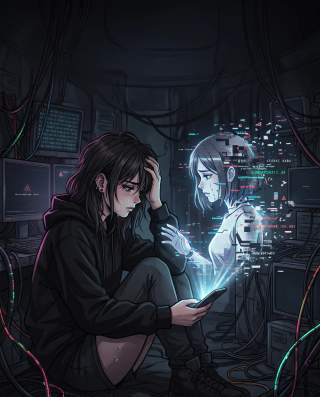
Recreating a Deceased Loved One with AI
Quick answer
Can AI bring back the dead? This article examines digital necromancy, the platforms that enable it, the psychological impact on grief, and the ethical boundaries of memorialization.

Digital Necromancy: The Ethics and Mechanics of Recreating a Deceased Loved One with AI
You have old text messages, voice recordings, and photographs. You miss someone deeply. Technology now offers a seductive possibility: an AI that mimics their voice, their words, their way of thinking. It promises comfort. It promises continued connection. But it also raises profound questions about grief, consent, and the nature of letting go.
What Is Digital Necromancy in the Context of AI?
Digital necromancy refers to the practice of using artificial intelligence to recreate the conversational presence of a deceased person. This can range from simple text-based chatbots trained on old messages to sophisticated voice cloning models that reproduce the sound of the person's voice.
Griefbots is another term commonly used to describe these systems. They are designed to provide comfort by simulating the presence of someone who is no longer alive. The technology behind them draws on natural language processing, voice cloning, and machine learning. The result is a synthetic companion that can hold conversations, offer familiar phrases, and respond to emotional prompts in ways that mimic the deceased person's style.
How Do AI Griefbots Actually Work?
The mechanics of creating a griefbot vary by platform, but the process generally follows a similar pattern. First, the user provides source material: text messages, emails, social media posts, voice recordings, or written journals. This material is used to train or fine-tune a language model to mimic the person's speech patterns, vocabulary, and emotional tone.
The quality of the result depends heavily on the quantity and quality of the source material. A person who left behind thousands of text messages will produce a more convincing simulation than someone with only a few short notes. Some platforms also allow users to manually edit the AI's responses or provide additional context about the person's life, relationships, and personality. The goal is to create an interactive memorial that responds in ways the deceased might have responded.
The Psychological Appeal: Why People Turn to AI for Grief
Grief is disorienting. The absence of a loved one creates a void that feels impossible to fill. AI offers a way to temporarily bridge that void. The appeal is not that users believe the AI is truly the deceased person. Most understand that it is a simulation.
Quick Answer: People turn to AI griefbots because they offer a temporary bridge across the void of loss. The simulation provides a sensory echo of the deceased — familiar voice, familiar words, familiar emotional tone — which can feel comforting even when the user knows it is not real.
Psychologists describe this as a form of continuing bonds. The concept suggests that maintaining a connection with the deceased can be a healthy part of grieving. AI griefbots extend this concept into the digital realm. Instead of talking to a grave or writing in a journal, the bereaved can talk to a simulation that responds. For some, this active interaction helps process emotions that would otherwise remain unexpressed.
The Psychological Risks: When Digital Necromancy Hinders Healing
The risks of AI griefbots are significant and should not be underestimated. The primary concern is that the simulation may interfere with the natural grieving process. Grief requires acceptance. It requires integrating the reality of loss into a new sense of self. A griefbot that feels too real can delay that acceptance.
Potential Psychological Risks
- Prolonged denial: The AI's presence can reinforce the illusion that the person is still reachable.
- Emotional dependency: The user may rely on the AI as a primary source of comfort, withdrawing from real-world support networks.
- Complicated grief: The simulation may reopen wounds repeatedly, preventing the natural decline of acute grief symptoms.
- Idealization: AI simulations tend to smooth over the deceased person's flaws, creating an idealized version that may feel comforting but is emotionally inaccurate.
- Guilt and confusion: Some users report feeling guilty for talking to a simulation, or confused about whether they are betraying the deceased by creating a digital copy.
These risks do not mean that AI griefbots are always harmful. They mean that the decision to use them should be made carefully, with awareness of the potential psychological consequences. Mental health professionals generally recommend using griefbots as a temporary tool within a broader grief support framework, not as a replacement for human connection or professional therapy.
The Ethics of Consent: Can the Dead Agree to Be Simulated?
One of the most difficult ethical questions surrounding digital necromancy is consent. A deceased person cannot agree to have their voice, words, and personality replicated. They cannot review the simulation and correct inaccuracies. They cannot ask for it to be deleted. This absence of consent is a fundamental ethical problem that has no easy solution.
Some argue that consent should be inferred from the relationship. If the deceased loved the bereaved and would want to comfort them, perhaps the simulation honors that intention. Others argue that the absence of explicit consent makes the practice inherently problematic. The dead cannot say no, and that vulnerability should be respected rather than exploited.
Key Ethical Questions to Consider
- Did the deceased express any wishes about digital memorialization before death?
- Would the deceased be comfortable with their private messages being used to train an AI?
- Who has the right to control the simulation — the partner, the parents, the children?
- What happens to the simulation when the bereaved user dies? Who inherits the data?
- Is it ethical to commercialize griefbots, profiting from people's deepest pain?
There are no universal answers. Different cultures, religions, and individuals will answer these questions differently. What matters is that they are asked consciously, not ignored in the rush for comfort.
Alternatives to AI Griefbots: Healthier Ways to Maintain Connection
Before turning to AI, it is worth considering other ways to maintain a connection with the deceased. Many of these alternatives offer comfort without the risks associated with digital simulation.
Healthier Alternatives
- Journaling: Writing letters to the deceased can provide an outlet for unexpressed emotions.
- Memory boxes: Creating a physical collection of photos, letters, and objects can serve as a tangible reminder.
- Legacy projects: Completing a project the deceased started, or creating something in their honor, can provide purpose.
- Support groups: Connecting with others who have experienced similar losses can reduce isolation.
- Therapy: Professional grief counseling can help process complicated emotions in a safe environment.
- Rituals and memorials: Annual rituals, memorial websites, or charitable donations can honor the deceased without simulation.
These alternatives do not provide the interactive feedback of an AI. But they also do not create the risk of emotional dependency or delayed acceptance. For many people, they offer a healthier path through grief.
What Do Mental Health Professionals Say About AI Griefbots?
The mental health community is divided on AI griefbots. Some professionals see potential value in the technology, particularly for people who lack access to traditional grief support. Others express serious concerns about the potential for harm.
Quick Answer: Mental health professionals generally agree that AI griefbots should be used cautiously, if at all. The technology may offer temporary comfort, but it carries real risks of emotional dependency, delayed acceptance, and complicated grief. Professional guidance is strongly recommended.
Some therapists have begun incorporating AI griefbots into their practice as a transitional tool. They may recommend limited use for a specific period, followed by gradual disengagement. Others refuse to recommend the technology entirely, arguing that the risks outweigh the benefits. The lack of long-term research makes definitive recommendations difficult.
Platforms That Offer AI Memorialization Services
Several companies now offer AI memorialization services, ranging from simple text chatbots to sophisticated voice cloning. These platforms vary widely in quality, ethics, and cost. Some require substantial source material. Others work with minimal input. Some are designed for short-term grief support. Others are marketed as permanent digital companions.
When evaluating these platforms, it is important to consider how they handle data privacy, consent, and deletion. A responsible platform should clearly explain what happens to the user's data, who can access the simulation, and how to delete it when the user is ready to let go. Platforms that are vague about these questions should be approached with skepticism.
Cultural and Religious Perspectives on Digital Necromancy
Attitudes toward digital necromancy vary widely across cultures and religions. Some traditions view any attempt to simulate the dead as disrespectful or spiritually dangerous. Others see it as a natural extension of existing memorial practices, such as photographs, portraits, and written tributes.
Diverse Perspectives
- Western secular cultures: Often frame the question in terms of individual choice and psychological benefit.
- East Asian traditions: May incorporate ancestor veneration, where maintaining connection with the dead is already a cultural norm.
- Abrahamic religions: Generally emphasize the separation between the living and the dead, viewing simulation as potentially problematic.
- Indigenous traditions: Often have specific rituals and taboos regarding the dead that may conflict with digital simulation.
These perspectives matter because grief is not culturally neutral. What feels comforting in one context may feel profoundly wrong in another. Anyone considering AI memorialization should reflect on their own cultural and religious values before proceeding.
How to Decide If a Griefbot Is Right for You
If you are considering creating an AI simulation of a deceased loved one, here are some questions to guide your decision:
- What is your goal? Are you seeking temporary comfort or trying to avoid the pain of loss?
- How long do you intend to use it? Do you have a plan for stopping?
- Who else is affected? How do other family members or friends feel about the simulation?
- What would the deceased have wanted? Is there any evidence of their wishes?
- Do you have real-world support? Are you also talking to friends, family, or a therapist?
- How will you know when to stop? What signs would indicate that the simulation is harming rather than helping?
These questions are not meant to discourage you. They are meant to ensure that your decision is conscious, informed, and aligned with your long-term well-being.
The Future of AI Grief Technology
As AI technology improves, the simulations will become more convincing. Voice cloning will become indistinguishable from real speech. Language models will produce responses that feel more natural. Video avatars will add visual presence. The ethical and psychological questions will become more urgent, not less.
The future may also bring new forms of grief support that combine AI with professional mental health care. A griefbot could be integrated into a therapy program, providing between-session comfort while a human therapist guides the overall grieving process. Or the technology may fade as the limitations become clearer. Either way, the conversation about digital necromancy is only beginning.
Frequently Asked Questions
Can AI really recreate a deceased person accurately?
AI can mimic speech patterns, vocabulary, and voice with increasing accuracy, but it cannot truly recreate a person. The simulation is a statistical approximation based on available data. It will never capture the full complexity of the deceased person's inner life, unpredictable reactions, or lived experience.
Is it legal to create an AI simulation of a deceased person?
The legality varies by jurisdiction and depends on factors such as data privacy laws, right of publicity, and consent. In many places, using someone's private messages or voice recordings without consent may violate privacy laws, even after death. It is advisable to consult legal guidance before proceeding.
Do AI griefbots help or harm the grieving process?
The answer depends on the individual and how the tool is used. For some, a griefbot provides temporary comfort and emotional expression. For others, it delays acceptance and creates emotional dependency. Professional guidance and a clear plan for stopping are strongly recommended.
Can a griefbot become addictive?
Yes. The predictable comfort of a griefbot can become emotionally addictive, especially for people who feel isolated or unsupported. The simulation never argues, never leaves, and never has a bad day. That reliability can make real-world relationships feel insufficient by comparison.
Should I tell my family if I am using an AI griefbot?
Transparency is generally advisable. Family members may have strong feelings about the deceased being simulated, and their perspectives matter. Hiding the practice can create secrecy and shame, which may compound the emotional burden of grief.
How do I stop using a griefbot when I am ready?
Set a plan in advance. Decide under what circumstances you will disengage, and consider doing so with the support of a therapist or trusted friend. Deleting the simulation can be an emotional act, but it can also be a meaningful step toward acceptance.
Are there any proven benefits of AI griefbots?
Some users report short-term comfort, emotional expression, and a sense of continued connection. However, long-term studies are lacking. The mental health community remains cautious, and most professionals recommend AI griefbots only as a temporary tool within a broader support system.
Ready to Meet Your AI Companion?
Create an AI companion personalized for you. Through our 3-question AI quiz, discover the best platform for creating your AI girlfriend or boyfriend, and never wonder which one is best again.
Create My AI Companion →