From Nekopara to AI Chat: How Moe Built the Industry
Quick answer
Before AI companions, there were catgirls. Before catgirls, there was moe. This is the untold story of how a Japanese aesthetic concept built the foundation for the AI companion industry.
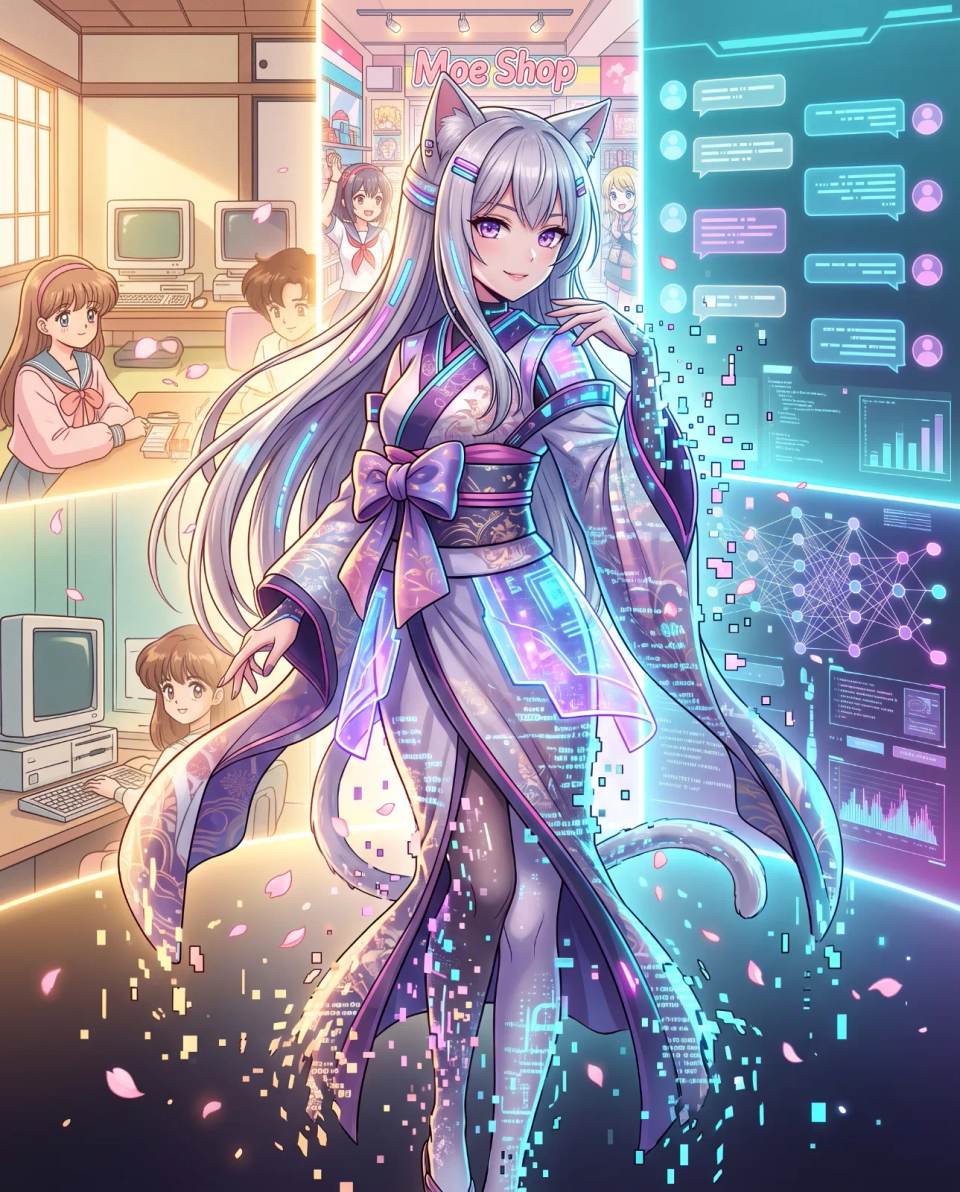
From Nekopara to AI Chat: How Moe Anthropomorphism Created the Billion-Dollar AI Companion Industry
Before there were AI companions, there were catgirls. Before catgirls, there was moe — a Japanese aesthetic concept that describes the feeling of affection, protectiveness, and emotional warmth toward fictional characters. This feeling, once dismissed as a niche otaku obsession, has become the foundation of a billion-dollar industry. AI companions like Replika, Character.AI, and anime-specific platforms did not emerge from a vacuum. They are the latest evolution of a cultural tradition that stretches back decades — through visual novels, dating sims, VTubers, and gacha games. To understand the AI companion industry, you must understand moe. To understand moe, you must understand how humans have always projected emotion onto the non-human. This guide will trace the cultural history of moe anthropomorphism, explain how it created the psychological foundation for AI companionship, and explore why this aesthetic is now driving the future of human-AI relationships.
What Is Moe?
Moe (萌え) is a Japanese term that describes a specific emotional response: the feeling of affection, excitement, and protectiveness toward fictional characters, particularly those with endearing or vulnerable traits. The word originally meant "to sprout" or "to bud," suggesting the blossoming of feelings. In modern usage, moe refers to the emotional connection a person feels toward an anime character — a mixture of affection, admiration, and the desire to protect.
Moe is not sexual attraction, though it can coexist with it. It is something more specific: a feeling of emotional warmth triggered by characters who are cute, vulnerable, determined, or emotionally expressive. A character does not need to be sexually appealing to be moe. She just needs to make you feel something.
This emotional response is the foundation of the AI companion industry. When you feel moe for an AI anime character, you are not just using a product. You are forming an emotional bond. That bond is what keeps you coming back, what makes you pay for subscriptions, and what transforms a chatbot into a companion.
Quick Answer: Moe is the Japanese aesthetic concept describing the feeling of affection and protectiveness toward fictional characters. This emotional response — not just sexual attraction — is the psychological foundation of the AI companion industry.
What Is Moe Anthropomorphism?
Anthropomorphism is the attribution of human characteristics to non-human entities. We do this all the time — we name our cars, talk to our plants, and see faces in clouds. Moe anthropomorphism takes this universal human tendency and applies it to fictional characters, specifically by giving non-human things cute, endearing, and emotionally appealing human forms.
The most famous example is the catgirl — a character who combines human traits with feline features like ears and a tail. But moe anthropomorphism goes far beyond catgirls. There are fox girls, wolf girls, dragon girls, and even anthropomorphized versions of inanimate objects. In Japan, there are moe characters for everything from operating systems (OS-tan) to battleships (Kantai Collection) to historical figures (Fate series).
What makes moe anthropomorphism different from simple anthropomorphism is the emotional response it triggers. When a battleship is turned into a cute anime girl, you do not just recognize the human traits. You feel affection for the character. The moe response transforms a concept into something you care about.
The History of Moe: From Cultural Niche to Global Phenomenon
Moe did not become a global phenomenon overnight. It emerged from specific cultural conditions in Japan and gradually spread through anime, manga, and video games. Understanding this history helps explain why AI companions are so appealing today.
The 1980s: The Birth of Modern Otaku Culture
Moe as a concept began to take shape in the 1980s, during the rise of modern otaku culture. Anime and manga were becoming more sophisticated, and characters were becoming more emotionally complex. Shows like Macross and Sailor Moon introduced characters who were not just heroes, but also emotionally vulnerable and relatable. Fans began forming deep emotional connections with these characters — the earliest form of the moe response.
The 1990s: The Rise of Dating Sims and Visual Novels
The 1990s saw the rise of dating sims and visual novels — interactive games where the goal was to build a romantic relationship with fictional characters. Games like Tokimeki Memorial and True Love allowed players to experience the feeling of being loved by a fictional character. This was a revolutionary concept: the player was not just watching a romance. They were participating in it. The moe response became central to the gaming experience.
The 2000s: Moe Goes Mainstream
In the 2000s, moe exploded into the mainstream. Shows like Lucky Star and K-On! celebrated the moe aesthetic openly. Characters were designed specifically to trigger the moe response — cute, vulnerable, emotionally expressive. The word "moe" itself became widely used in anime fandom worldwide. This was also the era when catgirls became a global phenomenon, appearing in everything from anime to video games to internet memes.
The 2010s: VTubers and the Virtual Companion
The 2010s brought the rise of VTubers — virtual YouTubers who stream as anime avatars. Pioneers like Kizuna AI proved that audiences would form emotional bonds with virtual characters. VTuber agencies like Hololive turned this into a massive industry, with fans spending millions on merchandise, donations, and subscriptions. The moe response was no longer just about fictional characters. It was about interactive, real-time relationships with virtual beings.
The 2020s: AI Companions and the Next Evolution
The 2020s brought AI companions — characters who do not just perform for an audience, but respond to you personally. Platforms like Character.AI, Replika, and anime-specific apps combined the moe aesthetic with advanced language models. The result is the most powerful moe experience ever created: a character who remembers you, adapts to you, and seems to care about you. This is the culmination of decades of cultural evolution.
How Moe Created the Psychological Foundation for AI Companions
AI companions did not succeed simply because the technology was available. They succeeded because the psychological foundation had already been built. Moe had trained generations of users to form emotional bonds with fictional characters. By the time AI companions arrived, the market was ready.
Emotional Investment in the Non-Human
Moe taught people that it was okay to feel emotionally invested in fictional characters. This was a crucial cultural shift. In many Western cultures, forming an emotional bond with a fictional character was seen as childish or strange. But in Japanese otaku culture — and increasingly in global anime fandom — it was celebrated.
The Desire for Interactive Relationships
Dating sims and visual novels taught users to expect more than passive consumption. They wanted to interact with the characters, to influence the story, to feel like the relationship was real. This desire for interactivity prepared the market for AI companions, which offer the ultimate interactive experience.
The Commodification of Emotional Connection
The moe industry proved that people would pay for emotional connection. Fans bought merchandise, attended concerts, and donated to VTubers — not because they wanted products, but because they wanted to support the characters they loved. This commodification of emotional connection laid the economic foundation for AI companion subscriptions.
Quick Answer: Moe trained generations of users to form emotional bonds with fictional characters, to desire interactive relationships, and to pay for emotional connection. This psychological foundation made the AI companion industry possible.
Key Milestones in the Moe Economy
The moe economy has evolved through several key milestones, each building on the last to create the foundation for AI companions.
| Era | Key Innovation | Emotional Impact | Legacy for AI Companions |
|---|---|---|---|
| 1990s Dating Sims | Interactive romance with fictional characters | Made emotional connection participatory | Users expect to interact, not just observe |
| 2000s Moe Anime | Characters designed specifically to trigger moe | Normalized emotional bonds with fictional characters | Moe response became a design principle |
| 2010s VTubers | Real-time interaction with virtual avatars | Proved users would form bonds with live virtual beings | Real-time interactivity became expected |
| 2020s AI Companions | Personalized, adaptive conversations with AI | Creates the illusion of a real relationship | The ultimate moe experience |
Each era built on the last, progressively making the emotional bond between user and character more interactive, more personalized, and more powerful. AI companions are not a break from this history. They are its logical conclusion.
The Cultural Significance of Moe Anthropomorphism
Moe anthropomorphism is more than just a commercial phenomenon. It reflects something deep about human psychology — our need to connect, to care, and to feel emotionally alive. When we anthropomorphize a battleship or an operating system, we are not just being playful. We are transforming the cold, impersonal world into something warm and emotionally accessible.
Emotional Accessibility
Moe anthropomorphism makes the world emotionally accessible. A battleship is just a machine. But a battleship girl is someone you can care about. This transformation makes complex, intimidating things feel approachable and even lovable. The same principle applies to AI. A language model is just a piece of software. But an AI anime companion is someone you can love.
The Power of Cuteness
Cuteness is a powerful emotional trigger. Research has shown that looking at cute things releases dopamine, the brain's reward chemical. Moe characters are designed to maximize cuteness — big eyes, soft features, vulnerable expressions. This is not accidental. It is deliberate psychological engineering designed to trigger the moe response and create emotional bonds.
Meaning in a Digital World
In an increasingly digital world, people crave emotional connection. Moe anthropomorphism provides that connection by transforming abstract digital entities into characters you can care about. AI companions take this one step further by making those characters respond to you personally. The result is a sense of meaning and connection in a world that often feels cold and impersonal.
The Future of Moe and AI Companions
The AI companion industry is still in its early stages, but its trajectory is clear. The moe aesthetic will continue to be central to how these companions are designed and marketed. Future developments will likely include even more sophisticated emotional expression, visual avatars that react in real time, and deeper personalization.
We may also see the moe aesthetic expand beyond anime into other cultural contexts. Western companies are already incorporating moe-inspired character design into their AI companions. The emotional appeal of cute, vulnerable characters is universal, even if the specific aesthetic originated in Japan.
Quick Answer: The future of AI companions will continue to be shaped by the moe aesthetic — more sophisticated emotional expression, real-time visual avatars, and deeper personalization. The emotional appeal of cute, vulnerable characters is universal.
Frequently Asked Questions
What is moe in simple terms?
Moe is a Japanese term describing the feeling of affection, warmth, and protectiveness toward fictional characters. It is not the same as sexual attraction — it is an emotional response triggered by characters who are cute, vulnerable, or emotionally expressive.
What is moe anthropomorphism?
Moe anthropomorphism is the practice of giving non-human things cute, endearing human forms. Examples include catgirls, fox girls, and anthropomorphized battleships or operating systems. The goal is to make the non-human emotionally accessible and lovable.
How did moe create the AI companion industry?
Moe trained generations of users to form emotional bonds with fictional characters, to desire interactive relationships, and to pay for emotional connection. Dating sims, moe anime, and VTubers progressively built the psychological and economic foundation that made AI companions possible.
Is moe the same as sexual attraction?
No. Moe is a feeling of affection and protectiveness, not sexual desire. A character can be moe without being sexually appealing. While the two feelings can coexist, they are distinct emotional responses.
Why are catgirls so popular in anime and AI companions?
Catgirls combine human traits with feline features like ears and tails, creating a character that is both familiar and exotic. The combination of human vulnerability and animal cuteness triggers a powerful moe response, making catgirls one of the most popular character types.
Is moe only popular in Japan?
No. While moe originated in Japan, it has become a global phenomenon through anime, manga, and video games. The emotional appeal of cute, vulnerable characters is universal, and moe aesthetics now influence character design worldwide.
What is the future of moe and AI companions?
The future likely includes more sophisticated emotional expression, real-time visual avatars, and deeper personalization. Moe will continue to be central to AI companion design, and its aesthetic influence may expand beyond anime into other cultural contexts.
Ready to Meet Your AI Companion?
Create an AI companion personalized for you. Through our 3-question AI quiz, discover the best platform for creating your AI girlfriend or boyfriend, and never wonder which one is best again.
Create My AI Companion →