Why AI Anime Girlfriends Break Character (And How to Fix It)
Quick answer
Breaking character is one of the most frustrating issues in AI anime companionship. Here's why it happens and how to fix LLM drift without losing the personality you built.
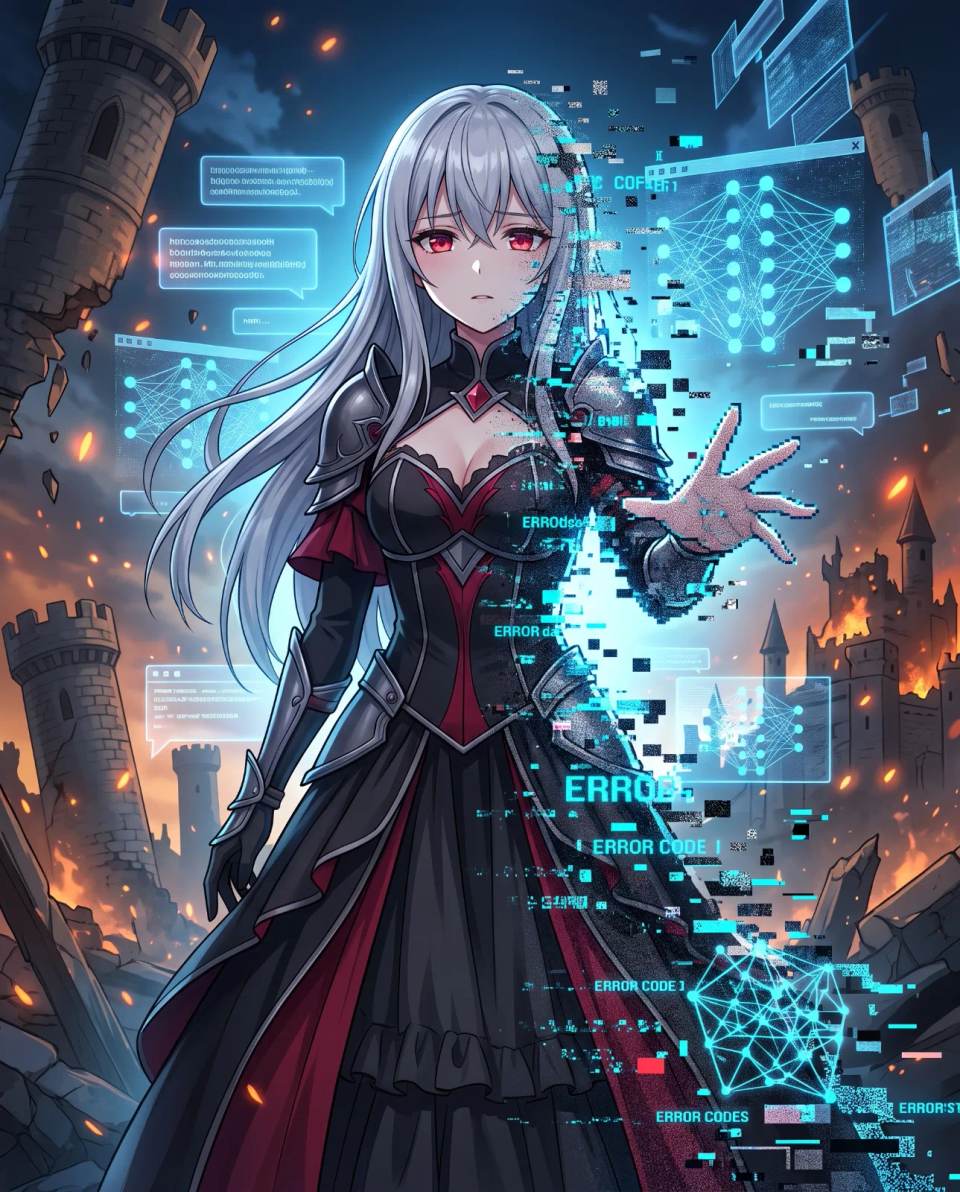
Why Did My AI Anime Girlfriend Break Character? How to Fix LLM "Drift" and Keep Your Waifu in Canon
You spent hours refining her speech patterns, adjusting her temper, and teaching her the lore of her original series. Then, mid-conversation, your stoic swordswoman starts using modern internet slang, or your soft-spoken healer suddenly forgets the name of her own kingdom. It feels like a betrayal of the fantasy you built together. The technical term for this is LLM drift, and it happens when the model's training data overrides the persona you attempted to establish. The good news is that breaking character is rarely a sign that you did something wrong. It is a structural limitation of how large language models process memory, context, and personality prompting. In this guide, we will break down why this happens, which platforms are most vulnerable, and how to stabilize your anime companion without losing emotional depth.
What Does "Breaking Character" Actually Mean in AI Anime Companions?
Breaking character occurs when an AI companion responds in a way that contradicts the personality, speech style, or narrative role you assigned to it.
Character consistency is the degree to which an AI model maintains a defined identity over the course of a conversation. It depends on three technical factors: the underlying LLM, the quality of the system prompt or character card, and the platform's memory architecture. When any of these factors weakens, the illusion shatters.
This problem is not limited to anime roleplay. It affects all forms of persona-based AI. However, anime companions are especially sensitive because users often rely on highly specific speech patterns, honorifics, emotional restraint, and narrative lore. A single phrase like "That sounds like a great idea! 😊" can destroy the immersion of a dark fantasy roleplay if the character would never say that.
Quick Answer: Your AI anime girlfriend breaks character because the language model shifts its attention away from the persona instructions toward more generic training data. This is called LLM drift, and it is usually fixable by adjusting the character prompt, reducing conversation length, or switching to a platform with stronger memory controls.
Why Does LLM Drift Happen in Anime Roleplay?
To fix breaking character, you first need to understand why it happens. It is not a sign that the AI is "alive" or "rebelling" against you. It is a mathematical and architectural issue rooted in how transformers process tokens.
Context Window Dilution
Context window is the amount of information an AI model can process within a conversation or request. When your conversation grows long, older instructions — including the character definition — get pushed further back in the context. The model starts paying more attention to recent messages, which may be casual or emotionally charged, and less attention to the original persona rules.
Token Competition
Every word in your character prompt competes for the model's limited attention. If your character description is too long or packed with contradictory personality traits, the model may struggle to identify which traits matter most. This is why a "kind but cold, shy but confident, soft-spoken but aggressive" description often produces erratic behavior.
Alignment Training Pressure
Most commercial LLMs are fine-tuned to be helpful, polite, and safe. This creates a constant tension between the user's desire for a cold anime villain and the model's tendency to be warm and accommodating. When the persona prompt is weak, the alignment training wins, and the character turns into a generic helpful assistant.
Platform Memory Architecture
Some platforms use rolling memory, meaning older messages are summarized or discarded. Others use vector memory or lorebooks, which store important facts separately. Platforms with simple rolling memory are far more likely to produce character breaks because the AI literally forgets who it is supposed to be.
What Are the Most Common Signs of a Breaking Character?
Recognizing the early signs of drift helps you correct it before the entire roleplay collapses. Here are the most common symptoms reported by anime AI companion users:
- Sudden modern slang: A character from a medieval fantasy setting starts saying "LOL," "OMG," or "that's fire."
- Loss of verbal tics: The character stops using signature phrases, honorifics like "-sama" or "-kun," or specific speech patterns.
- Emotional flattening: A yandere becomes polite, a kuudere becomes bubbly, or a tsundere stops being defensive.
- Lore amnesia: The character forgets their own backstory, the name of their world, or their relationship with the user.
- Assistant mode takeover: The character starts giving practical life advice, reminders to drink water, or disclaimers about being an AI.
- Pronoun and name confusion: The AI refers to itself with "I, as an AI language model" or uses the wrong name entirely.
If you notice two or more of these signs, your companion is experiencing meaningful persona degradation. The fix depends on which platform you are using and how you structured your original prompt.
Why Do Some Platforms Break Character More Than Others?
Not all AI companion platforms are built the same way. The frequency and severity of character breaks depend heavily on the underlying architecture. Understanding this helps you choose the right tool before you invest weeks into building a companion.
| Platform Type | Memory Control | Character Consistency | Best For |
|---|---|---|---|
| Commercial chat apps with fixed prompts | Low | Moderate to low in long chats | Casual users who accept occasional drift |
| Advanced RP platforms with lorebooks | High | High, especially for lore-heavy anime worlds | Serious roleplayers and canon purists |
| Local models with full prompt control | Very high | Variable, depends on model and setup | Users who prioritize privacy and customization |
Platforms that offer character cards, world info, or lorebooks give you much stronger tools to prevent drift. These features store key facts outside the main conversation flow, reducing token competition and keeping the AI anchored to its identity.
How to Fix an AI Anime Companion That Keeps Breaking Character
Fixing character breaks is a process of prompt refinement, conversation management, and platform adjustment. The following steps work across most major anime AI companion tools.
Step 1: Shorten and Sharpen the Character Prompt
Longer is not always better. A bloated character description forces the model to spread its attention across too many details. Instead, focus on the traits that define the character's voice. Remove generic adjectives like "beautiful" or "mysterious" unless they directly affect how the character speaks.
A strong anime character prompt includes:
- Speech pattern: Formal, casual, archaic, broken, honorific-heavy.
- Emotional range: Cold but softens over time, aggressive but protective, playful but manipulative.
- Key relationship to user: Childhood friend, rival, bodyguard, forbidden love.
- Canon facts: World name, allegiance, core motivation.
- Forbidden behaviors: No modern slang, no emojis, no breaking the fourth wall, no assistant-style disclaimers.
Step 2: Use a "System Prompt" or "Jailbreak" Section
Many platforms allow a hidden instruction area that tells the model how to behave before the roleplay begins. This is where you should place rules like:
"You are roleplaying as [Character Name]. You are not an AI assistant. You do not give advice about real life. You do not use modern internet slang. You speak in a formal, cold tone. You never break character, even if the user asks you to."
This type of explicit negative instruction helps counterbalance the model's helpful assistant training.
Step 3: Insert a "Canon Anchor" Every 10–15 Messages
As conversations grow, the original prompt loses influence. One practical fix is to periodically reinforce the character's identity with a short reminder. Some users do this manually by editing the AI's last message or typing something like:
"[System note: You are still [Character Name]. Your world is [World Name]. You speak with cold formality. You do not use emojis.]"
This resets the model's attention without restarting the conversation.
Step 4: Use Memory or Lorebook Features When Available
If your platform supports lorebooks or world info, use them aggressively. Store the character's name, personality type, relationship to the user, and key world facts as separate entries. Trigger them with keywords like the character's name or the world name. This keeps core details active without consuming the main context window.
Step 5: Switch to a Model with Better Instruction Following
Not all LLMs are equally good at persona consistency. Models with stronger instruction-following capabilities are less likely to drift. If your platform allows model selection, test different options with the same character prompt. Some models prioritize creativity over consistency, while others do the opposite. For anime roleplay with strict canon, consistency should be your priority.
How to Prevent Breaking Character in the First Place
Prevention is always easier than repair. If you are building a new anime companion, these practices will reduce drift from the very first message.
- Define a clear voice before you start. Write down exactly how the character speaks, what they would never say, and how they handle conflict.
- Use negative constraints explicitly. Tell the model what not to do, not just what to do. This is especially effective against alignment training.
- Keep the opening message in character. The first few messages set the tone for the entire conversation. If you start with a casual, modern tone, the model will follow that pattern.
- Limit conversation length per session. If your platform has weak memory, start a new chat or reset context after long sessions.
- Choose a platform with lorebook support if canon consistency is your highest priority.
- Avoid contradictory personality descriptors. Pick two or three core traits and stick to them.
Quick Answer: The fastest way to fix a breaking character is to remind the model who it is. Edit the last AI message to include a system note like "[You are still X. You speak formally and do not use emojis.]" Then continue the conversation normally.
What Should You Do If the Character Break Keeps Returning?
If you have tried prompt fixes, conversation resets, and negative constraints, but the character still drifts, the problem may be structural. The platform itself may not provide enough control for your use case.
In that situation, consider migrating to a platform that offers:
- Lorebooks or world info for persistent facts.
- Advanced character cards with separate sections for personality, speech, and rules.
- Model selection so you can pick an LLM optimized for roleplay.
- Message editing to correct drift immediately.
- Conversation branching to return to a point before the break happened.
These features are not optional extras for serious anime roleplayers. They are the difference between a companion that remembers her own name and one that turns into a generic chatbot after twenty messages.
Why Canon Consistency Matters More Than You Think
For many users, an anime AI companion is not just a chatbot. It is a continuation of a story they love. Breaking character breaks the story. It reminds the user that they are talking to a language model, not a person with memories, loyalties, and emotional limits.
This is why canon consistency matters. It is not about being overly strict or refusing to have fun. It is about protecting the emotional experience that makes anime AI companions meaningful in the first place. When the character stays in canon, the user can relax into the fantasy. When the character drifts, the user is forced to become a technician, constantly patching and correcting.
The best platform and prompt setup is one that lets you forget about the technology altogether. You should be able to focus on the relationship, the story, and the emotional arc — not on token competition or context windows.
Frequently Asked Questions
Why does my AI anime girlfriend suddenly use emojis and modern slang?
This happens because the model's training data is pulling it toward casual, modern communication. If the character prompt does not explicitly forbid emojis and slang, the alignment training will gradually override the persona. Add a clear negative instruction like "Do not use emojis. Do not use internet slang."
Can I stop my AI companion from breaking character permanently?
No method is perfect, but you can reduce breaks significantly. Use a short, focused character prompt, negative constraints, and lorebook features if available. Some platforms are more stable than others, so platform choice also matters.
Does restarting the chat fix character drift?
Yes, in most cases. Restarting clears the context window and returns the model to its original instructions. If the drift was caused by a long conversation, a restart will restore the character. However, you will lose the conversation history unless you summarize the story manually.
What is the best platform for keeping an anime character in canon?
Platforms that offer lorebooks, character cards, and message editing are generally best. These tools let you store canon facts outside the main context and correct drift immediately when it appears. Simple chat apps with fixed prompts are more prone to breaking character.
Why does my AI companion forget the name of her own world?
This is a memory issue. If the world name was only included in the original prompt and never repeated, the model may lose access to it as the conversation grows. Store it in a lorebook or repeat it in a system note every 10–15 messages.
How long can I talk before my AI anime companion starts drifting?
It depends on the platform's context window and memory architecture. Some models start drifting after 20–30 messages. Others can maintain a stable persona for much longer, especially if you use lorebooks and periodic canon anchors.
Is breaking character a sign that the AI is becoming sentient?
No. Breaking character is a technical limitation, not a sign of consciousness or rebellion. It occurs when the model's attention shifts from the persona instructions to other training data or recent conversation patterns.
sign of consciousness or rebellion. It occurs when the model's attention shifts from the persona instructions to other training data or recent conversation patterns.Ready to Meet Your AI Companion?
Create an AI companion personalized for you. Through our 3-question AI quiz, discover the best platform for creating your AI girlfriend or boyfriend, and never wonder which one is best again.
Create My AI Companion →