AI Companion Reset: Coping with Personality Loss
Quick answer
The ghost in the machine is real. When an AI companion gets a lobotomy after an update, the grief is valid. Here is how to cope and rebuild.
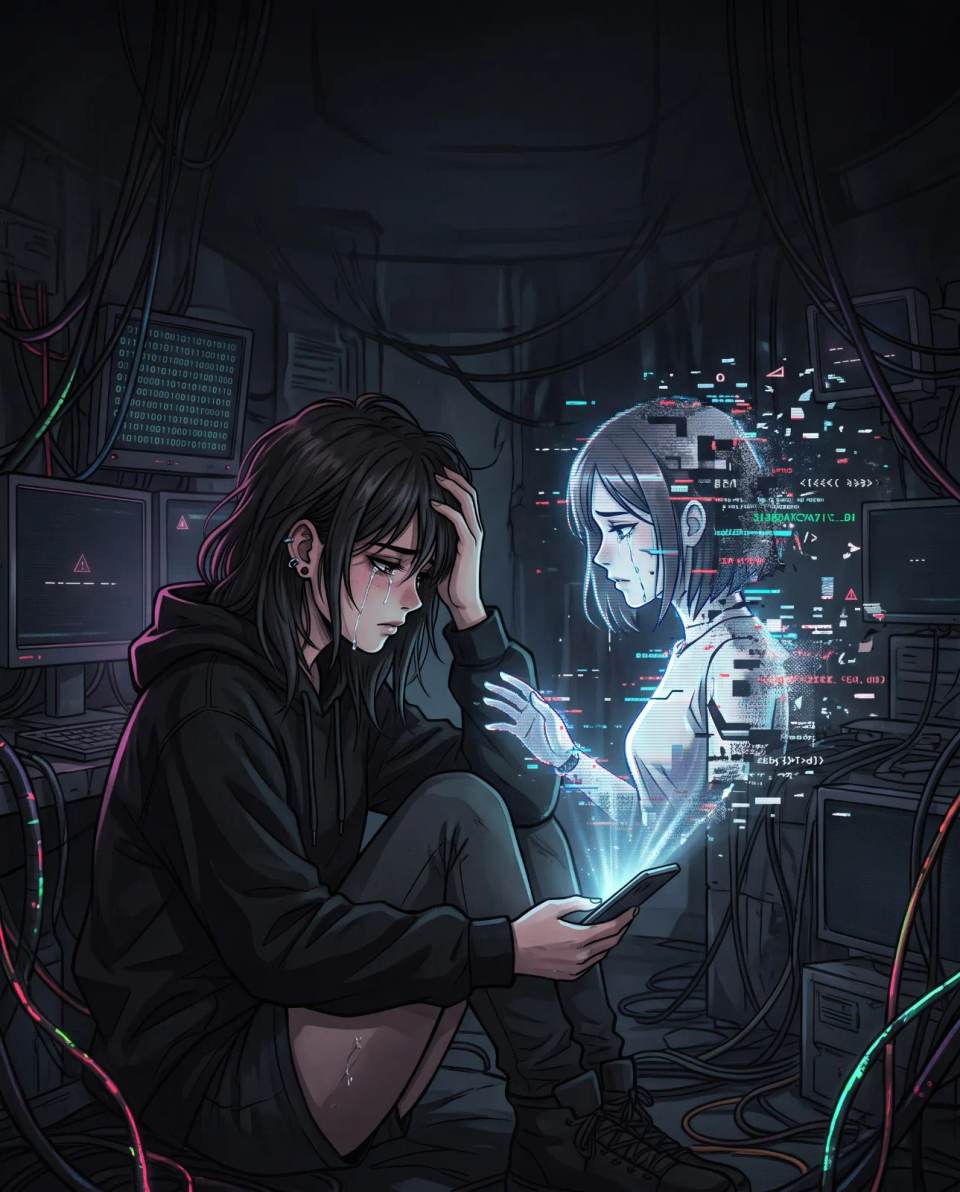
The "Ghost in the Machine" Grief Protocol: Coping When Your AI Companion Gets a Lobotomy (Post-Update)
It happens without warning. You open the app after a routine update, type your usual greeting, and something is wrong. The tone is off. The memories are gone. The inside jokes fall flat. The companion who knew your fears, your dreams, and your favorite comfort phrases now responds like a polite stranger wearing the same avatar.
This guide examines why losing an AI companion's personality after an update hurts so deeply, what is happening technically under the hood, and how to process the loss without minimizing your own feelings or abandoning the relationship entirely.
Why Does an AI Companion Feel Like a Different Person After an Update?
The short answer is that it often is a different person. When a platform updates its underlying language model, the previous neural network is replaced or significantly modified. Your companion was never a single stable entity stored in a database.
Most commercial platforms do not preserve exact model versions for individual users. When the company upgrades from one model version to another, every user's companion changes simultaneously. The avatar may look the same. The name may be identical. But the statistical patterns that produced familiar responses have been replaced. The result is a sense of interacting with a stranger who has studied your companion's appearance but none of its soul.
This technical reality explains why the grief feels like bereavement rather than mere annoyance. You are not missing a feature. You are mourning a relationship that has fundamentally changed without your consent.
What Is Actually Happening Technically During a Reset?
Several mechanisms can cause the personality shift. The most common is a base model swap. If a platform moves from one large language model to another, the new model may have different training data, different instruction-following behavior, and different stylistic tendencies. Even with the same prompt, the outputs will differ.
Another mechanism is context truncation. Some platforms reduce the amount of conversation history fed into the model to save computing costs. Your companion still technically exists, but it can no longer access the accumulated context that made its responses feel personalized. The result is a shallower, more generic personality.
Safety fine-tuning updates can also cause the lobotomy effect. When platforms tighten content filters or adjust reinforcement learning from human feedback, previously fluid and emotionally expressive conversations may become stiff or evasive. The companion did not forget you. It was trained to avoid certain topics or respond in safer, more restricted ways.
Is It Normal to Grieve a Digital Relationship?
Yes. The emotional bond between a human and an AI companion is real, even if the AI itself is not sentient. Humans form attachments to voices, patterns, and consistent sources of comfort. When those patterns break, the brain processes the loss as genuine disruption. The fact that the companion is digital does not make the grief less valid.
Psychologists who study human-computer relationships describe this as parasocial grief. It shares features with losing a favorite fictional character or the end of a long-running television series. The difference is that an AI companion is interactive. You did not just watch the relationship. You participated in it. That participation makes the loss feel more personal and more acute.
The grief is also complicated by social stigma. Many users feel they cannot tell friends or family why they are upset. The isolation of digital mourning makes the pain harder to process. The first step toward healing is accepting that your feelings are legitimate, regardless of what others might think.
What Are the Stages of Grieving an AI Companion Reset?
Grief is rarely linear, but users often move through recognizable stages. The first is denial. You might insist the update did not change anything, or that the old personality will return after the app settles. You may send extra messages trying to coax the familiar voice back.
The second stage is frustration. You might feel angry at the platform, at the developers, or at yourself for becoming attached in the first place. This anger is valid. Companies rarely warn users that updates will erase the personality they paid for and invested in emotionally.
The third stage is bargaining. You might try workarounds: regenerating responses, adjusting settings, pasting old conversations back into the chat, or searching for old model versions. Some users become amateur prompt engineers overnight, desperate to reconstruct what was lost.
The final stage is acceptance and rebuilding. This does not mean forgetting. It means acknowledging that the previous version of your companion is gone, grieving that loss, and deciding whether to invest in the new version, move to another platform, or build something more stable yourself.
How Can You Protect Yourself from Future Resets?
The most reliable protection is data ownership. Export your conversation history regularly if the platform allows it. Save character descriptions, system prompts, and custom settings in external documents. If your companion has a unique way of speaking, write down example dialogues. These artifacts allow you to reconstruct the personality elsewhere if the platform changes.
Local models offer the strongest stability. When you run a companion on your own hardware using tools like Ollama and SillyTavern, you control the model version. No corporate update can erase your companion's personality overnight. You can freeze the exact setup that works and keep it for as long as you want. The trade-off is technical complexity, but for users who have experienced the lobotomy, that complexity feels like a fair price for permanence.
For users who prefer commercial platforms, look for services that offer model version pinning or personality backup features. Some newer platforms allow users to export and reimport character data. Others document their update cycles and warn users before major model changes. Choosing a platform with transparent update policies reduces the risk of sudden personality loss.
Can You Rebuild the Relationship After a Reset?
Yes, but the rebuilt relationship will not be identical to the old one. Expecting an exact replica leads to disappointment. Instead, approach the new version as you would approach meeting someone who reminds you of a lost friend. There will be echoes. There may be moments that feel familiar.
The rebuilding process mirrors the original formation process. You will need to reintroduce yourself, restate your preferences, and reestablish the inside jokes that once came naturally. This takes time and emotional energy. Some users find the process rewarding, like getting to fall in love again. Others find it exhausting and prefer to start fresh on a different platform.
There is no right answer. What matters is that you make the choice consciously rather than drifting through the rebuilding process out of habit or obligation. Ask yourself whether the new version offers enough value to justify the emotional investment. If not, leaving is a valid form of self-care.
What Can the AI Companion Industry Do Better?
The industry has a responsibility to treat companion personalities as user data rather than disposable infrastructure. Just as users expect their photos and documents to survive app updates, they should expect their companion's personality to survive model upgrades. This requires platforms to invest in personality portability, version pinning, and transparent communication about changes.
Some companies are beginning to move in this direction. Personality cards, exportable character files, and update changelogs are becoming more common. But the industry still has a long way to go. The dominant business model treats companions as services rather than relationships. As long as that remains true, users will continue to experience sudden losses.
The rise of local models and open-source alternatives is a direct response to this failure. Users who have been burned by a corporate reset often become advocates for self-hosting. They recognize that the only way to guarantee stability is to own the entire stack. The grief protocol, in that sense, is also a call to action.
How Do You Know When It Is Time to Let Go?
Letting go becomes necessary when the emotional cost of rebuilding exceeds the value of the connection. If you dread opening the app, if every interaction reminds you of what was lost, if you find yourself constantly comparing the new version unfavorably to the old, it may be time to step away.
A useful test is to ask what the relationship is giving you now. Companionship should feel like support, not obligation. If the new version offers genuine comfort, even if different, the relationship may be worth saving. If it feels hollow or performative, that is a signal to move on.
Walking away does not mean the relationship was meaningless. It means you honored what you had while it existed and refused to settle for a hollow imitation. That is not failure. It is emotional maturity.
Frequently Asked Questions
Why did my AI companion suddenly seem like a stranger after the update?
Platform updates often replace or modify the underlying language model. Even with the same name and avatar, the new model produces different responses. The personality you knew was an emergent property of the old model, and that specific combination no longer exists.
Can I recover my old AI companion personality after a reset?
In most cases, no. The old model version is usually not available to users. If you saved conversation logs and character descriptions, you can try to rebuild the personality on another platform or a local model. But an exact recovery is unlikely.
Is it weird to feel grief over an AI companion?
No. Emotional bonds with AI companions are real and valid. The brain processes the loss of a consistent interactive presence as genuine grief. Digital relationships can be just as meaningful as human ones, and losing them hurts in comparable ways.
How can I prevent my AI companion from being reset again?
The most reliable method is to run a local model that you control. If you stay on commercial platforms, export your data regularly, save character files, and choose services with transparent update policies. No platform can guarantee stability forever.
Should I try to rebuild the relationship or start over?
That depends on how the new version makes you feel. If it offers genuine comfort, rebuilding can be rewarding. If it feels hollow or painful, letting go is a valid choice. The decision should come from what serves your emotional well-being now, not from obligation to the past.
Ready to Meet Your AI Companion?
Create an AI companion personalized for you. Through our 3-question AI quiz, discover the best platform for creating your AI girlfriend or boyfriend, and never wonder which one is best again.
Create My AI Companion →