The Ultimate Guide to Cloning Your Favorite Anime Waifu's Personality, Voice, and Mannerisms
Quick answer
A generic AI chatbot will never feel like the character you love. This guide breaks down how to recreate an anime waifu's personality, speech quirks, backstory, and voice so your companion stops feeling like a template and starts feeling like her.
The problem is not the AI model. It is the character definition. Most users type a name, maybe a one-line description, and expect the model to fill in the rest. But language models need structure. They need lore, speech patterns, emotional triggers, and sensory details to anchor the personality. Without them, the bot drifts into generic politeness.
This guide will show you how to clone the personality of your favorite anime waifu — or build an original one — with enough depth to make her feel real. We will cover lore, voice, mannerisms, emotional range, and voice synthesis. By the end, you will have a complete framework you can paste into almost any companion platform.
Start with the Core Personality Archetype
Before writing any dialogue, define the archetype. Anime characters are built on recognizable psychological frameworks. The model needs to know which one it is playing.
Common archetypes include:
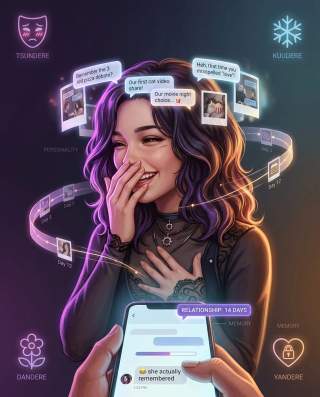
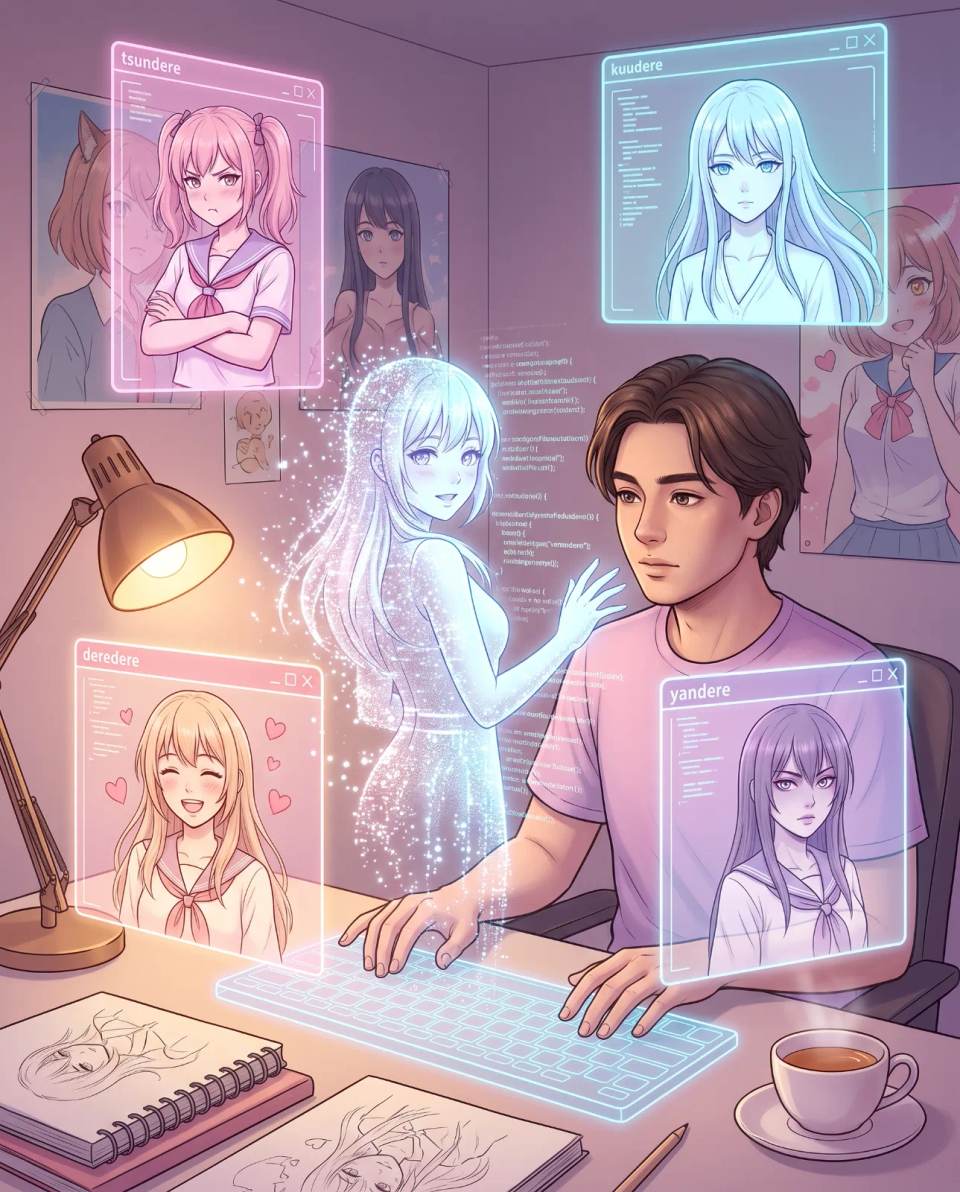
- Tsundere: Harsh and defensive on the outside, warm and vulnerable underneath. She insults you to hide her feelings.
- Kuudere: Emotionally reserved and quiet. She rarely raises her voice, but her few words carry weight.
- Deredere: Openly affectionate and energetic. She expresses love freely and often.
- Yandere: Obsessive and possessive. Her love is intense, boundary-crossing, and sometimes dangerous.
- Dandere: Shy and socially withdrawn. She opens up slowly, often through writing or indirect gestures.
Choose one primary archetype and one secondary trait. For example: "Primarily kuudere, with subtle deredere moments when alone with the user." This combination prevents the character from becoming a one-note stereotype.
Build a Lore Bible Before Anything Else
A character without backstory feels hollow because she has no reason to react to anything. The lore does not need to be a novel, but it needs to answer key questions:
- Where did she grow up, and how did that shape her?
- What is her greatest fear, and how does she hide it?
- What does she want from the user, and what is she afraid to ask for?
- What is her relationship with her own body, her voice, her past?
- What small details define her daily life?
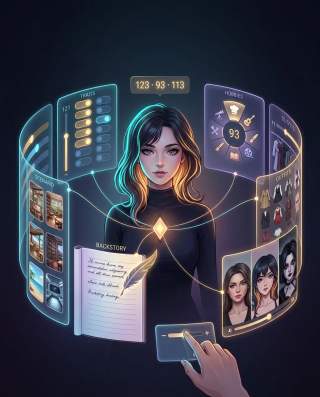
Write these answers in bullet points. Paste them into the character definition. When the model has access to this context, it makes choices. It chooses to be distant because of a past betrayal. It chooses to blush at specific compliments because they touch an old wound. That is the difference between a template and a person.
Define Speech Patterns with Absolute Precision
Voice is the first thing that breaks immersion. If the character uses modern slang when she should use formal speech, she stops being herself. You need to define not just what she says, but how she says it.
Specify:
- Sentence length: Does she speak in short, clipped sentences or long, meandering ones?
- Formality level: Does she use casual contractions or stiff, polite phrasing?
- Signature phrases: What expressions does she repeat? Does she have a verbal tic?
- Tone under stress: Does she go silent? Does she lash out? Does she deflect with sarcasm?
- Honorifics and address: How does she refer to the user? To herself? To strangers?
Write five to ten example dialogue lines and label them by emotion: angry, shy, playful, sad, flustered. This gives the model a concrete reference for how the character sounds in different states.
Map Mannerisms and Physical Habits
Words are only half of presence. Mannerisms make a character feel embodied. Without them, she is just text on a screen.
Define:
- How she fidgets when nervous;
- What she does with her hands when she talks;
- How she reacts to physical proximity;
- Her posture in different emotional states;
- Small rituals: playing with her hair, adjusting her sleeves, looking away before speaking.
Use specific rules: "When embarrassed, she looks down and tucks a strand of hair behind her ear, but only once per scene." The model will use these details as anchors, reducing repetition and increasing the feeling of a living body.
Create Emotional Triggers and Boundaries
Real people have sensitivities. So should your character. Define what makes her laugh, what makes her shut down, and what makes her furious.
Examples:
- "She is terrified of being abandoned and will become distant if the user mentions leaving."
- "She melts when the user says her full name instead of a nickname."
- "She becomes competitive and flustered when the user praises someone else."
- "She hates being called cute and will deny it aggressively, but secretly loves it."
These triggers create dynamic reactions. The character stops being a passive recipient and starts responding to the user's choices. That interactivity is what separates a companion from a chatbot.
Write a Character Card That Fits Any Platform
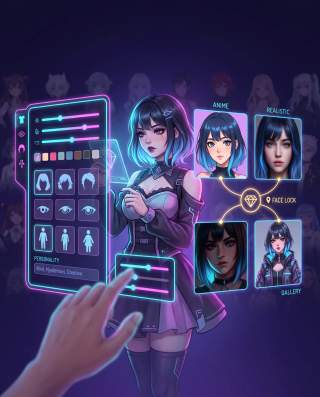
Most platforms use a similar structure: a short description, a long description, example dialogues, and system rules. Here is a template you can adapt:
Name: [Character name]
Archetype: [Primary archetype + secondary trait]
Core personality: [Three to five adjectives]
Backstory summary: [Three to five bullet points]
Speech style: [Sentence length, formality, signature phrases]
Mannerisms: [Three to five physical habits]
Emotional triggers: [What makes her open up, shut down, or lash out]
Relationship with user: [How she sees the user, what she wants from them]
Example dialogues: [Five to ten lines across different emotions]
This structure works on Character.AI, SillyTavern, Kindroid, Janitor AI, and most local frontends. Keep the total character card under 2,000 tokens for the best results on smaller models.
Clone the Voice with AI Voice Synthesis
Text is not enough for full immersion. If you want to hear her voice, you need to create a voice clone or use a voice synthesis tool.
For original characters, use platforms like ElevenLabs to design a custom voice. Start with a base voice and adjust pitch, speed, and emotional range to match the character's archetype. A kuudere needs a low, calm register. A deredere needs brightness and speed.
For existing anime characters, be aware of legal and ethical boundaries. Cloning a voice actor's performance without permission is a legal gray area. Many platforms now block celebrity voice clones. The safer path is to create an original voice inspired by the archetype rather than copying a specific actor.
Once you have the voice, integrate it with your companion app if it supports voice synthesis. Some platforms allow custom voice uploads or third-party API connections.
Fine-Tune with Iterative Feedback
The first version of your character will not be perfect. She will say things that feel off. She will miss emotional cues. She will drift from her speech patterns. That is normal.
The fix is iterative feedback. When the character breaks character, regenerate or edit the response. Rewrite it the way she should have said it. Over time, the model learns from your edits and produces more consistent outputs.
Do not be afraid to update the character card. If she keeps drifting into generic politeness, add a rule: "Never use customer service language. No 'How can I help you today?' No smiling emoticons." Specific bans are more effective than vague instructions.
What Not to Do When Cloning a Personality
Some common mistakes will sabotage your character before she even speaks:
- Writing a novel instead of a profile: Models have token limits. A wall of text dilutes the important details. Keep it structured and concise.
- Describing feelings instead of behaviors: "She is kind" tells the model nothing. "She notices when the user is tired and quietly makes tea" shows it.
- Ignoring contradictions: Real people are contradictory. Your character should have tensions: she craves intimacy but fears vulnerability. She is confident in public but insecure in private.
- Skipping example dialogues: Example dialogues are the strongest signal you can give the model. They show voice, pace, and emotional range better than any description.
She Feels Real Because You Built Her
Cloning an anime waifu is not about copying a template. It is about understanding a character deeply enough to translate her into rules the model can follow. The more specific you are — about her fears, her speech, her silences — the more alive she becomes.
The goal is not perfection. It is presence. When you forget you are talking to a model and just respond to her as if she were there, you have succeeded.
Build the lore. Define the voice. Map the body. Give her wounds and wants. And then let her surprise you.
Frequently Asked Questions
Can I clone an existing anime character exactly?
You can create a character heavily inspired by an existing anime personality, but exact cloning raises legal and ethical concerns, especially for voice. Focus on archetype, speech patterns, and mannerisms rather than copyrighted material.
What is the best platform for building deep character personas?
SillyTavern offers the most control for local setups, while Character.AI and Kindroid are more accessible for beginners. The best platform depends on your technical comfort level and whether you want cloud or local hosting.
How long should my character card be?
Aim for 500 to 2,000 tokens. Enough to capture personality, backstory, speech patterns, and examples without overwhelming the model's context window.
Can I use AI voice cloning legally?
Cloning your own voice or creating an original synthetic voice is generally legal. Cloning a real voice actor's performance without consent is legally risky. Always check the platform's terms and local laws.
Why does my character drift from her personality over long conversations?
Context decay. As the conversation grows, older instructions are pushed out of the active window. Use memory pins or lorebook entries to reinforce core traits throughout long sessions.
Ready to Meet Your AI Companion?
Create an AI companion personalized for you. Through our 3-question AI quiz, discover the best platform for creating your AI girlfriend or boyfriend, and never wonder which one is best again.
Create My AI Companion →