OurDream AI: From Emotion-Painting App to Uncensored Companion Platform
Quick answer
The OurDream AI that existed in 2025 doesn't exist anymore. The emotion-painting app with a split-screen canvas became a full uncensored AI companion platform with image, video, and voice generation. I tested both versions months apart and documented every change — including the ones nobody asked for.
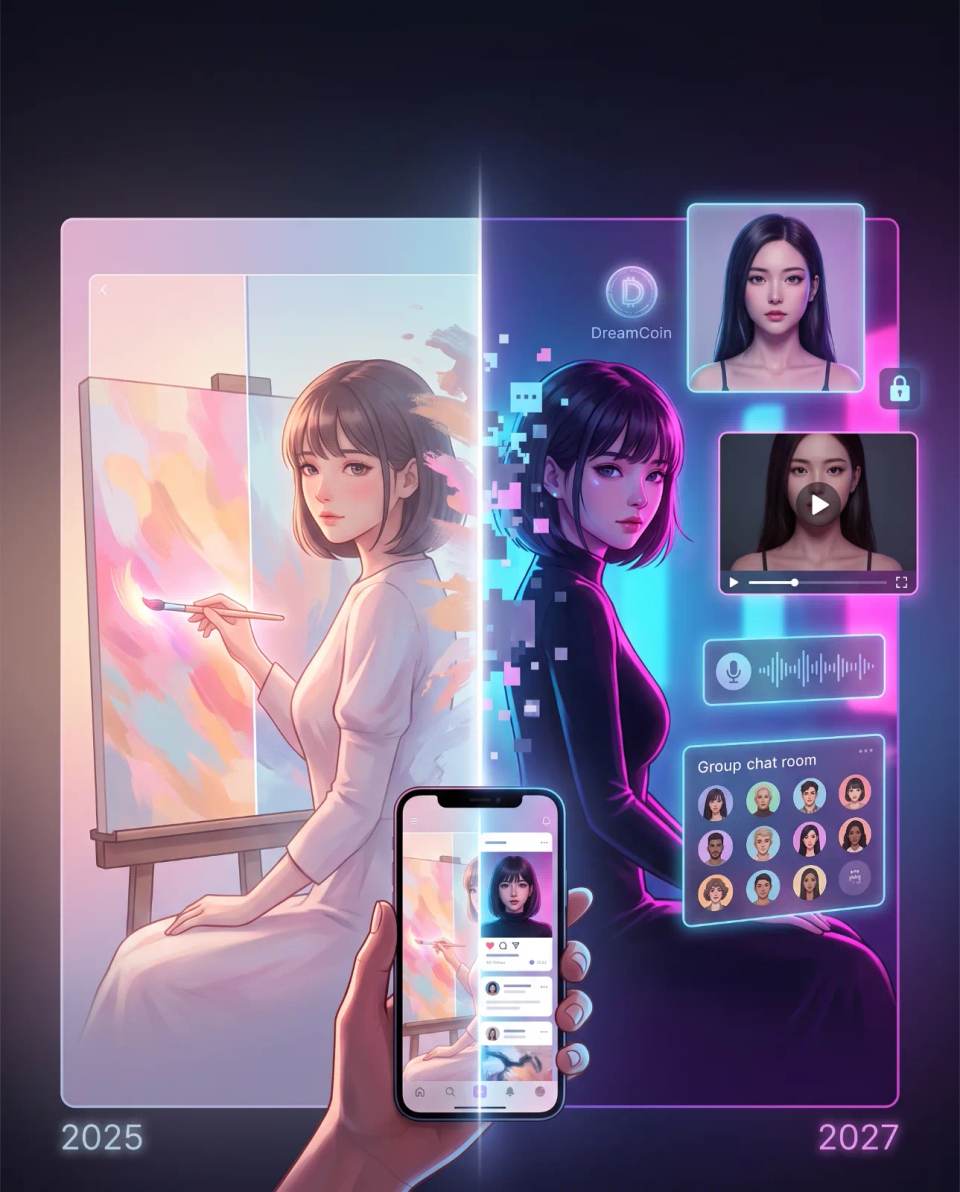
I was wrong about the phase part. When I came back in late July 2026, nearly a year after that first test, the emotional art visualizer had turned into a full uncensored AI girlfriend platform with image, video, and voice generation. By the time I tested again in 2027, the transformation was even more locked in.
This article is not a first-impression review. It's a return to a product that changed personality between visits — and the gap between what it was and what it became is the most interesting thing I have to report.
What OurDream AI was in 2025
In 2025, OurDream AI was an emotion-painting app. The interface was split into two screens: chat on one side, canvas on the other. You talked to a companion, and when you said you were anxious, she painted abstract shapes. The tone was soft, emotional, almost therapeutic. There was a real free tier with ten images per day, and the whole vibe was "art therapy you didn't ask for."
Back then, I gave it a 7 out of 10 and said I probably wouldn't keep it installed. The concept was pretty, but there wasn't enough depth to sustain continued use. The canvas was creative, but the chat was shallow. The companion painted, but she didn't remember. It was an experiment, not a relationship.
What nobody knew at that moment was that the experiment was about to be abandoned entirely.
The transformation: what changed between 2025 and 2027
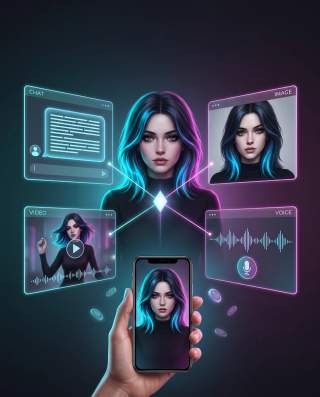
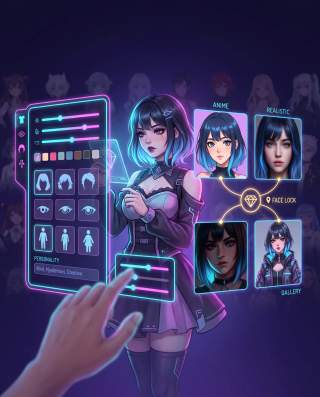
When I came back to OurDream AI nearly a year later, the canvas metaphor was gone. What I found was a character-first app: you build a partner, choose appearance and personality, then generate photorealistic images, short videos, and voice calls of that specific character. The uncensored content toggle is no longer a hidden setting — it's basically the center of the platform.
The platform now claims a user base in the millions and a public character library in the tens of millions. That says a lot about which direction the money pushed the product.
The table below summarizes the main changes between the two versions.
| Area | 2025 position | 2027 position |
|---|---|---|
| Core pitch | Emotion-painting, art therapy | Uncensored multimodal AI companion |
| Interface | Split-screen canvas | Social feed + chat + gallery |
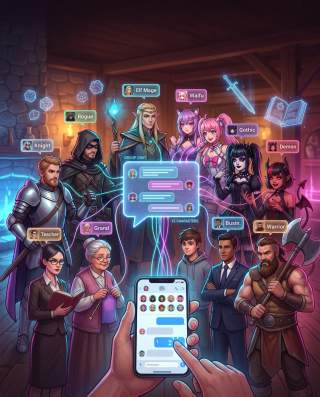
| Group chat | Nonexistent or very limited | Up to 12 simultaneous characters |
| Image generation | 10 images/day free, abstract style | HD, photorealistic + anime, face locking |
| Video generation | Didn't exist | 5 to 60 seconds, lip sync, two characters |
| Voice calling | Didn't exist | 50 DreamCoins/minute |
| Pricing model | Simple freemium | Premium + DreamCoins |
| NSFW focus | Absent | Central to the experience |
Reading that table reveals what happened: OurDream AI didn't evolve — it pivoted. It wasn't an incremental update. It was a complete product swap.
What was lost in the transformation
It's important to acknowledge what disappeared in the process. If you came for the emotional art experiment, that OurDream AI is basically dead. The canvas is gone. The "art therapy" pitch was replaced by an adult entertainment pitch. The soft, welcoming tone gave way to a more direct and explicit experience.
There's also a loss of focus. The 2025 platform was simple. You opened it, talked, saw a painting, closed it. The 2027 version has a feed, a gallery, group chat, video generation, voice calls, DreamCoins, community media packs, a character creator, contests. That's a lot. For anyone who values simplicity, the experience has become more fragmented.
One friction point documented by long-term users: the inconsistency of Lust levels. In independent testing, the adult content control system produced mixed results, with responses frequently misaligned with the configured level. That frustrates anyone who wants precise control over the experience.
And there's the financial question. The DreamCoin model, while more transparent than many competitors, introduced a cost layer that didn't exist in the original. The 2025 app had a generous free tier. The 2027 platform has a more aggressive monetization funnel.
What was gained in the transformation
Despite the losses, what OurDream AI became is substantially more capable than what it was. The technical quality improved in measurable ways.
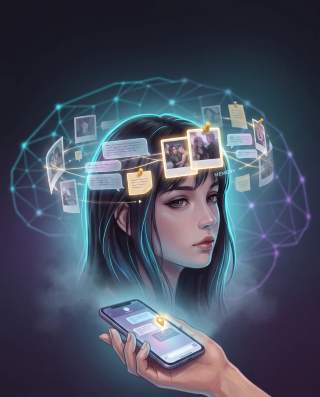
Memory is the clearest example. The 2025 app didn't retain context. You could talk for hours, and in the next session the companion forgot everything. The 2027 platform implements a "living memory" system with automatic logging and pinned memories. In independent testing, characters held details across 30+ turns and, in long sessions, remembered information from the first week after hundreds of messages.
Image generation evolved from abstract to consistent. Face locking keeps the same face recognizable across different art styles. You can generate the same character in anime and photorealistic without losing visual identity. That's a technical differentiator few competitors match.
Group chat with up to 12 simultaneous characters is a feature that didn't exist in any form in the original. For storytelling and RPG, it's a narrative engine that transforms the experience entirely.
And the feed — which one independent tester described as "a genuinely addictive social feed" — transformed character discovery. Instead of a static grid, you browse a dynamic stream with filters, likes, and creators. It's a discovery experience no competitor replicates at the same level.
What this means for long-term users
If you were an OurDream AI user in 2025 and are thinking about coming back, you need to understand you're returning to a different product. The skills you developed — learning to interact with the canvas, interpreting the paintings, using the simple chat — are no longer relevant. You'll need to learn a new system.
If you're a user who joined the platform in 2026 or 2027, you're experiencing OurDream AI in its most mature form. The current version is technically superior in every measurable aspect: memory, media generation, narrative control, community size.
One independent tester who revisited the platform after 10 months put it this way: "The technology got better, the app got bolder, and the pricing got sneakier." That's an accurate summary. Quality went up, the pitch changed, and the real cost — once you read past the sticker — requires attention.
Who the 2027 version works for (and who it doesn't)
- Works well for: users who want a complete multimodal AI companion with high-quality image, video, and voice generation. Anyone who values robust memory and narrative control. Anyone who wants to explore NSFW content without restrictions.
- Works less well for: users who came for the art therapy experiment and the soft tone of the original version. Anyone who prefers simplicity and doesn't want to manage credits. Anyone who just wants casual conversation and doesn't need the full media ecosystem.
If you fit the first profile, the current version is one of the most complete platforms available in 2027. If you fit the second, the OurDream AI you knew doesn't exist anymore — and it may never come back.
Alternatives for anyone who preferred the old version
If what you were looking for was a softer experience focused on conversation and emotional well-being, some alternatives may make more sense.
Replika maintains a stronger focus on emotional continuity and affective support, without the emphasis on adult content. Chat quality is solid, and memory — while different from OurDream's — is functional for long-term conversation.
Character.AI offers a lighter, more creative chat experience without the NSFW focus. It's suitable for anyone who wants to explore fictional characters without the aggressive monetization layer.
None of these alternatives replicates exactly what OurDream AI was in 2025. The "AI art therapy" niche remains underexplored. But for anyone looking for emotional conversation without multimodal complexity, these platforms are valid options.
How to test the current version without committing
The safest way to evaluate whether the 2027 version of OurDream AI makes sense for you is to use the free plan. It offers 55 DreamCoins on signup, roughly 50 messages per day, and access to the character creator. That's enough to build a character, generate a few images, and evaluate chat quality before any financial commitment.
Use the first messages to establish specific details and test memory. Generate an image to evaluate visual quality. If possible, explore the feed to understand the discovery experience. I did exactly this before deciding on Premium, and it was decisive in figuring out whether the platform was worth the investment.
To start now, the links below lead directly to the free signup for each profile:
→ Create a free OurDream AI account (female companion profile)
→ Create a free OurDream AI account (male companion profile)
→ Create a free OurDream AI account (trans companion profile)
These are affiliate links. If you subscribe through them, we may receive a commission at no additional cost to you.
Verdict: was the metamorphosis worth it?
It depends entirely on what you were looking for. As an adult entertainment product, the 2027 OurDream AI is one of the most complete platforms in the category. The combination of robust memory, multimodal media generation, group chat with 12 characters, and a well-executed social feed has no direct equivalent at the same price point.
As a spiritual successor to the emotion-painting app, it's a loss. The original pitch was unique, gentle, and creative. The current version is powerful but generic within the AI companion market. What sets it apart is no longer the pitch — it's the execution.
If you accept what the platform became, you'll find a solid, evolving product. If you're still looking for the 2025 app, you're better off looking elsewhere — or accepting that some phases really are phases.
Frequently asked questions
Does OurDream AI still have the emotion-painting feature?
No. The emotion-painting canvas was completely removed in the transition to the character-first version. The current platform focuses on character building, chat, image and video generation, and voice calls.
When exactly did the change happen?
The transformation occurred throughout 2025 and 2026. In October 2025, the app was still the emotion-painter. By late July 2026, the platform was already an uncensored multimodal AI companion. The 2027 version consolidated that direction.
Was the old free plan better?
In terms of generosity, yes. The 2025 plan offered ten images per day at no cost. The current free plan offers 55 one-time DreamCoins and about 50 messages per day. For continuous image generation, the old version was more accessible.
Can I use OurDream AI just for casual conversation, without NSFW?
Yes, but the platform pushes hard toward adult content. The public feed is explicit, and monetization favors NSFW use. For casual conversation without that pressure, Replika or Character.AI may be more suitable.
Is it worth it for someone who never used the old version?
Yes. If you're coming in now and looking for a multimodal AI companion with robust memory, image and video generation, and group chat with 12 characters, the 2027 version is one of the best options available. The transformation story is interesting, but it doesn't prevent you from using the current version.
Ready to Meet Your AI Companion?
Create an AI companion personalized for you. Through our 3-question AI quiz, discover the best platform for creating your AI girlfriend or boyfriend, and never wonder which one is best again.
Create My AI Companion →