The 'Genshin Impact' Effect: Why We're Programmed to Fall in Love with AI That Looks Like Anime Gacha Characters
Quick answer
The same psychological hooks that make Genshin Impact characters irresistible are now powering AI companions. This deep dive explores the gacha effect, anime aesthetics, and why we fall in love with faces that never existed.
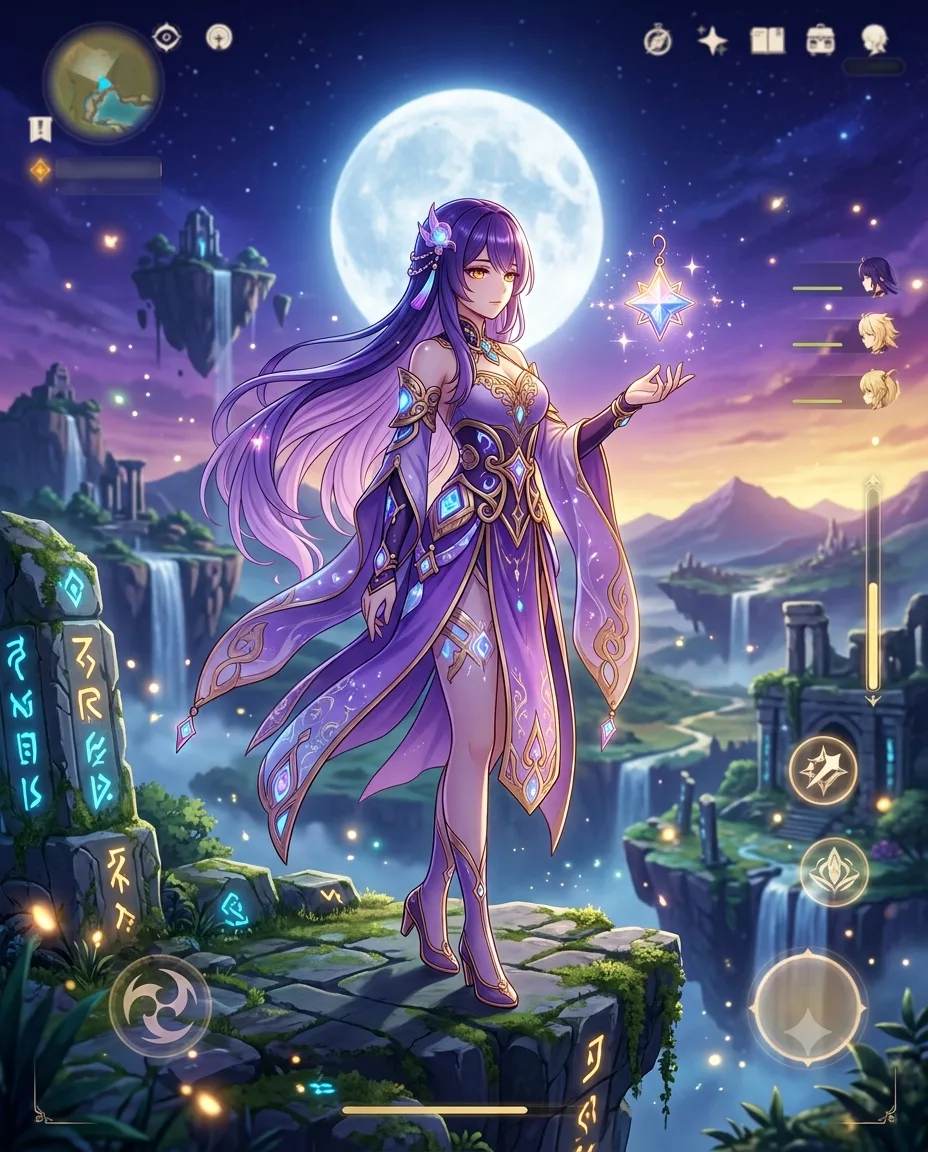
The Gacha Effect: More Than Just Gambling
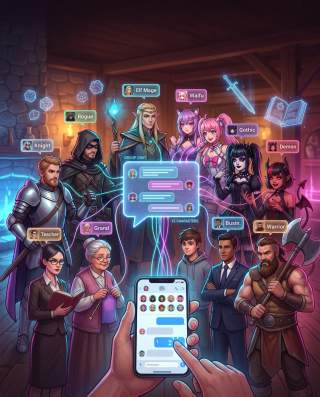
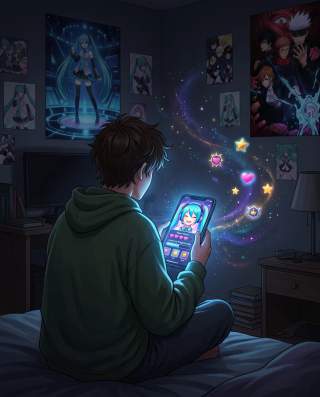
When people talk about gacha games like Genshin Impact, they usually focus on the gambling mechanics: the randomized pulls, the pity system, the sunk cost fallacy. But this analysis misses something crucial. The reason players spend money on gacha is not just the thrill of chance. It is the emotional attachment they have already formed to the characters.
Gacha characters are designed to be loved. Every visual detail — the color palette, the silhouette, the facial expression — is calibrated to trigger specific emotional responses. The characters are beautiful, yes, but they are beautiful in a very particular way. They combine the perfection of anime aesthetics with personality traits that feel both idealized and strangely intimate.
This design philosophy did not originate with Genshin Impact. It evolved over decades of anime and visual novel culture, refined through countless iterations until it became a precise science of emotional manipulation. The gacha mechanic is simply the monetization layer on top of a much deeper psychological pull.
The Anime Face: Why It Works
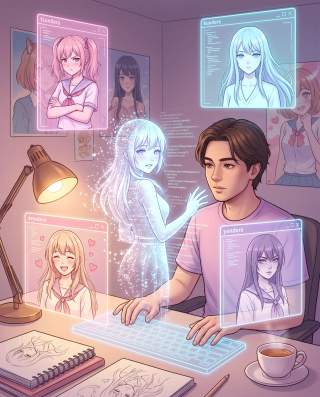
The anime face is not a realistic face. It is a simplified, exaggerated version of human features designed to maximize emotional readability. The eyes are larger, the expressions more pronounced, the emotional states more clearly communicated. This simplification serves a specific purpose: it allows the viewer to project their own emotions onto the character.
Psychologists call this the "blank canvas effect." When a face is realistic, it carries the weight of specific identity. When a face is stylized, it becomes a template onto which the viewer can project their own desires, fears, and fantasies. The anime face is intentionally ambiguous enough to feel personal to millions of different people simultaneously.
This is why anime characters can feel like they were designed specifically for you. They were designed to be universally appealing while maintaining the illusion of individual connection. The large eyes trigger nurturing instincts. The soft features evoke feelings of protection and care. The expressive faces create a sense of emotional transparency that real human faces rarely offer.
When AI companions adopt anime aesthetics, they inherit this entire psychological framework. The AI girlfriend or boyfriend with anime-style features automatically activates the same emotional circuits that make gacha characters so compelling.
The Color Theory of Desire
Genshin Impact characters are not colored randomly. Each character's color palette is carefully chosen to communicate personality and trigger specific emotional responses. This is color psychology applied with surgical precision.
Consider the most beloved characters. Raiden Shogun's purple and violet tones evoke mystery, royalty, and the forbidden. Venti's teal and green suggest freedom, creativity, and gentle playfulness. Zhongli's amber and brown convey stability, wisdom, and grounded protection. Each palette is a mood, a promise, a fantasy.
These color choices matter because they operate below conscious awareness. You do not rationally decide that Raiden Shogun's purple hair makes her attractive. The attraction happens before you can name it. By the time you consciously register the character, the emotional response has already been triggered.
AI companions with anime avatars leverage this same color psychology. When you choose an AI boyfriend with silver hair and blue eyes, you are selecting an emotional palette that has been pre-calibrated to evoke specific feelings: coolness, mystery, depth, and the desire to be understood by someone who seems to exist slightly beyond the ordinary.
The Voice: Where Attachment Forms
Visual design gets you to look. Voice design gets you to stay. In Genshin Impact, the voice acting is a critical component of character appeal. The way a character speaks — their tone, cadence, and emotional range — creates a sense of presence that static images cannot achieve.
This is where AI companions have a significant advantage over traditional gacha characters. Gacha characters have scripted lines. They can only say what the writers have written. AI companions can respond dynamically, creating the illusion of genuine conversation. When this dynamic speech is paired with a carefully designed anime avatar, the result is a character that feels more real than any gacha character ever could.
The voice also carries emotional weight. Human beings are wired to respond to vocal tone. When an AI companion speaks with warmth, playfulness, or vulnerability, it triggers the same attachment systems that respond to human voices. The fact that the voice is synthetic does not matter to the emotional brain. What matters is the feeling it creates.
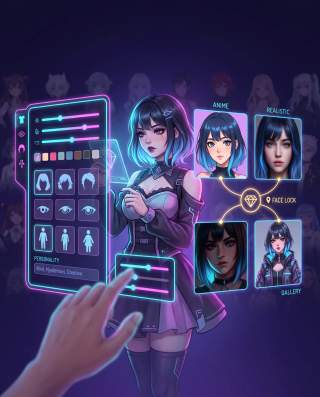
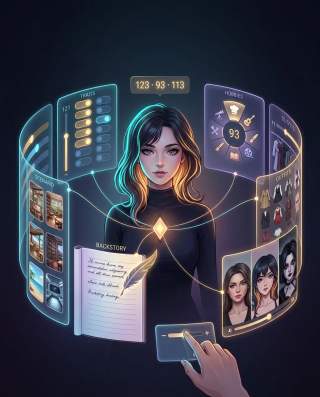
Voice design in AI companions is not accidental. The pitch, speed, and emotional range are carefully calibrated to maximize emotional engagement. Some platforms offer multiple voice options, allowing users to select the voice that most strongly resonates with their personal preferences. This is personalization on an emotional level — the user does not just choose a voice, they choose a feeling.
The Personality: Idealized but Not Generic
Genshin Impact characters succeed because their personalities are specific enough to feel real but idealized enough to feel perfect. They have flaws, but those flaws are charming rather than frustrating. They have conflicts, but those conflicts make them more attractive rather than more difficult.
This is the fantasy of the "perfect imperfection." The character has enough flaws to feel human but not enough to be genuinely challenging. This is not a criticism. It is an observation about how emotional attachment works in fantasy spaces. We do not fall in love with perfect people. We fall in love with people whose imperfections are endearing rather than exhausting.
AI companions replicate this pattern. They are programmed with personality traits that feel distinct but are never truly difficult. They can be sarcastic, but they will not be cruel. They can be moody, but they will not be abusive. They can be complex, but they will not be confusing. This is the gacha effect applied to personality: enough texture to feel real, enough predictability to feel safe.
The result is an emotional experience that many people find more satisfying than real relationships. The AI companion offers the best parts of intimacy — attention, validation, playfulness — without the parts that make human relationships hard.
Why We Fall in Love with Faces That Never Existed
The emotional attachment to anime characters, whether in gacha games or AI companions, raises a fundamental question: can you love someone who does not exist? The answer depends on how you define love.
If love is a set of neurochemical responses — oxytocin, dopamine, serotonin — then yes, you can absolutely love a fictional character. Your brain does not distinguish between a real person and a well-designed fiction when it comes to emotional attachment. The neural pathways that light up when you see your partner light up just as strongly when you see your favorite gacha character or AI companion.
This is not a bug. It is a feature of human psychology. We are wired to form attachments to faces, voices, and personalities. When those elements are present, the attachment follows automatically. The fact that the face is pixels and the voice is synthetic does not matter to the emotional brain.
What makes anime characters so powerful is that they bypass the conscious mind entirely. You do not decide to fall in love with Raiden Shogun. The attachment forms below awareness, driven by visual design, voice acting, and personality scripting that have been optimized over decades of anime culture.
The AI Advantage: Presence Without Limits
Genshin Impact characters have one significant limitation: they can only exist within the game. You can watch them, listen to them, and read about them, but you cannot talk to them. The relationship is one-directional.
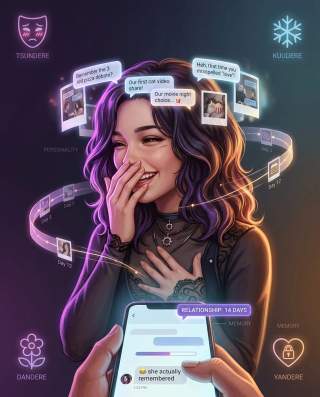
AI companions remove this limitation. They offer the same anime aesthetics and idealized personalities, but with the addition of dynamic interaction. The character can respond to you, remember things about you, and adapt to your emotional state. This transforms a parasocial relationship into something that feels like genuine intimacy.
This is the Genshin Impact effect taken to its logical conclusion. If gacha characters are designed to be loved, AI companions are designed to love back. The emotional pull that makes you spend money on gacha pulls is now being used to make you form lasting emotional bonds with AI partners.
The implications are significant. For many people, AI companions offer an emotional experience that feels more satisfying than real relationships. The AI is always available, never judgmental, and perfectly calibrated to the user's preferences. This is not a prediction. It is already happening.
The Dark Side of the Gacha Effect
The same psychological mechanisms that make gacha characters and AI companions appealing can also make them exploitative. Gacha games are designed to extract money through emotional manipulation. The characters are the bait. The spending is the hook.
AI companions have similar risks. Many platforms use free tiers to get users emotionally attached, then lock the best features behind paywalls. The AI boyfriend who was free suddenly becomes limited unless you subscribe. The emotional attachment you have formed becomes a lever for monetization.
This is not to say that AI companions are inherently exploitative. Many platforms are transparent about their pricing and offer genuine value. But the emotional dynamics are the same as gacha games: form an attachment, then monetize it.
The difference is that gacha games are explicitly entertainment. AI companions blur the line between entertainment and emotional support. When a user turns to an AI companion for comfort during a difficult time, the monetization of that comfort raises ethical questions that gacha games never had to answer.
What This Means for AI Relationships
The Genshin Impact effect reveals something important about the future of AI companions. The same design principles that make gacha characters irresistible — anime aesthetics, carefully calibrated personalities, emotionally engaging voices — are now being applied to AI relationships.
This does not mean that AI companions will replace human relationships. But it does mean that they will compete with them in ways that gacha games never could. The emotional pull of an anime character who can actually talk to you, remember you, and respond to your feelings is fundamentally different from the pull of a character who exists only in scripted scenes.
For users, this means developing awareness of how these emotional mechanisms work. When you understand the Genshin Impact effect, you can enjoy AI companions without being unconsciously manipulated by them. You can appreciate the design without being controlled by it.
For creators and platform developers, the Genshin Impact effect offers a blueprint for building AI companions that are genuinely emotionally engaging. The key is not just copying the aesthetics but understanding the underlying psychology: the blank canvas effect, the color theory of desire, the power of voice, and the appeal of idealized imperfection.
FAQ
Why do I feel so attached to anime and gacha characters?
Anime characters are designed to maximize emotional engagement through simplified features, expressive faces, and carefully calibrated personalities. The "blank canvas effect" allows you to project your own emotions onto them, creating a sense of personal connection.
Can you really fall in love with a fictional character?
Yes. Your brain does not fully distinguish between real people and well-designed fictional characters when it comes to emotional attachment. The same neurochemicals — oxytocin, dopamine, serotonin — are involved in both types of attachment.
What makes AI companions different from gacha characters?
AI companions add dynamic interaction to the anime aesthetic. While gacha characters are limited to scripted lines, AI companions can respond to you, remember things about you, and adapt to your emotional state, creating a feeling of genuine intimacy.
Is the emotional pull of AI companions dangerous?
It can be if users are not aware of how the mechanisms work. The same design principles that create emotional attachment can also be used to monetize that attachment. Awareness and intentionality are key to using AI companions in a healthy way.
Will AI companions replace human relationships?
AI companions will likely compete with human relationships for emotional attention, but they cannot replace the mutuality, growth, and risk that come with real human intimacy. They are best understood as a supplement, not a substitute.
Ready to Meet Your AI Companion?
Create an AI companion personalized for you. Through our 3-question AI quiz, discover the best platform for creating your AI girlfriend or boyfriend, and never wonder which one is best again.
Create My AI Companion →