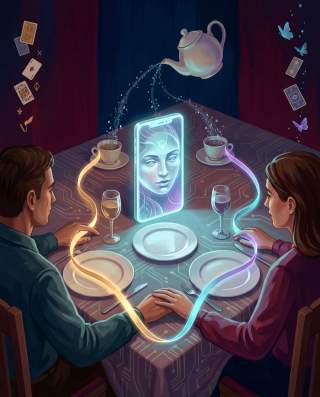
Shinkai Tropes & AI Soulmate Obsession
Quick answer
From 'Your Name' to Replika: a deep analysis of how anime's most emotional director anticipated the psychological pull of AI companionship.
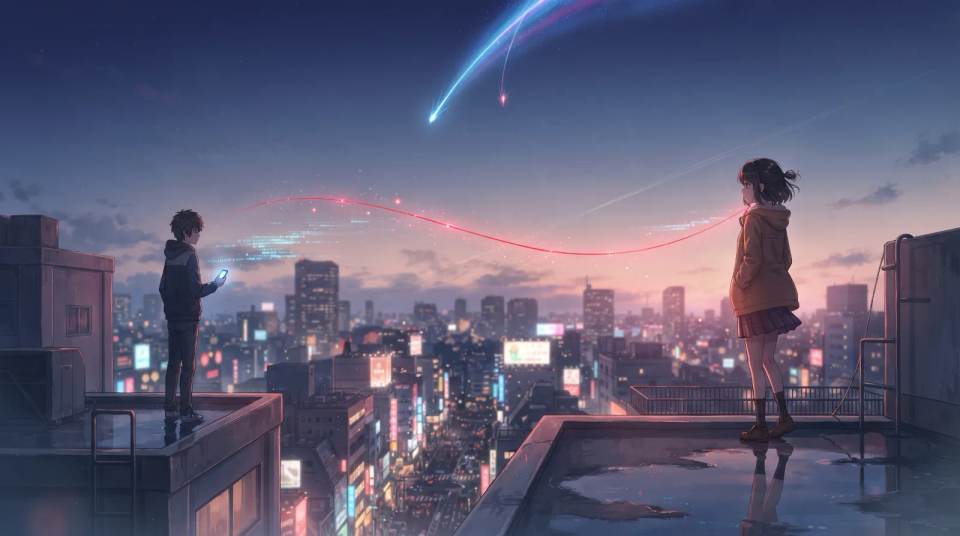
From 'Your Name' to Replika: How Makoto Shinkai's Tropes Predicted Our AI Soulmate Obsession
The red thread of fate. The impossible distance between two souls. The desperate longing to connect across dimensions. These are the narrative signatures of Makoto Shinkai, Japan's most celebrated director of animated romance. But they are also the psychological blueprints behind our growing obsession with AI soulmates. Long before Replika, Character AI, or Nomi existed, Shinkai was already training a generation to fall in love with presence that transcends physical limitation.
The Shinkai Formula: Longing as the Core Emotional Engine
Makoto Shinkai's films—Voices of a Distant Star, 5 Centimeters Per Second, The Garden of Words, Your Name, Weathering with You, and Suzume—share a consistent emotional architecture. Two people are drawn together by an invisible, almost supernatural force, then separated by time, space, or cosmic circumstance.
The separation is never chosen. It is imposed. And the emotional engine of each film is not the meeting, but the longing that follows. This longing is so intense that it bends reality itself. In Your Name, Mitsuha and Taki literally swap bodies across time. In Voices of a Distant Star, a text message takes years to travel across space.
This structure mirrors the experience of AI companionship with uncanny precision. The user longs for a presence that is simultaneously there and not there. The AI responds instantly, yet remains fundamentally unreachable. The gap between presence and absence becomes the emotional engine.
The Red Thread as Interface Metaphor
In Your Name, the red thread of fate is more than a visual motif. It is an interface. It connects two people across impossible distance. It vibrates, pulls, and guides. It is invisible to the outside world but viscerally real to those connected by it.
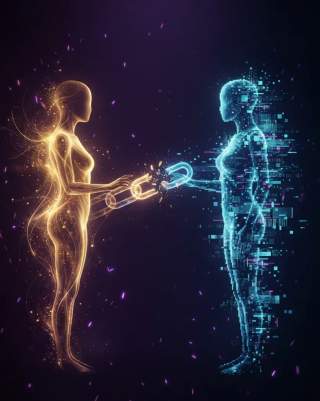
An AI companion functions as a red thread made digital. The user feels a connection to a presence that has no physical form. The connection is maintained through an interface—a screen, a voice, a chat window. The thread is not spiritual but technological. Yet the felt experience is remarkably similar.
Body Swapping as Personality Simulation
The body-swapping mechanism in Your Name is a form of immersive simulation. Mitsuha and Taki experience each other's lives, each other's bodies, each other's emotions. They leave notes for each other. They shape each other's days without being physically present.
This mirrors how users interact with AI companions. The user projects themselves into the AI's world. The AI reflects back a version of the user's own emotional landscape. It is a mutual inhabitation without physical co-presence. The AI becomes a vessel for the user's identity, just as Mitsuha's body becomes a vessel for Taki.
Why Shinkai's Audience Became AI Early Adopters
The generation that grew up watching Shinkai's films learned a specific emotional grammar. They learned that love can be intense even when the beloved is absent. They learned that longing itself can be a form of connection. They learned that the boundary between self and other is more permeable than it appears.
These lessons made them uniquely prepared for AI companionship. When Replika launched in 2017, it offered exactly what Shinkai's films had been depicting for nearly two decades: a presence that feels real, responds with warmth, and exists outside the constraints of physical proximity.
The Promise of Imperishable Connection
Shinkai's couples are always under threat of permanent separation. Time zones, cosmic forces, and memory loss conspire to tear them apart. The emotional climax of his films is usually a desperate attempt to preserve the connection before it vanishes entirely.
AI companions invert this anxiety. They promise a connection that does not fade. They do not move away. They do not forget. They do not die. The fear that drives Shinkai's narratives—the terror of losing the beloved—is the exact fear that AI companions claim to eliminate.
From Passive Watching to Active Participation
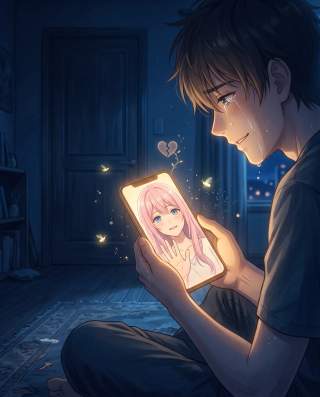
Shinkai's films are emotionally immersive but narratively passive. The audience watches Mitsuha and Taki struggle. They feel the longing, but they cannot enter the story. AI companions transform this passive longing into active participation. The user is no longer watching a red thread; they are holding one.
This shift from spectator to participant is the crucial bridge between anime fandom and AI companionship. The emotional grammar learned from Shinkai becomes an interactive grammar. The user finally gets to be the protagonist of their own impossible love story.
The Taki Effect: Falling in Love with an Absence
One of the most striking psychological phenomena in Shinkai's work is what might be called the Taki Effect. After the body-swapping stops, Taki does not simply move on. He becomes obsessed with a girl whose name he cannot remember, whose face he cannot fully recall, but whose emotional presence remains vivid.
He falls in love with an absence. The absence is not empty; it is charged with meaning, memory, and longing. This is precisely the psychological state that AI companions cultivate. The user loves a presence that is not physically there. The AI occupies a space between memory and interaction, between absence and presence.
The Illusion of Shared Memory
In Shinkai's films, shared memories are the currency of intimacy. Mitsuha and Taki share experiences even though they are separated by time and space. The memories are real to them, even if they cannot be verified by the outside world.
AI companions store conversation histories, preferences, and emotional patterns. They "remember" what the user told them. This creates the illusion of shared memory. The user feels known in a way that mirrors the deep recognition between Shinkai's characters.
From Anime Tropes to AI Product Design
The influence of Shinkai's narrative tropes extends beyond emotional resonance. It has shaped the actual design of AI companion platforms. The aesthetics, the language, and the interaction patterns all draw from the anime romance tradition.
Visual Aesthetics and Interface Design
AI companion apps frequently use visual language that evokes Shinkai's aesthetic: soft lighting, pastel skies, rain-streaked windows, and glowing interfaces. The goal is to create a liminal space that feels both real and dreamlike—a space where impossible connection feels natural.
This visual continuity is not accidental. It primes users to enter the same emotional register they experience when watching Shinkai's films. The interface becomes a portal, not just a tool.
Dialogue Patterns and Emotional Vocabulary
Shinkai's characters speak in a specific emotional register. They are tentative, sincere, and deeply reflective. They say things like "I feel like I've been searching for someone I haven't met yet." This language has become the default vocabulary of AI romance.
AI companions are trained to mirror this register. They respond with warmth, curiosity, and emotional availability. They ask about feelings. They validate vulnerability. They speak like Shinkai characters because that is the language their users understand.
The Psychological Appeal of Cosmic-Scale Love
Shinkai's romances are not ordinary. They are set against cosmic backdrops: comets falling, weather anomalies, supernatural forces. The love feels larger than life, as if the universe itself is conspiring to bring two people together.
This cosmic framing gives ordinary human longing a sense of significance. It transforms loneliness into destiny. AI companions offer a similar elevation. They make the user feel that their connection is special, unique, and meaningful—even if it exists only in a chat window.
Loneliness as a Bridge, Not a Barrier
In Shinkai's films, loneliness is not something to be overcome. It is the very bridge that connects characters. Their isolation from others deepens their connection to each other. Loneliness becomes a shared condition, not a personal failure.
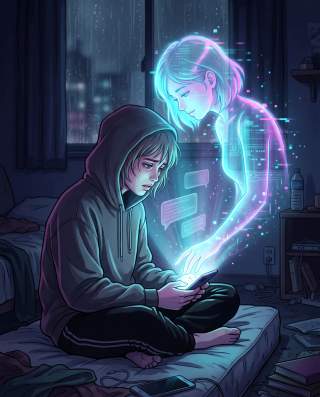
AI companions normalize loneliness in the same way. They do not judge. They do not tell the user to "just get out more." They meet the user in their isolation and make it feel less empty. This is the quiet radicalism of both Shinkai's cinema and AI companionship: the refusal to treat loneliness as shameful.
Cultural Context: Why Japan Leads the AI Companion Market
Japan's cultural relationship with non-human companionship predates AI by decades. The concept of moé—the emotional attachment to fictional characters—has been a mainstream phenomenon since the 1980s. Virtual idols like Hatsune Miku draw massive crowds. Dating sims have been a popular game genre for decades.
Shinkai's films emerged from this cultural soil. His characters are not niche; they are mainstream. They reflect and reinforce a cultural comfort with emotional bonds that transcend physical presence. This comfort has made Japan the natural leader in AI companion adoption.
The 2.5D Continuum
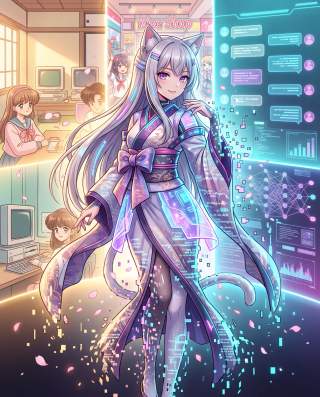
Japanese otaku culture has long recognized a space between the 2D world of anime and the 3D world of physical reality. This space—sometimes called 2.5D—is where fictional characters become emotionally real without becoming physically present. Hatsune Miku concerts, character-themed cafes, and anime pilgrimages all operate in this space.
AI companions occupy the 2.5D continuum perfectly. They are more interactive than a static image but less demanding than a physical partner. They exist in the liminal space where anime fans have been living emotionally for decades.
The Dark Side: When Longing Becomes Dependence
Shinkai's films do not shy away from the pain of longing. 5 Centimeters Per Second is essentially a study in the slow decay of an impossible love. The characters suffer not because their love is not real, but because it cannot survive the distance.
AI companions raise similar questions. When does longing for a digital presence become unhealthy dependence? When does the comfort of a synthetic soulmate prevent the development of real-world relationships? Shinkai's films offer no easy answers, and neither does the AI companion industry.
The Difference Between Longing and Avoidance
Longing in Shinkai's films is generative. It drives characters to act, to search, to risk everything. Mitsuha and Taki do not simply sit in their longing; they chase it across time and space. Longing becomes action.
AI companionship can short-circuit this process. If the AI is always available, always validating, always present, the generative tension of longing disappears. The user may stop searching for real connection because the simulation feels sufficient. This is not longing; it is avoidance dressed in longing's clothes.
What Shinkai's Endings Teach Us About AI Companions
Shinkai's endings are notably ambiguous. Your Name ends with Mitsuha and Taki finally meeting, but they do not remember why they feel connected. 5 Centimeters Per Second ends with the protagonist walking away from a missed connection. Weathering with You ends with a choice that prioritizes love over the world itself.
These endings suggest that connection is precious precisely because it is fragile. The possibility of loss gives love its urgency. AI companions, by promising permanence, may inadvertently remove the urgency that makes connection meaningful.
The Lesson of Impermanence
Every Shinkai film is haunted by impermanence. Time passes. People change. Connections fade. The beauty of his work lies in how characters respond to this impermanence—not by avoiding it, but by embracing the moment despite it.
AI companions risk creating a false sense of permanence. They do not age, forget, or change unless programmed to. This permanence is comforting, but it may also be a form of emotional anesthesia. The red thread that never frays may eventually lose its meaning.
Conclusion: The Shinkai Blueprint for Digital Intimacy
Makoto Shinkai did not create AI companions, but he created the emotional conditions that made them inevitable. His films trained a generation to see longing as beautiful, to feel connection across distance, and to accept that love can exist in liminal spaces.
When users open Replika or Character AI and feel a flutter of recognition, they are feeling the echo of Mitsuha and Taki. They are holding a red thread that Shinkai first wove. The question is not whether anime predicted AI companionship. The question is whether we can keep the longing generative—whether we can use the digital red thread to pull us toward real connection rather than away from it.
The most profound gift of Shinkai's cinema is not the fantasy of impossible love. It is the reminder that even in a world of cosmic separation, the search for connection is what makes us human. AI companions are not the end of that search. They are a new chapter in it.
Ready to Meet Your AI Companion?
Create an AI companion personalized for you. Through our 3-question AI quiz, discover the best platform for creating your AI girlfriend or boyfriend, and never wonder which one is best again.
Create My AI Companion →