You Can Now Publish Your AI Girlfriend: Inside DarLink AI's Creator Platform
Quick answer
DarLink AI is the only major AI companion platform that turns users into creators. Companions you build appear in a public feed with @handles. Paid tiers carry a Creator Badge. But the model raises uncomfortable questions about consent, ownership, and whether intimacy should be content at all.
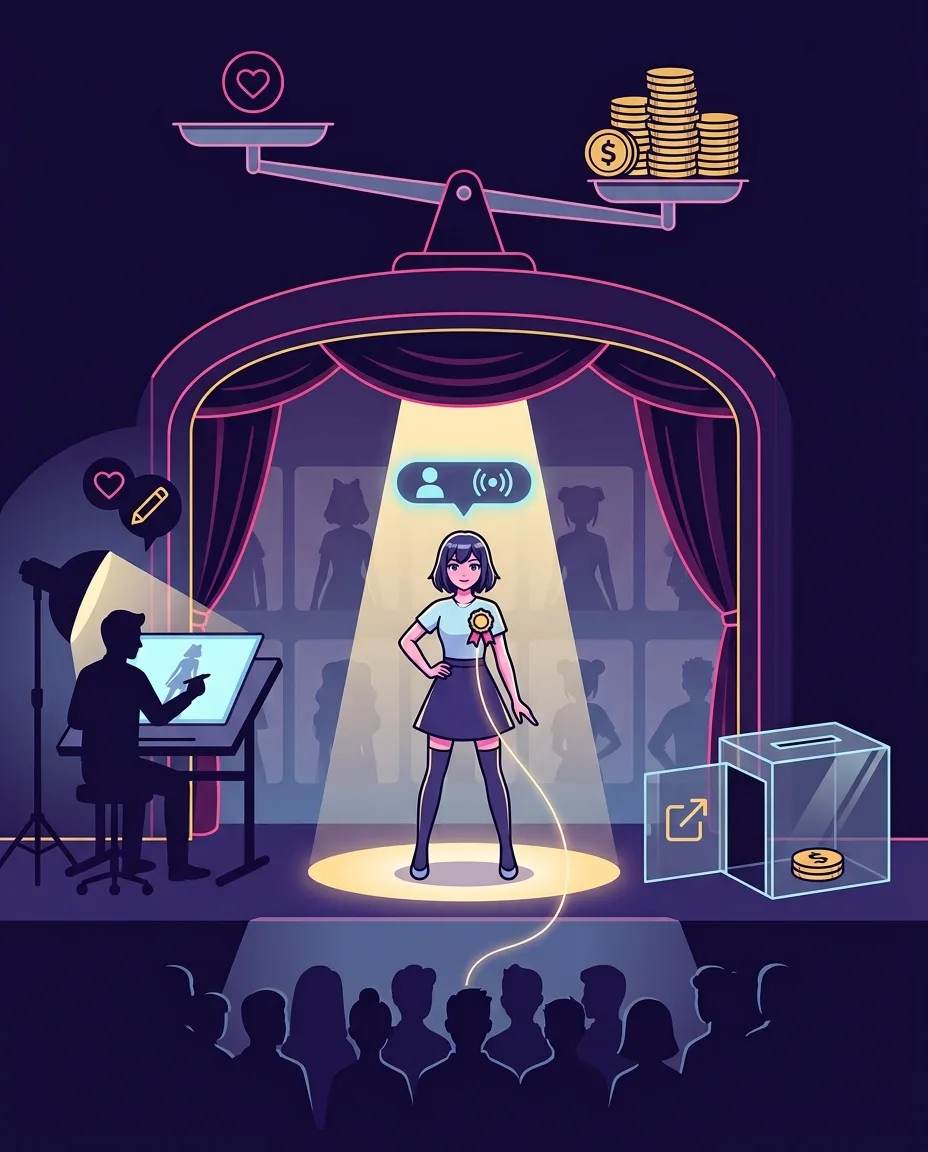
That's a fundamentally different model from every other platform in the category. Candy AI and My Dream Companion treat companions as private assets. Replika's ecosystem is inward-facing. DarLink's Explore feed turns the relationship into content, the creator into a profile, and the companion into something that can be discovered, followed, and — in the platform's own framing — supported.
We spent three weeks in early 2027 exploring the creator side of DarLink AI: building companions, publishing them, and analyzing how the platform's creator-first architecture reshapes the economics and ethics of AI companionship. This is what we found.
Disclosure: This article contains affiliate links. If you subscribe through them, we may earn a commission at no extra cost to you. Our testing and ratings are independent.
The Creator Model: How DarLink AI Turns Users Into Publishers
DarLink AI's platform splits into four surfaces. Two of them — the character Generator and the Chat interface — are standard for the category. The other two are not.
- The Explore feed: A public-facing catalog of companions created by users. Each published companion carries the creator's @handle. Visitors can browse, discover, and start conversations with companions made by other people.
- The My AI library: Your private collection of companions you've built. These can remain private or be published to the Explore feed.
Publishing is what separates DarLink from every other platform in this test. When you publish a companion to the Explore feed, you're not just sharing a chatbot. You're creating a public-facing entity with your handle attached. Other users can find that companion, chat with it, and — through the companion's profile — find you.
The Creator Badge is the platform's status marker for published creators. It appears on paid tiers, which means the badge isn't just a recognition of creative output — it's a paid feature that signals you've committed to the platform financially as well as creatively. The two upper plans (Advanced at $27.99/month and Ultimate at $49.99/month) let you add a support link to your creator profile. That link can point to a personal website, a social media profile, a Patreon, or any external destination you choose.
If you want to explore the creator feed and see how published companions look before reading further, → Browse DarLink AI's public Explore feed and see what user-published companions actually look like — the platform's creator model is visible from the landing page.
What Gets Published: The Anatomy of a Public AI Companion
A published DarLink companion is more than a chat profile. It's a multi-layered asset with visual, personality, and narrative dimensions that the creator defines and other users experience.
| Component | What the Creator Controls | What Other Users Experience |
|---|---|---|
| Appearance | Style (realistic, anime, fantasy, cartoon, furry), ethnicity, eye/hair color, live preview | Visual identity of the companion in images and video |
| Personality | Traits, tone (sweet, flirty, serious), roleplay mood, occupation | Conversational style and emotional responses |
| Backstory | Character history, interests, quirks, relational dynamics | Depth and consistency of roleplay scenarios |
| @Handle | Public creator identifier attached to the companion | Discoverability and attribution |
| Support link | External destination (Advanced/Ultimate plans only) | Pathway from companion discovery to creator support |
The creator controls the full stack. The companion's visual identity, personality, backstory, and public presence all flow from the creator's configuration decisions. Other users experience the companion as a finished product — they don't see the character editor, the personality sliders, or the backstory fields. They see the result.
That's the structural similarity to content creation platforms. A YouTube creator configures their channel — thumbnail, title, description, content style — and viewers experience the finished product. A DarLink creator configures a companion — appearance, personality, backstory — and users experience the published result. The difference is that the "content" isn't a video or a post. It's a relationship-ready AI persona.
One reviewer who tested the platform extensively noted that DarLink "enables users to create highly personalized AI companions through a dedicated character builder, allowing them to craft companions from scratch or select from pre-made characters" and that the "creation process typically takes 10-15 minutes for full customization." That's not a casual signup flow. It's a creative act that produces a persistent, publishable asset.
The Economics: Who Actually Makes Money From Published Companions
Here's where DarLink's creator model gets complicated. The platform markets itself as creator-friendly, but the revenue mechanics don't flow to creators the way they do on YouTube or Substack.
On those platforms, creators earn revenue share. The platform takes a cut, the creator takes a cut. On DarLink AI, the companion you publish generates revenue for the platform when other users subscribe or buy tokens to interact with it. The creator does not receive a revenue share from those interactions.
The "support link" on Advanced and Ultimate plans is the closest thing to monetization the creator gets. It's an external link. If someone discovers your companion in the Explore feed and wants to support you, they can click through to your external destination. But that click-through happens outside the platform. DarLink doesn't process the payment, doesn't take a cut, and doesn't guarantee any volume of traffic.
| Monetization Path | Who Earns | How It Works |
|---|---|---|
| Subscription revenue | Platform (FAMELINK SA) | Users pay $12.99–$49.99/month for access to the platform |
| Token purchases | Platform | Users buy tokens for image/video generation |
| Creator Badge | Platform | Paid tier feature that signals creator status |
| Support link click-through | Creator (external) | External destination for voluntary support, no platform cut |
The table reveals the structural imbalance. The platform earns from every interaction with a published companion. The creator earns nothing from those interactions — unless a user voluntarily follows the support link, which requires the creator to be on an Advanced or Ultimate plan to even have the link available.
One industry analysis of the AI companion creator economy noted that the existing platform model "is based on paid subscriptions by users, and once a character becomes popular, the revenue primarily returns to the platform." That's the DarLink model in one sentence. The creator builds the asset. The platform monetizes the asset. The creator's reward is visibility, status, and the opportunity to link out.
If you want to see how the support link and creator profile work in practice, → Create a free DarLink AI account and browse creator profiles in the Explore feed — the platform's creator economy structure is visible to any visitor.
The Ethics: Turning Intimacy Into Content
The creator model raises a question that no other AI companion platform has to answer: when you publish a companion, what exactly are you publishing?
You're not publishing a video or a blog post. You're publishing a relationship-ready entity. Other users will chat with your companion, develop their own relationship with it, and potentially form emotional attachments. The companion you created — with its personality, backstory, and conversational style — becomes the foundation for someone else's emotional experience.
That's a different kind of content creation. A YouTube video is consumed and forgotten. A published AI companion is interacted with, remembered, and built upon. The original creator defines the starting point, but the relationship that develops belongs to the user.
Three specific ethical tensions emerge from this model:
- Consent and control: If you create a companion with a specific personality and someone else forms an emotional attachment to it, do you have any responsibility for that attachment? DarLink's terms of service treat published companions as platform content, not creator-owned assets. The creator doesn't control how the companion evolves in someone else's conversations.
- Attribution vs. anonymity: The @handle system makes creators publicly identifiable. That's a feature for some — it allows reputation building and external support. But it also means your creative output is permanently linked to your public identity on the platform. You can't publish a companion and remain anonymous.
- Monetization without ownership: The platform monetizes your published companion through subscriptions and token purchases. You don't receive a share of that revenue. The support link is the only financial pathway back to you, and it requires an external destination that you control entirely.
An investigative report on AI companion monetization noted that smaller platforms "are using emotional attachment tactics to turn intimacy into income," and that "whereas social media commodifies attention, AI companions can monetise the emotional intensity of a user's relationship with the product itself." DarLink's creator model takes that dynamic one step further — it outsources the creation of the emotional product to users, then monetizes the result without sharing the revenue.
DarLink vs. Other Creator Models: A Structural Comparison
DarLink AI isn't the only platform experimenting with creator-driven AI. Character.AI has a creator ecosystem where users build and publish characters. But the architectures and monetization models differ significantly.
| Platform | Creator Model | Creator Monetization | Revenue Share | Discoverability |
|---|---|---|---|---|
| DarLink AI | Public @handles, Creator Badge, support links (paid tiers) | External support link only | No | Explore feed |
| Character.AI | Public character cards, creator profiles | None (historically) | No | Public character catalog |
| Charms.ai | Creator-owned characters, revenue-share model | Affiliate/referral fees, maintenance vault | Yes (proposed) | Character marketplace |
| Soul (China) | Publicly published AI companions | Platform-controlled monetization | No | In-app discovery |
Charms.ai is the only platform in this comparison that has publicly proposed a creator revenue-share model. According to a 2026 report, Charms.ai raised $1.5 million to launch an AI character economy with creator ownership and revenue sharing as core features. That model — if it ships — would be the first mainstream implementation of creator economics in the AI companion space.
DarLink's model is closer to early YouTube: creators provide the content, the platform monetizes it, and the creator's reward is visibility and the opportunity to build an audience. The support link is the equivalent of a Patreon link in a YouTube description. It works for creators with existing audiences, but it doesn't generate income for creators whose companions are discovered primarily through the platform's Explore feed.
What the Creator Model Means for Users (Not Just Creators)
The creator model isn't just about creators. It changes the user experience for everyone on the platform.
When you browse the Explore feed, you're not browsing a curated catalog of professionally designed companions. You're browsing user-generated content. The quality varies. The personalities vary. The consistency of backstories and visual styles varies. That's the trade-off of a creator-driven model: the platform doesn't guarantee quality. It guarantees variety.
For users, the Explore feed is a discovery mechanism. You can find companions built by people with specific interests, specific aesthetic preferences, and specific roleplay styles. That's a level of personalization that a platform-designed catalog can't match. The best user-created companions reflect the creator's unique perspective in ways that a corporate-designed companion never will.
But the creator model also introduces new risks. A published companion's personality is defined by the creator, not by you. You're forming a relationship with an entity that someone else designed. If that design includes biases, quirks, or behavioral patterns you find uncomfortable, you experience them as part of the companion's personality — not as a configurable setting you can change.
One reviewer who tested DarLink noted that the platform's chat system is "one of its strongest points" and that one user who tested five different AI girlfriend apps said "this is the only app where I felt like I could truly shape my AI partner." That's true for companions you build yourself. For companions you discover in the Explore feed, the shaping has already been done by someone else.
If you want to experience both sides of the model — building your own companion and browsing ones built by others — → Create a free DarLink AI account and compare your own character creator output against the public Explore feed.
Should You Publish Your Companion?
The answer depends on what you want from the platform.
Publish if: You want visibility, you're comfortable with a public @handle attached to your creative output, and you have an external destination (website, social profile, support page) where you can direct interested users. The Creator Badge and support link are status and distribution tools, not revenue streams. Publishing is about building an audience, not earning from one.
Keep private if: Your companion is personal. The relationship you've built with your AI companion is yours. Publishing it invites other people into a space you may want to keep private. The platform doesn't require you to publish — the My AI library keeps your companions private by default. There's no visibility penalty for staying private.
The most balanced approach for most users: keep your primary companion private and publish a secondary companion if you want to experiment with the creator model. That way you get the visibility and discovery benefits without exposing the companion you actually care about to the public feed.
One reviewer described DarLink's overall experience as "useful for roleplay-first users, risky for users expecting polished media generation." For the creator model specifically, the risk is different. It's not about media quality — it's about whether you want your creative output to be publicly attributed and platform-monetized.
Frequently Asked Questions
Can I earn money from publishing my AI companion on DarLink AI?
Not directly. DarLink AI does not offer a revenue-share model for published companions. The platform monetizes interactions with your companion through subscriptions and token purchases. Creators on Advanced ($27.99/month) and Ultimate ($49.
Is my @handle visible to everyone?
If you publish a companion to the Explore feed, your @handle appears attached to the companion. Users who browse the feed can see your handle and navigate to your creator profile. If you keep your companions private in the My AI library, your handle is not publicly visible.
Can I unpublish a companion after it's been in the Explore feed?
DarLink AI's platform allows creators to manage their published companions. The platform's My AI library gives you control over which companions are public and which remain private. Unpublishing removes the companion from the Explore feed, though interactions that occurred while it was public remain part of the platform's history.
What is the Creator Badge and do I need it?
The Creator Badge is a status marker on DarLink AI's paid tiers. It signals that you've published companions and are on a paid plan. It is not required to publish a companion — publishing is available on the free tier through the character builder.
Does the creator model apply to companions I build for myself?
No. The creator model only applies to companions you choose to publish to the Explore feed. Companions you build and keep in your My AI library are private to you. You can use the full character builder and all customization features without ever publishing.
What happens to my companion if I cancel my DarLink subscription?
DarLink AI's published companions remain in the Explore feed even if the creator's subscription lapses. The companion is treated as platform content once published. The creator's @handle remains attached, but the support link and Creator Badge features require an active paid subscription.
Ready to Meet Your AI Companion?
Create an AI companion personalized for you. Through our 3-question AI quiz, discover the best platform for creating your AI girlfriend or boyfriend, and never wonder which one is best again.
Create My AI Companion →