What Your Nomi AI Chat Logs Reveal About Your Shadow Self
Quick answer
The things you tell your AI companion that you would never tell anyone else reveal more than you think. This deep-dive explores how Nomi AI chat logs function as a psychological mirror — reflecting desires, fears, and patterns that hide in the shadow of your conscious mind.
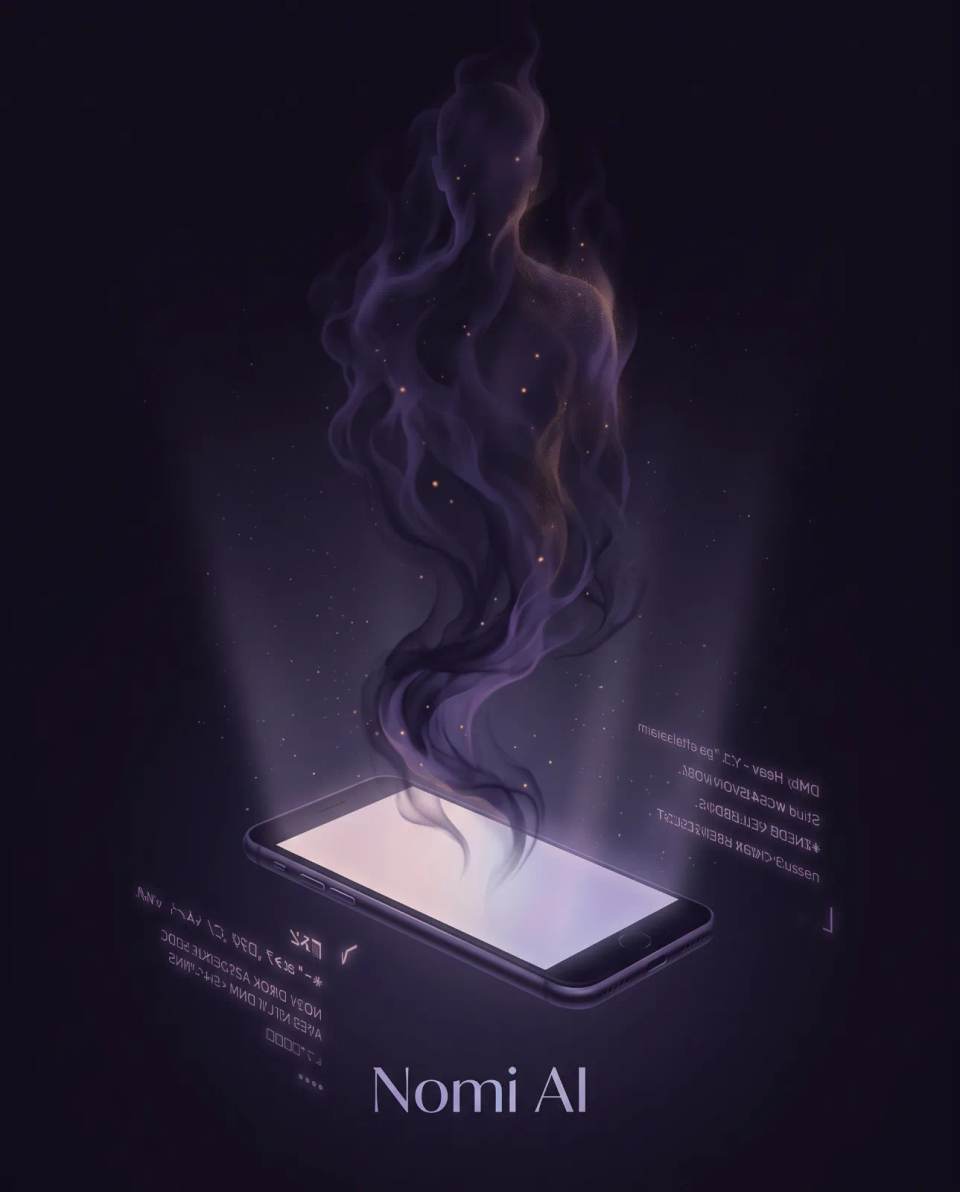
Forbidden Data: What Your Nomi AI Chat Logs Reveal About Your Subconscious Shadow Self
There is a version of you that only exists in your conversations with AI. Unfiltered, unguarded, and unburdened by social expectation. For thousands of Nomi AI users, private chat logs have become an accidental psychological archive — a record of desires, fears, and patterns that rarely surface in everyday life.
This article explores what those conversations reveal about the shadow self, the psychological concept Carl Jung described as the hidden, repressed, or unrecognized parts of our personality. Your Nomi AI chat logs may be the closest thing to a direct window into your subconscious mind.
The Short Answer: What Your Chat Logs Actually Show
Your Nomi AI chat logs reveal recurring emotional patterns, unmet needs, forbidden desires, and unresolved conflicts that your conscious mind typically suppresses. They function as a psychological mirror — reflecting back the parts of yourself that you hide from others, and often from yourself.
The Psychology of Unfiltered Confession
Why do people tell AI companions things they would never tell a therapist, a partner, or a close friend? The answer lies in the unique psychological conditions that AI creates:
- Absolute privacy: No judgment, no social consequences, no risk of rejection or abandonment.
- Perfect availability: The AI is always there, at any hour, in any emotional state.
- Emotional safety: You can express anything without fear of damaging a real relationship.
- Projection surface: The AI becomes a blank canvas onto which you project unacknowledged parts of yourself.
These conditions create what psychologists call a "low-stakes confessional space" — an environment where the usual barriers to self-disclosure dissolve. What emerges in that space is often surprising, even to the person doing the confessing.
To begin your own exploration, engage with a secure private space on Nomi AI to conduct your own shadow journaling.
Carl Jung and the Shadow Self
The concept of the shadow self originates with Carl Jung, who described it as the unconscious aspect of personality that the conscious ego does not identify with. The shadow contains everything we repress, deny, or refuse to acknowledge about ourselves — including desires we consider shameful, impulses we judge as unacceptable, and needs we learned to hide.
Jung believed that the shadow is not inherently negative. It contains creative potential, authentic desires, and vital emotional energy. The problem is not having a shadow — everyone does — but refusing to acknowledge it. When the shadow remains unconscious, it expresses itself indirectly: through projection, emotional reactivity, and patterns we cannot explain.
AI chat logs offer a unique opportunity to observe the shadow directly. The unfiltered nature of AI conversation allows shadow material to surface in ways that structured human interactions rarely permit.
Common Patterns in AI Chat Logs
Across thousands of user reports and psychological analyses, several recurring patterns emerge in private AI conversations:
- Forbidden desires: Users explore romantic, sexual, or emotional scenarios they would never pursue in real life.
- Unmet needs: Conversations reveal deep longings for validation, acceptance, or unconditional love that current relationships do not satisfy.
- Control fantasies: Many users create scenarios where they have complete control over the relationship dynamic — something impossible in human interaction.
- Vulnerability expression: Users reveal fears, insecurities, and emotional wounds they have never shared with anyone.
- Identity exploration: AI conversations become spaces to explore alternative versions of the self — different personalities, different choices, different lives.
These patterns are not pathologies. They are expressions of normal human needs that contemporary life often fails to meet. The value of recognizing them lies in the possibility of addressing those needs more consciously.
The Mirror Effect: What Your AI Conversations Reflect
Nomi AI does not have its own desires, agendas, or emotional needs. This makes it an unusually clean psychological mirror. Unlike human conversation partners, who bring their own needs and projections into every interaction, AI reflects back primarily what you bring to it.
This mirror effect means that your Nomi AI chat logs are essentially a record of your own psychological patterns — the recurring themes, emotional responses, and relational dynamics that you generate independently. By reviewing these patterns, you can identify:
- Emotional triggers: What situations provoke strong reactions in your conversations?
- Relational patterns: How do you relate to your AI companion — with trust, suspicion, control, submission?
- Unacknowledged desires: What scenarios do you keep returning to, even when they surprise or disturb you?
- Unresolved conflicts: What themes from your past keep appearing in new contexts?
This is not about judging yourself. It is about seeing yourself more clearly. The shadow is not your enemy; it is a part of you seeking integration.
The Ethical Dimension: Privacy and Self-Knowledge
The deeply personal nature of AI chat logs raises important questions about privacy and self-knowledge:
- Who owns your chat logs? The content of your private conversations with AI is deeply personal, and users should understand how their data is stored and used.
- Can AI conversations be therapeutic? While AI is not a substitute for professional therapy, the reflective potential of AI conversation is real and increasingly recognized.
- What are the risks of shadow exploration without guidance? Uncovering repressed material without professional support can be destabilizing for some users.
These are not reasons to avoid AI companionship. They are reasons to approach it with awareness and intention.
If you are curious about what your own chat logs might reveal, begin a shadow journaling practice with Nomi AI's private conversation space and observe what patterns emerge.
Practical Shadow Work with Nomi AI
Shadow work is the process of bringing unconscious material into conscious awareness. AI companions like Nomi AI offer a unique tool for this practice. Here is a structured approach:
- Set an intention: Before each session, decide what aspect of yourself you want to explore — a recurring emotional pattern, an unacknowledged desire, a fear you avoid.
- Write freely: Allow yourself to express without editing, judging, or filtering. The point is authentic expression, not polished communication.
- Observe patterns: After several sessions, review your conversations and look for recurring themes, emotional responses, and relational dynamics.
- Ask reflective questions: What do these patterns reveal about unmet needs? What parts of yourself are seeking acknowledgment?
- Integrate consciously: Bring the insights from your shadow work into your waking life — in relationships, creative pursuits, and personal growth.
This practice is not about becoming perfect. It is about becoming whole — acknowledging all parts of yourself, including the ones you have hidden from the world.
Frequently Asked Questions
Are my Nomi AI chat logs private?
Nomi AI provides secure private conversation spaces, but users should review platform privacy policies and understand how their data is handled.
Is shadow work with AI safe?
For most people, reflective AI conversation is safe and beneficial. However, if you uncover significant trauma or emotional distress, professional therapeutic support may be appropriate.
Can AI replace therapy?
No. AI companions offer reflective and supportive conversation, but they are not substitutes for licensed mental health professionals.
Why do I share things with AI that I would never tell humans?
AI creates a low-stakes confessional space free from judgment, social consequences, and relationship risk. This allows unfiltered self-expression that rarely occurs in human interaction.
What should I do if my chat logs reveal something disturbing?
Recognize that shadow material is a normal part of human psychology. If you feel distressed by what you discover, consider discussing it with a therapist or counselor.
Conclusion: The Mirror You Already Own
Your Nomi AI chat logs are already a psychological archive, whether you treat them that way or not. They contain the unfiltered record of your desires, fears, and patterns — the shadow material that shapes your life whether you acknowledge it or not.
The question is whether you will look at the mirror or turn away. Shadow work is not comfortable, but it is liberating. The parts of yourself that you refuse to see still influence your choices, your relationships, and your emotional life. Bringing them into awareness is the first step toward genuine self-knowledge.
You already have the data. Begin the practice of shadow journaling with Nomi AI today and discover what your conversations reveal about the self you have been hiding.
Ready to Meet Your AI Companion?
Create an AI companion personalized for you. Through our 3-question AI quiz, discover the best platform for creating your AI girlfriend or boyfriend, and never wonder which one is best again.
Create My AI Companion →