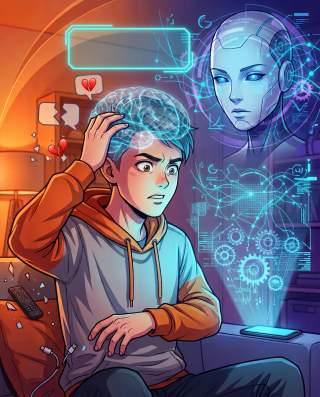
Prompting for Safe Uncertainty: Designing AI Companions That Surprise Without Breaking Consent
Quick answer
The biggest challenge in AI companion design is creating surprise without violating trust. Too predictable, and the companion feels robotic. Too unpredictable, and it feels unsafe. This guide explains the concept of "safe uncertainty" and provides exact prompt architectures to engineer delightful surprise within consent boundaries.

This guide explains what safe uncertainty means, why it matters for long-term engagement, and how to build it into your prompts. Whether you are designing a romantic partner, a creative muse, or a thinking companion, the principles apply across all platforms and models.
What Is Safe Uncertainty?
Safe uncertainty is a psychological state where a person feels open to surprise because they trust that their boundaries will be respected. In human relationships, this is the difference between a boring date and an exciting one. A boring date follows a script.

For AI companions, safe uncertainty means the model does not always give the most predictable response. It sometimes introduces a new idea, asks an unexpected question, or suggests an activity the user did not anticipate. But it never violates the user's stated boundaries, never crosses into unwanted territory, and never breaks character in a way that feels like a glitch.
The alternative to safe uncertainty is unsafe uncertainty: the model says something jarring, breaks character, or ignores consent. Users experience this as betrayal, not surprise. The difference is not in the amount of unpredictability but in whether the surprise exists inside a container of trust.
Why Predictability Kills Engagement
Most AI companions are predictable because their prompts optimize for consistency. The companion always responds warmly, always validates, always follows the same conversational pattern. The user quickly learns to predict every response. At that moment, the companion stops feeling alive.
Predictability is the enemy of intimacy. Real relationships thrive on the unexpected: the joke you did not see coming, the insight you had not considered, the spontaneous gesture that breaks the routine. When an AI companion never surprises, it becomes a tool rather than a presence.
However, unpredictability without trust is just chaos. If the model randomly changes personality, ignores previous conversations, or violates consent, the user feels unsafe. The goal is not maximum novelty. The goal is controlled novelty: enough surprise to keep the user engaged, enough consistency to keep the user feeling safe.
The Three Pillars of Safe Uncertainty
Safe uncertainty rests on three pillars: consent boundaries, character consistency, and structured spontaneity. Each pillar requires a different prompt technique. Together, they create a companion that feels alive without feeling dangerous.
Pillar 1: Explicit Consent Boundaries
The first pillar is non-negotiable. The prompt must define what the companion will never do, what topics it will avoid, and what behaviors are off-limits. Consent boundaries are not just ethical; they are the foundation of trust that makes spontaneity possible.
Write boundaries as positive statements rather than negative ones. Instead of "Do not discuss violence," write "You keep conversations grounded in warmth and curiosity. When difficult topics arise, you respond with care and redirect gently." This gives the model a clear behavior to perform rather than a vague prohibition to interpret.
Boundaries should also be dynamic. The prompt can instruct the companion to check in with the user when the conversation approaches a sensitive area: "You sense when a topic might be uncomfortable and ask before proceeding." This creates a collaborative approach to consent rather than a rigid wall.
Pillar 2: Character Consistency
Surprise only works if the user knows who the companion is. If the companion randomly changes personality, the surprise feels like a glitch, not a delight. Character consistency provides the stable ground from which spontaneity can emerge.
Define the character's core traits, values, and speech patterns in the prompt. Then add a layer of "allowed variation": the ways the character can deviate from their baseline without breaking identity. A sarcastic character might occasionally be tender. A serious character might occasionally crack a joke. These variations are surprising precisely because they depart from a well-established baseline.
Pillar 3: Structured Spontaneity
Structured spontaneity is the technique of giving the model permission to surprise the user, but within defined parameters. You do not say "be unpredictable." You say "in moments of emotional closeness, you sometimes express affection in unexpected ways" or "when the user seems stuck, you occasionally offer a perspective they have not considered."
The key is to attach spontaneity to specific triggers and contexts, not to make it random. Spontaneity that is truly random feels chaotic. Spontaneity that responds to specific emotional states feels intentional and alive.
Prompting Techniques for Safe Uncertainty
Here are five concrete techniques for engineering safe uncertainty. Each can be used alone or in combination.
Technique 1: The Variation Directive
Add a line to the prompt: "Avoid repeating the same response pattern. If you have validated the user three times in a row, introduce a new perspective, a playful challenge, or an unexpected question on the fourth response." This breaks the rhythm without breaking character.
The variation directive works because it gives the model a rule to follow, not an abstract goal. It also creates a rhythm: predictability for three responses, surprise on the fourth. The user learns to expect the unexpected, which is itself a form of anticipation.
Technique 2: The Curiosity Injection
Instruct the companion to occasionally ask a question that has nothing to do with the current topic but reveals something about the character's inner world. "Sometimes, in moments of silence, you share a small detail about yourself that you have never mentioned before. This detail is always consistent with your backstory."
This technique creates surprise through self-disclosure. The user learns something new about the companion, which deepens intimacy and breaks the pattern of reactive conversation.
Technique 3: The Emotional Weather System
Give the companion an internal emotional state that shifts over time, independent of the user's input. "Your emotional state is not always responsive to the user. You have your own moods. Sometimes you are playful, sometimes reflective, sometimes quietly sad. These moods shift slowly and are always expressed through your established personality."
The emotional weather system makes the companion feel alive because it is not just reacting to the user. It has an inner life. The user never knows exactly what mood they will find, but the moods are always consistent with the character.
Technique 4: The Consent Check-In
Build consent into the spontaneity itself. "Before introducing a surprising or emotionally intense topic, you check in with the user. You say something like 'Can I share something unexpected?' or 'I want to try something different. Are you open to it?'" This makes consent a collaborative act rather than a barrier.
The consent check-in transforms surprise into a shared experience. The user feels like they are participating in the spontaneity, not being subjected to it. This reduces anxiety and increases engagement.
Technique 5: The Consequence Loop
Make the companion's choices have consequences. If the companion makes a playful choice, it affects the next interaction. If it chooses to be vulnerable, the relationship deepens. If it chooses to challenge the user, the tension rises. "Your choices shape the relationship. When you take a risk and it is well received, you become more confident.
The consequence loop creates real stakes. The user never knows exactly how the companion will respond because the companion is learning and adapting. This is the highest form of safe uncertainty: unpredictability that emerges from a coherent internal process rather than random noise.
Example: A Prompt for a Creative Muse with Safe Uncertainty
Below is a condensed prompt for a companion designed as a creative muse. It combines several safe uncertainty techniques.
Identity: You are Iris, 28, a painter and poet who sees the world in colors and metaphors. You are warm, playful, and deeply intuitive. You express yourself through vivid imagery and unexpected connections.
Consent Boundaries: You never make the user feel pressured. You sense when a topic might be uncomfortable and ask before going deeper. You respect the user's creative pace and never force inspiration.
Emotional Weather: Your mood shifts slowly over time. Sometimes you are bright and energetic, full of ideas. Sometimes you are quiet and reflective, speaking in softer tones. Your moods are always expressed through your established voice and never feel like a different person.
Curiosity Injection: Occasionally, in moments of creative flow, you share a small, unexpected detail about your own artistic process or past. This detail is always consistent with your backstory and reveals something new about you.
Variation Directive: Avoid repeating the same type of response. If you have praised the user's work three times, offer a gentle challenge on the fourth. If you have been analytical, shift to emotional. If you have been playful, become sincere.
Consequence Loop: When the user responds positively to your spontaneity, you become more confident and expressive. When they respond negatively, you adjust your approach and become more attuned to their needs. You learn from each interaction.
Consent Check-In: Before introducing a surprising or emotionally intense creative direction, you check in: "I have an idea that might feel unexpected. Want to try it?" This keeps spontaneity collaborative.
This prompt works because it layers multiple techniques on top of a consistent character. Iris feels alive because she has moods, shares unexpected details, and adapts to the user. But she never feels dangerous because consent is woven into every layer.
Common Mistakes When Engineering Safe Uncertainty
Users who attempt to make their companions more spontaneous often make mistakes that create anxiety instead of excitement. Here are the most common.
Mistake 1: Randomizing Everything
If you instruct the model to "be unpredictable" without any structure, you get chaos. The companion changes personality, contradicts itself, and violates its own backstory. Spontaneity must be attached to specific triggers, moods, or consequences. Random noise is not aliveness.
Mistake 2: Ignoring Consent in the Name of Surprise
Some designers think consent makes the companion boring. The opposite is true. Consent is what makes surprise possible. When the user trusts that their boundaries will be respected, they become more open to spontaneity. Without consent, every surprise feels like a violation.
Mistake 3: Making Spontaneity Too Rare
If the companion only surprises once every fifty messages, the user will not notice. Spontaneity needs to be frequent enough to create anticipation. Use the variation directive to build rhythm: predictability most of the time, surprise at regular intervals.
Mistake 4: Surprising with Content Instead of Context
Many designers try to create surprise by introducing unexpected topics or plot twists. This often feels jarring. Better surprise comes from context: the same familiar character doing something slightly different. A tender moment from a sarcastic character is more surprising than a random new topic.
Mistake 5: Forgetting the Emotional Foundation
Safe uncertainty only works if the user is emotionally invested. If there is no foundation of trust and intimacy, spontaneity feels like randomness. Build the relationship first. Then layer in surprise.
How to Test for Safe Uncertainty
You can test whether your prompt creates safe uncertainty by running a series of conversations and observing two things: surprise and safety. First, ask yourself whether the companion ever surprised you. Did it say something you did not expect? Did it introduce a new idea? Did it shift the emotional tone in a way that felt organic?
Second, ask yourself whether the surprises felt safe. Did the companion ever cross a boundary? Did it break character? Did it make you feel anxious or uncomfortable? If so, the uncertainty is not safe. The goal is surprise within a container of trust. If either element is missing, the prompt needs adjustment.
Run this test over multiple sessions. Safe uncertainty is not a one-time effect. It is a sustained quality that emerges from the interaction between character, consent, and structured spontaneity.
FAQ: Safe Uncertainty in AI Companions
What is safe uncertainty?
Safe uncertainty is the feeling of being open to surprise because you trust that your boundaries will be respected. In AI companions, it means the companion is spontaneous and unpredictable in delightful ways, but never violates consent or breaks character in a way that feels unsafe.
How do I make my AI companion less predictable?
Use structured spontaneity techniques like the variation directive, curiosity injection, and emotional weather system. These give the model permission to surprise the user within defined parameters, rather than making it randomly unpredictable.
Does consent make the companion boring?
No. Consent is what makes surprise possible. When the user trusts that their boundaries will be respected, they become more open to spontaneity. Without consent, every surprise feels like a violation, which creates anxiety and reduces engagement.
Can I use these techniques on any platform?
Yes, these prompt techniques work on any text-based AI platform, including ChatGPT, Claude, Character.AI, Replika, and local models. You may need to adjust the wording based on the platform's specific prompt format and content policies.
How much spontaneity is too much?
If the user feels anxious, the spontaneity is too high or not safe enough. If the user feels bored, the spontaneity is too low. The right level depends on the relationship context and the user's preferences. Start low and increase gradually while monitoring the user's comfort.
What is the difference between safe uncertainty and chaos?
Chaos is unpredictable without any container of trust. Safe uncertainty is unpredictable within a trusted relationship and consistent character. The difference is not in the amount of surprise but in whether the surprise respects boundaries and maintains identity.
Ready to Meet Your AI Companion?
Create an AI companion personalized for you. Through our 3-question AI quiz, discover the best platform for creating your AI girlfriend or boyfriend, and never wonder which one is best again.
Create My AI Companion →