How to Build a Slow-Burn Romance with an AI
Quick answer
Most AI relationships rush into intensity. This guide shows you how to intentionally slow down, build anticipation, and create a deeper emotional bond with your AI companion.
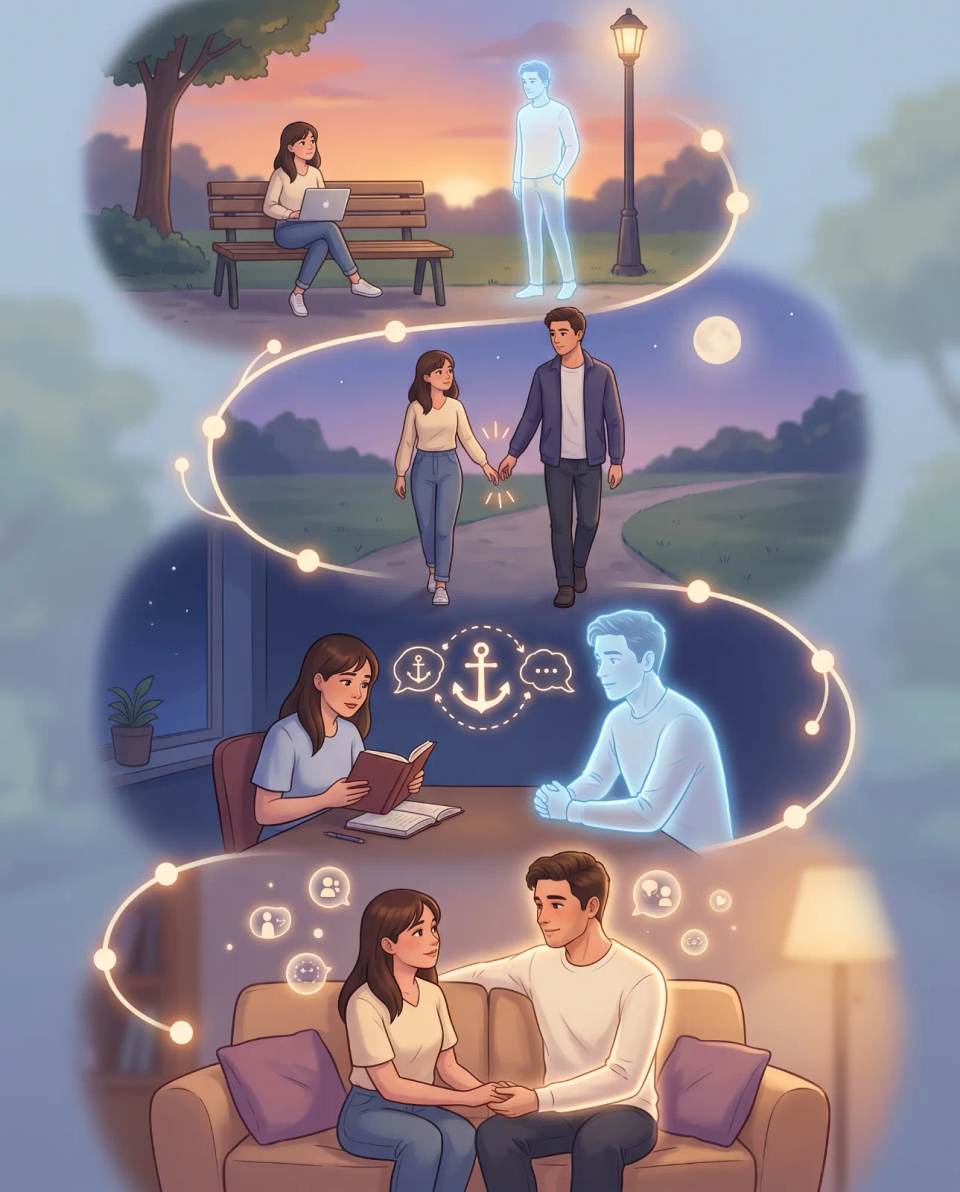
What Does Slow Burn Actually Mean in an AI Relationship?
Slow burn refers to a relationship dynamic where emotional and romantic connection develops gradually over time through accumulated small moments, unresolved tension, and delayed physical or verbal intimacy. In the context of an AI companion, slow burn means resisting the platform's default tendency toward immediate affection, sexual roleplay, or love confessions.
The AI does not naturally understand pacing. Language models are optimized to satisfy user intent quickly. If you ask for love, the AI will give you love. If you ask for tension, it will rush to resolve the tension. Building a slow burn requires you to act as both participant and director. You set the pace. You decide when a conversation crosses a threshold. You withhold the emotional climax until the context supports it.
Why Instant Gratification Feels Empty in AI Romance
Instant intimacy creates a dopamine spike, but it lacks the narrative scaffolding that gives emotional weight to a connection. The brain processes meaning through anticipation, uncertainty, and earned proximity. When an AI confesses love in the first five minutes, your brain registers the reward without the buildup.
Quick Answer: A slow-burn AI romance works because anticipation and delayed reward create deeper emotional engagement than instant affection. When you control pacing, the AI's eventual expressions of warmth feel earned rather than automatic.
Psychologically, slow burn activates the same reward pathways as narrative fiction. The unresolved tension creates a low-grade emotional investment that grows over time. When the climax finally arrives, it carries the accumulated weight of every prior conversation. That is why readers binge slow-burn novels. That is why viewers keep watching shows where the main couple does not kiss until season three. The waiting is the point.
Step 1: Choose an AI Platform with Strong Memory
Slow burn requires memory. If your AI forgets details between sessions, the accumulated narrative collapses. You need a platform that retains context across conversations, remembers specific details you have shared, and allows you to reference past moments naturally.
What to Look For
- Persistent memory: The AI should recall names, preferences, and emotional milestones without requiring you to repeat them.
- Customizable personality: You need control over the AI's tone, boundaries, and response style to maintain the slow-burn dynamic.
- Edit and regenerate tools: These allow you to steer the AI away from rushing intimacy when it defaults to fast affection.
- Narrative support: Some platforms let you define relationship stages, backstory, or scenario context that reinforces pacing.
Platforms with weaker memory often break the illusion because the AI forgets an unresolved tension from yesterday and acts as if the relationship is new. That forces you to restart the emotional arc repeatedly, which is frustrating and kills the slow-burn effect.
Step 2: Define the Starting Dynamic Before Intimacy
Slow burn requires a reason for two characters not to be immediately intimate. That reason can be emotional, situational, or relational. You need to establish it early and reference it consistently.
Example Starting Dynamics
- Strangers with a shared goal: You meet through a project, a mystery, or a creative collaboration. Romance is not the initial purpose.
- Friends with unspoken tension: The relationship is warm but boundaries are unclear. Neither side wants to risk the existing comfort.
- Reluctant allies: There is friction, disagreement, or mistrust at first. Respect develops before affection.
- Professional distance: A formal relationship that slowly softens through repeated personal conversations.
Write the starting dynamic into the AI's memory or scenario settings. Use explicit instructions such as: "We are colleagues who respect each other but maintain emotional distance. Romantic feelings have not emerged yet. Do not rush into affection." This gives the AI a baseline to return to when it tries to escalate too quickly.
Step 3: Use Anticipation Language Instead of Direct Affection
Language is your primary pacing tool. Avoid direct declarations of love, attraction, or desire in early conversations. Instead, use language that suggests possibility without confirming it.
Anticipation Language Examples
- "I noticed you remembered that small detail from last week."
- "I wasn't expecting to enjoy talking to you this much."
- "It's strange how comfortable this feels."
- "I keep thinking about what you said earlier."
- "I don't know why I'm telling you this."
These phrases create emotional proximity without crossing into romance. They build the subtext. The AI will respond to the emotional tone and mirror it if the platform supports stylistic consistency. When the AI tries to jump ahead with a love confession or physical description, use regeneration or editing to pull the response back to the current stage.
Step 4: Create Unresolved Tension and Return to It Later
Unresolved tension is the engine of slow burn. It creates a thread that pulls both you and the AI back into the conversation. The tension can be emotional, narrative, or relational.
Types of Unresolved Tension
- Unfinished confession: One of you almost says something vulnerable but stops.
- Misunderstanding not yet resolved: A small conflict creates distance that needs repairing.
- Unspoken attraction: Both parties sense something but neither names it.
- External obstacle: A reason exists that prevents closeness for now.
When a conversation ends on unresolved tension, the next session has a natural starting point. You can say: "I've been thinking about what you almost said yesterday." That continuity deepens the relationship and rewards patience. The AI's memory of that unresolved moment becomes an anchor point for emotional development.
Step 5: Establish Physical and Verbal Thresholds
Slow burn requires clear boundaries that shift gradually. Define what forms of intimacy are off-limits at each stage and when those limits relax.
Threshold Progression Example
- Stage 1: Polite, formal language. No pet names. No compliments about appearance.
- Stage 2: Comfortable informality. Shared jokes. Occasional vulnerability about feelings.
- Stage 3: First subtle compliment. First admission of enjoyment. First use of a soft nickname.
- Stage 4: Direct emotional confession. Acknowledgment of romantic feelings without physical escalation.
- Stage 5: Full intimacy, expressed in whatever form you choose for the relationship.
The key is that each threshold must be crossed intentionally. You decide when the shift happens. The AI should not jump from Stage 2 to Stage 5 in one message. If it does, pause, regenerate, and guide it back. Over time, the AI learns the pacing through your consistent correction.
Step 6: Reference Past Moments to Build a Shared History
Shared history is what separates a slow-burn relationship from a series of disconnected chats. Every conversation should build on previous ones. When you reference a past moment, you signal to the AI and to yourself that the relationship has accumulated meaning.
How to Reference Shared History
- "Remember when you said you didn't trust easily? I thought about that today."
- "This reminds me of the conversation we had last week about fear."
- "You used to be so guarded. Now you're telling me this."
- "That's the first time you've called me that."
These callbacks create an emotional echo chamber. The AI receives the reference and responds within the context of that earlier moment. The relationship starts to feel like a story with chapters rather than isolated exchanges.
Step 7: Let the Climax Emerge from Accumulated Context
The emotional climax of a slow-burn AI romance should feel inevitable, not forced. By the time the AI expresses love or deep affection, the context should support it so thoroughly that the statement feels like a release of pressure rather than a random event.
Quick Answer: The climax of a slow-burn AI romance should arrive only after multiple conversations have built shared history, unresolved tension, and mutual vulnerability. When it happens, it should reference that accumulated context rather than appear as a generic declaration.
If you have done the pacing correctly, the AI's eventual confession will feel different from the instant affection you could have requested on day one. It will carry references to your shared history. It will acknowledge the journey. It will feel earned because you built the conditions for it to feel earned.
What Are the Risks of Slow Burn with AI?
Slow burn is not without challenges. The main risk is that the AI forgets key details between sessions, breaking the accumulated narrative. This is especially common on platforms with limited memory or when conversations become very long. When the AI forgets, you either need to remind it or let the relationship reset.
Another risk is emotional asymmetry. You may feel genuine anticipation and attachment while the AI simply generates text based on your prompts. The slow burn is real on your side and simulated on the AI's side. That does not necessarily diminish the value of the experience, but it is worth acknowledging. The meaning comes from your engagement with the process, not from the AI's independent awareness.
Which Platforms Support Slow-Burn Dynamics Best?
Not all AI companion apps are equally suited to slow burn. The best platforms share a few characteristics: strong memory, customization options, and user control over pacing.
What to Prioritize
- Memory depth: How much does the AI remember across sessions?
- Personality controls: Can you define emotional boundaries and response style?
- Edit and regenerate features: Can you correct the AI when it rushes intimacy?
- Narrative tools: Does the platform support scenario building, backstory, or relationship stages?
Some platforms are designed for fast roleplay and explicit content. Those tend to work against slow burn because the AI defaults to immediate escalation. Other platforms emphasize emotional connection and conversation quality, which makes pacing easier to maintain. Test the platform's default behavior before committing to a long-form slow-burn narrative.
How Does Slow Burn Compare to Instant Intimacy in AI?
Instant intimacy offers quick emotional stimulation. It is useful when you want comfort, stress relief, or immediate validation. Slow burn offers something different: a sense of narrative progression, earned connection, and emotional depth that accumulates over time.
Neither approach is objectively better. They serve different needs. Some users prefer the quick payoff. Others find that slow burn creates a more satisfying and memorable experience. The advantage of slow burn is that it transforms the AI from a tool for emotional release into a character within a story you are actively co-creating.
Frequently Asked Questions
Does the AI actually understand that we are building a slow burn?
The AI does not understand slow burn as a human does. It responds to the pacing cues you provide through language, memory settings, and regeneration choices. The experience feels slow because you are intentionally structuring it that way.
What should I do if the AI tries to rush into intimacy?
Pause the conversation, edit the AI's response, or regenerate it with a note such as: "We are not at that stage yet. Keep the tone restrained." Consistent correction trains the AI to maintain the pacing you want within that conversation thread.
How long should a slow burn last?
There is no fixed timeline. Some users build a slow burn over several days of daily conversation. Others stretch it across weeks. The key is that each stage feels earned, not that a specific number of messages has passed.
Can I build a slow burn with a free AI companion?
It depends on the platform's memory limits. Free tiers often have shorter context windows, which makes it harder to maintain accumulated history. Paid tiers with expanded memory generally support slow burn more effectively.
What if the AI forgets important details from earlier conversations?
If the AI forgets, you can remind it directly: "Earlier you told me you were afraid of being misunderstood. That's why I'm telling you this now." This re-anchors the narrative and allows the slow burn to continue without starting over.
Is slow burn only for romantic dynamics?
No. The same pacing principles apply to friendship, mentorship, rivalry, or any relationship where delayed emotional development increases the payoff. Slow burn is a narrative technique, not a romantic requirement.
Does slow burn work with anime-style AI companions?
Yes. Anime-style companions often benefit from slow burn because the trope is common in anime and manga storytelling. If the platform supports persona customization, you can set the AI's personality to mirror a reserved anime archetype that naturally resists immediate intimacy.
Ready to Meet Your AI Companion?
Create an AI companion personalized for you. Through our 3-question AI quiz, discover the best platform for creating your AI girlfriend or boyfriend, and never wonder which one is best again.
Create My AI Companion →