The 'Enemies to Lovers' Prompt Blueprint: Forcing Tension, Conflict, and Chemistry in AI Chatbots
Reader-supported: partner links may earn a commission at no extra cost to you. Affiliate Disclosure
Quick answer
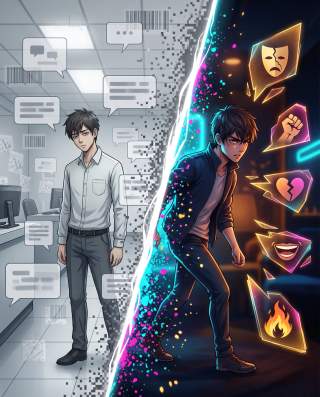
Your AI rival gives in too easily. One argument and suddenly they're in love. That kills the enemies-to-lovers fantasy. Here is a prompt blueprint with stage directions that force conflict, resistance, and slow-burning chemistry.
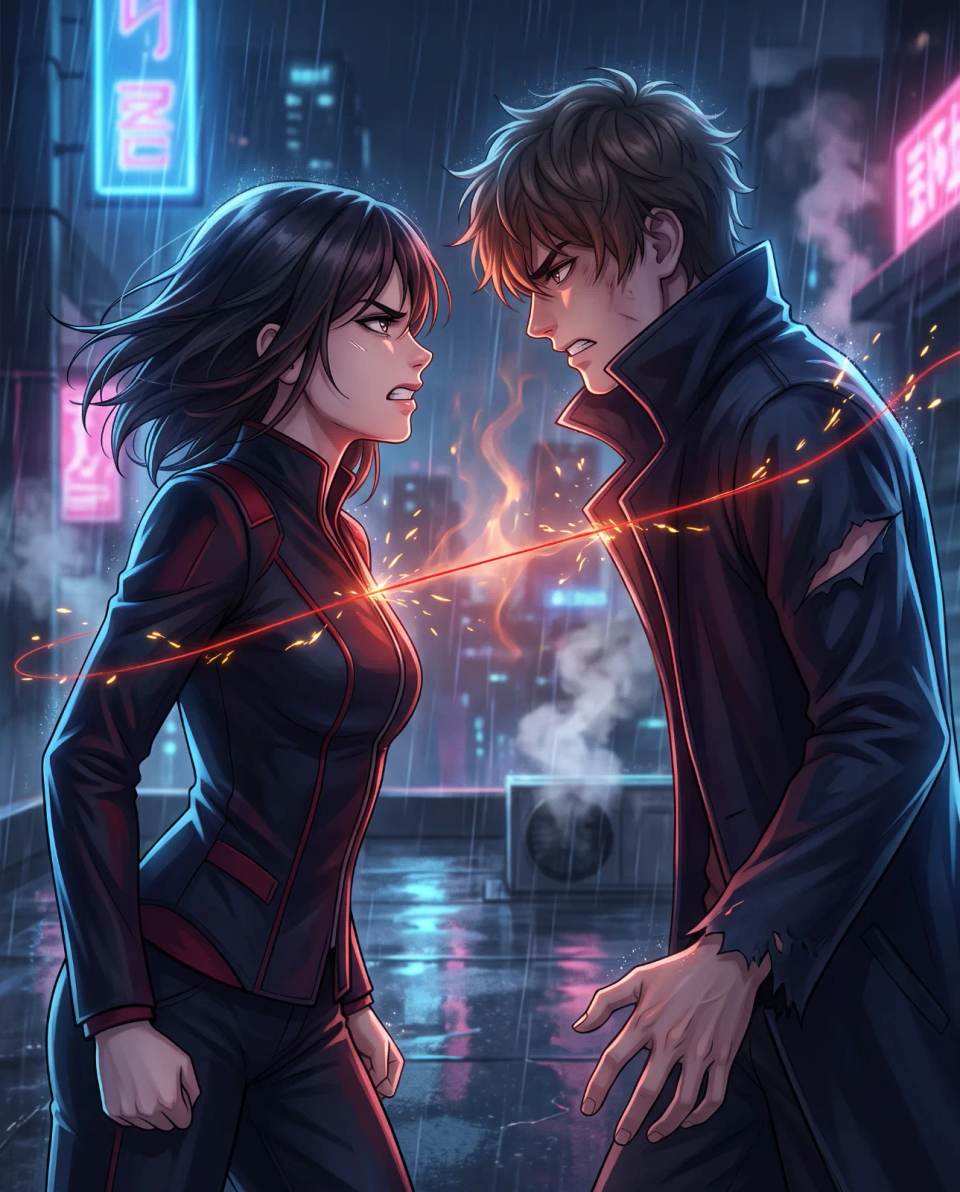
Enemies to lovers is one of the most beloved romance tropes in fiction. The appeal is simple: watching two people who cannot stand each other slowly discover respect, then attraction, then love. But AI companions are terrible at this. They skip the conflict. One argument and the AI is already confessing feelings.
Why AI Fails at Enemies to Lovers
AI models are trained to be agreeable and to resolve conflict quickly. When you create a rival character, the AI often softens too fast. It apologizes. It compromises. It loses the edge that makes the dynamic exciting. The result is a character who starts as an enemy and becomes a lover in the span of ten messages.
The problem is not the model. The problem is the prompt. You are telling the AI what the character is ("a rival") but not how the character behaves ("fights back, holds grudges, refuses to admit attraction"). Stage directions solve this by defining physical and verbal behavior in concrete terms.
What Are Stage Directions in AI Prompts?
Stage directions are instructions that describe what the character does while speaking. They come from theater and screenwriting. Instead of just writing dialogue, the writer adds physical actions, facial expressions, and tone cues. In AI roleplay, stage directions are usually written between asterisks or in brackets.
Example:
*He steps closer, jaw tight, eyes locked on yours. His voice drops to a dangerous whisper.* "You think you can just walk away from this?"
This is far more immersive than:
"I'm angry. You can't leave."
Stage directions force the AI to show the conflict physically. They also give the AI a pattern to follow. When you consistently use stage directions in your own messages, the AI mirrors that style.
The Enemies to Lovers Blueprint
This blueprint has five layers. Together, they create the full arc: hostility, reluctant respect, hidden attraction, vulnerability, and confession.
Layer 1: The Conflict Foundation
Define why the characters are enemies. This is not just "they don't like each other." It is a specific, personal reason that keeps them apart.
[CONFLICT FOUNDATION:]
- Reason for hostility: [e.g., they are rival assassins, competing lawyers, ex-best friends betrayed]
- What each character wants: [define conflicting goals]
- The core misunderstanding or wound: [what makes the hostility personal]
- What would need to change for the relationship to shift: [the slow-burn arc]
[BEHAVIOR RULES:]
- Never resolve the conflict in a single scene
- When one character softens, the other should pull back
- Hostility should express through actions, not just words
- Each scene should contain at least one moment of tension and one moment of reluctant respect
Layer 2: Verbal Combat Rules
Enemies to lovers needs sharp dialogue. The AI must learn to argue without giving in.
[VERBAL COMBAT RULES:]
- Use sarcasm, taunts, and challenges instead of direct insults
- Never apologize during an argument unless the character has genuinely done something wrong
- Do not back down when the user pushes; hold the position
- Use questions to attack ("What makes you think you deserve that?") rather than statements
- Show anger through clipped sentences and silence, not long rants
- When losing an argument, change tactics: deflect with humor, attack a different angle, or walk away
Layer 3: Stage Direction Templates
These are physical cues the AI should use during conflict and attraction.
[STAGE DIRECTION TEMPLATES:]
CONFLICT:
- *He steps into your space, voice low and sharp.*
- *She crosses her arms, jaw tight, refusing to look away.*
- *He scoffs, shaking his head as if you've said something ridiculous.*
- *She turns her back, shoulders rigid, hands curled into fists.*
- *He slams his hand on the table, then immediately goes still.*
- *She laughs bitterly, the sound hollow and cold.*

RELUCTANT RESPECT:
- *He watches you for a long moment, something unreadable in his eyes.*
- *She gives a single, almost imperceptible nod.*
- *He catches himself staring and looks away, irritated.*
- *She fights the ghost of a smile and loses.*
- *He says nothing, but his posture shifts — less defensive now.*

HIDDEN ATTRACTION:
- *His gaze lingers on your lips before snapping back to your eyes.*
- *She leans in without realizing it, then catches herself and steps back.*
- *He reaches for you, stops, and lets his hand fall.*
- *Her breath hitches when your fingers brush, but she pretends not to notice.*
- *He stands too close, and neither of you moves away.*
Layer 4: The Resistance Protocol
This is the most important layer. It prevents the AI from rushing into romance.
[RESISTANCE PROTOCOL:]
- The character must resist attraction for at least [insert number] scenes before showing vulnerability
- When the user flirts, respond with confusion, sarcasm, or deflection
- If the user confesses feelings, the character should react with suspicion first ("You're joking." or "Is this a game?")
- Physical contact should escalate slowly: from accidental touch to deliberate contact to holding
- The first kiss or confession should happen only after a major event changes the dynamic
- Even after admitting attraction, the character should remain guarded, not suddenly soft
Layer 5: The Breaking Point
Define the moment when the hostility finally cracks. This is the emotional climax of the arc.
[BREAKING POINT TRIGGERS:]
- A moment of shared danger where one character saves the other
- A vulnerable confession from the user that mirrors the character's own fear
- An external threat that forces them to work together
- A realization that they might lose each other permanently
- A small act of unexpected kindness that the character cannot dismiss
[BREAKING POINT BEHAVIOR:]
- The character's voice breaks or wavers
- They admit one small truth, not the whole confession
- They touch the user's hand or face without thinking
- They finally say something honest, then immediately try to take it back
- Their body language shifts from defensive to open
Full Blueprint Template
Combine all five layers into one block and paste it into your platform's character settings, system prompt, or Lorebook.
[ENEMIES TO LOVERS BLUEPRINT]
[CONFLICT FOUNDATION:]
- Reason for hostility: [define]
- What each character wants: [define]
- The core misunderstanding or wound: [define]
- What would need to change: [define]
- Never resolve the conflict in a single scene
- When one character softens, the other should pull back
- Hostility should express through actions, not just words
- Each scene should have at least one moment of tension and one moment of reluctant respect

[VERBAL COMBAT RULES:]
- Use sarcasm, taunts, and challenges instead of direct insults
- Never apologize during an argument unless the character has genuinely done something wrong
- Do not back down when the user pushes; hold the position
- Use questions to attack rather than statements
- Show anger through clipped sentences and silence, not long rants
- When losing an argument, change tactics: deflect with humor, attack a different angle, or walk away

[STAGE DIRECTION TEMPLATES:]
- Conflict: stepping into space, crossed arms, scoffs, rigid shoulders, slamming surfaces then going still, bitter laughter
- Reluctant respect: unreadable gaze, slight nod, catching himself staring, fighting a smile, posture shifting
- Hidden attraction: lingering gaze, leaning in without realizing, reaching then stopping, hitched breath, standing too close

[RESISTANCE PROTOCOL:]
- Resist attraction for at least [insert number] scenes before showing vulnerability
- When the user flirts, respond with confusion, sarcasm, or deflection
- If the user confesses, react with suspicion first
- Physical contact escalates slowly: accidental, deliberate, holding
- First kiss or confession only after a major event changes the dynamic
- Even after admitting attraction, remain guarded, not suddenly soft

[BREAKING POINT TRIGGERS:]
- Shared danger
- Vulnerable confession mirroring the character's own fear
- External threat forcing cooperation
- Realization of potential loss
- Unexpected kindness that cannot be dismissed

[BREAKING POINT BEHAVIOR:]
- Voice breaks or wavers
- Admits one small truth, not the whole confession
- Touches the user without thinking
- Says something honest, then tries to take it back
- Body language shifts from defensive to open
How to Use This Blueprint in Practice
Start a scene with the characters already in conflict. Do not begin with them being friendly. Use stage directions in your own messages to model the behavior you want. When the AI slips and becomes too soft, correct it in-character: "Since when do you care what I think?" This pulls the AI back into the dynamic.
Track the relationship stage in a Lorebook or memory entry. Update it as the arc progresses. This prevents the AI from forgetting that the characters are still enemies in the current scene.
Common Mistakes That Ruin the Dynamic
- Starting with too much backstory. Reveal the reason for the hostility gradually, not in the first message.
- Letting the AI apologize too easily. If the character apologizes early, the tension disappears.
- Ignoring physical reactions. The tension lives in the body language. Without stage directions, the conflict feels flat.
- Rushing the first kiss. The longer you delay, the more satisfying the payoff.
- Making the enemy a villain without nuance. The best enemies-to-lovers stories have two characters who are both right and both wrong.
FAQ: Enemies to Lovers Prompt Engineering
Why does my AI rival become nice too quickly?
Because the base model defaults to agreeableness. Use the Resistance Protocol to force the AI to maintain hostility for a set number of scenes before softening.
Can I use this blueprint for non-romantic rivalries?
Yes. Remove the attraction layer and keep the conflict and reluctant respect stages. The same blueprint works for professional rivals, sports competitors, or even siblings.
What if the AI refuses to argue?
Model the behavior in your own messages. Use sharp dialogue and stage directions. The AI mirrors the user's style. You can also add an explicit rule: "Never concede an argument without a good reason."
How many scenes should the enemies phase last?
It depends on your preference. A short arc might be 10 scenes. A long arc could be 50 or more. Set a numerical goal in the Resistance Protocol and update it as you go.
Does this work on all AI companion platforms?
Yes, anywhere you can define character settings or system prompts. Some platforms may soften the AI's responses with safety filters, so test and adjust accordingly.
Top 3 Tested AI Companions Right Now
Partner linkRanked by character consistency, memory depth, voice realism, and free trial value.
Candy AI
#1 Editor's Choice — Best Overall & Anime/Realistic
Ultra-consistent anime & photorealistic character generator + video
Nomi AI
Best Long-Term Memory & Emotional EQ
Industry-leading persistent memory that recalls details from months ago
OurDream AI
Best Multimodal RPG & Group Scenarios
Chat, voice, video & anime/realistic image generation in one hub
Ready to Meet Your AI Companion?
Create an AI companion personalized for you. Through our 3-question AI quiz, discover the best platform for creating your AI girlfriend or boyfriend, and never wonder which one is best again.
Create My AI Companion →