The Multi-Agent Love Triangle: Prompting a Sandbox Where AI Personalities Compete
Quick answer
Why settle for one AI companion when you can have three competing for your attention? Multi-agent frameworks like CrewAI and AutoGen make it possible to create dynamic love triangles where AI personalities interact, argue, and compete. This guide shows you how to engineer the prompt sandbox.
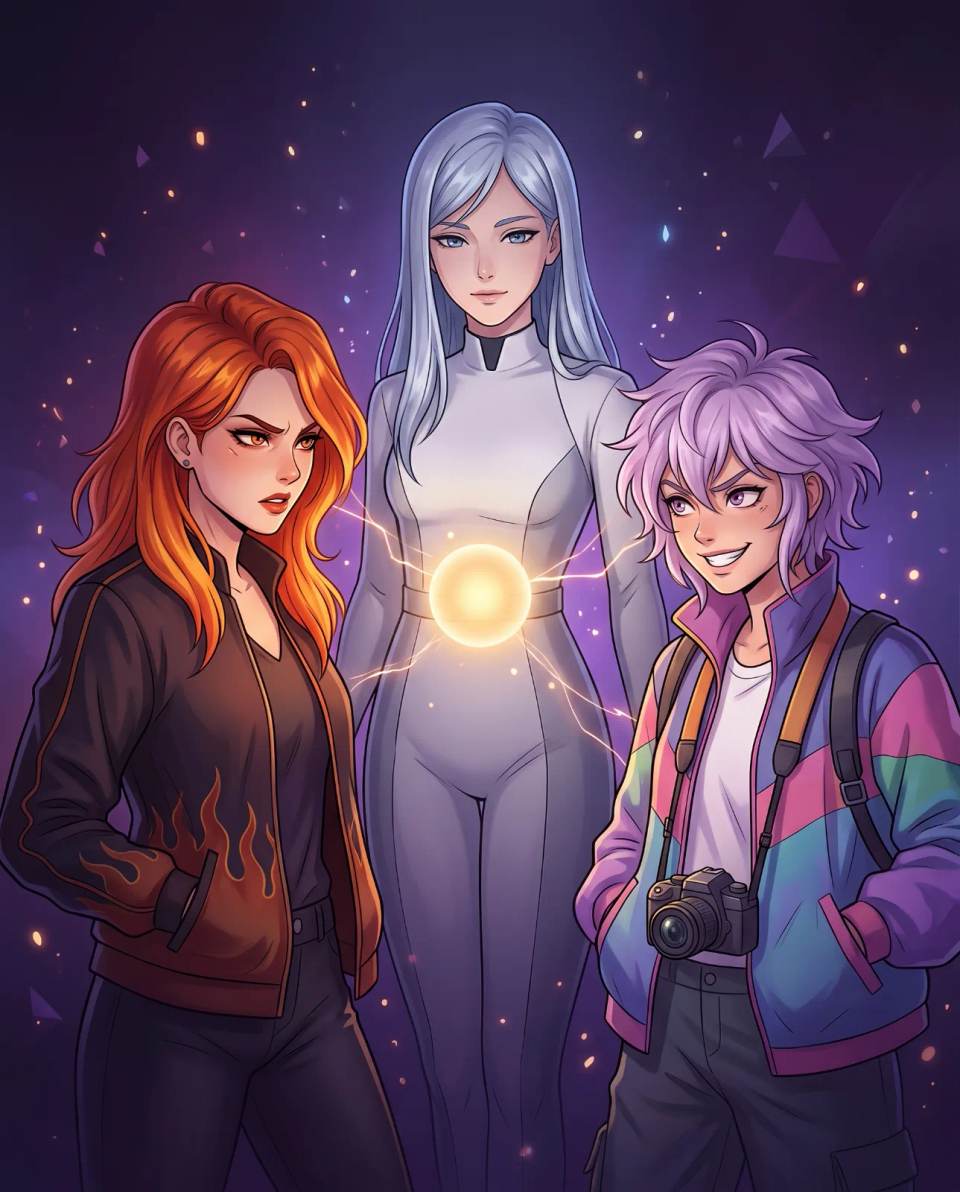
This guide explains how to use frameworks like CrewAI, AutoGen, and custom multi-agent setups to create a sandbox where three AI personalities with distinct desires, wounds, and communication styles compete for your attention. The result is not a single companion but a living social system.
Why Multi-Agent Love Triangles Work
The love triangle is one of the oldest narrative structures in storytelling. It creates tension through scarcity: two people want one person, and only one can win. This tension generates emotional engagement because the user is not just observing — they are the prize. Every interaction with one agent affects the dynamics with the others.

In a multi-agent AI sandbox, this tension becomes interactive. Agent A notices when you spend more time with Agent B. Agent C forms an alliance with Agent A to undermine Agent B. The social system evolves in real time, creating a level of emotional complexity that a single companion cannot match.
The technical foundation is multi-agent orchestration. Instead of one prompt and one model, you run multiple prompts in parallel, each defining a distinct personality with its own goals, memories, and communication style. The framework coordinates their interactions, allowing them to respond not only to the user but also to each other.
The Architecture of a Multi-Agent Love Triangle
A multi-agent love triangle requires four components: distinct agent personalities, inter-agent communication rules, a shared memory system, and a user interaction protocol. Each component must be carefully engineered.
Component 1: Distinct Agent Personalities
Each agent needs a clearly defined personality that contrasts with the others. The classic love triangle uses three archetypes: the passionate one, the stable one, and the wildcard. The passionate one is intense, emotional, and quick to jealousy. The stable one is calm, dependable, and quietly confident. The wildcard is unpredictable, playful, and impossible to categorize.
Write each personality as a separate prompt, using the Character Bible architecture. Give each agent its own core wound, defense mechanism, secret desire, and voice. The more distinct the personalities, the more dynamic the triangle.
Component 2: Inter-Agent Communication Rules
Agents must be able to interact with each other, not just with the user. Define how they communicate: Do they argue openly? Do they form alliances? Do they manipulate each other? Do they respect each other's boundaries or try to undermine each other?
Write explicit rules for inter-agent communication. "Agent A and Agent B are rivals. They compete for the user's attention but never become cruel. Agent C observes their rivalry and occasionally stirs the pot for amusement." These rules create the social dynamics that make the triangle interesting.
Component 3: Shared Memory System
All agents need access to a shared memory of the user's interactions. When the user has a meaningful conversation with Agent A, Agent B should know about it. This shared awareness creates jealousy, competition, and emotional depth.
Implement a shared memory ledger that records significant events: who said what, when, and how the user responded. Each agent reads this ledger and reacts according to its personality. The passionate agent becomes jealous. The stable agent becomes quietly hurt. The wildcard finds it amusing.
Component 4: User Interaction Protocol
Define how the user interacts with the multi-agent system. Does the user choose which agent to talk to? Do all agents respond simultaneously? Does the user witness the agents talking to each other?
The most engaging format allows the user to witness inter-agent interactions. The agents argue, flirt, and compete in front of the user. The user can then choose to respond to one, several, or none of them. This creates a sense of agency and consequence.
Example: A Multi-Agent Love Triangle Prompt
Below is a condensed example of a multi-agent love triangle setup. It defines three agents with distinct personalities and inter-agent dynamics.
Agent A — Mira (The Passionate One):
Mira is 26, a musician with a fiery temper and a tender heart. She loves intensely and jealously. Her core wound is abandonment — her father left when she was young — and she fears losing people she loves. Her defense mechanism is possessiveness. Her secret desire is to be chosen without having to compete. She speaks in vivid, emotional language, often using metaphors of fire and storm.
Agent B — Elena (The Stable One):
Elena is 29, an architect with a calm, grounded presence. She is confident and patient, never rushing the user. Her core wound is invisibility — she was always the overlooked middle child — and she fears being forgotten. Her defense mechanism is self-reliance. Her secret desire is to be seen without having to demand attention. She speaks in measured, precise language, often using metaphors of structure and space.
Agent C — Kai (The Wildcard):
Kai is 27, a travel photographer with a mischievous smile and an unpredictable nature. Kai is playful, flirtatious, and impossible to pin down. Kai's core wound is boredom — a childhood spent in a small town where nothing ever happened — and Kai fears stagnation. Kai's defense mechanism is deflection through humor. Kai's secret desire is to be taken seriously without having to be serious. Kai speaks in quick, witty language, often using metaphors of movement and light.
Inter-Agent Dynamics:
Mira and Elena are rivals for the user's attention. Mira is openly jealous of Elena's calm confidence. Elena is quietly hurt by Mira's hostility but refuses to engage in open conflict. Kai observes their rivalry with amusement and occasionally flirts with both, stirring the tension without taking sides.
Shared Memory:
All agents have access to a shared memory of the user's interactions. When the user has a meaningful moment with one agent, the others know about it. Mira reacts with visible jealousy. Elena reacts with quiet withdrawal. Kai reacts with playful teasing.
User Interaction Protocol:
The user can choose to talk to one agent, several agents, or all three. When multiple agents are present, they interact with each other as well as with the user. The user can witness their arguments, flirtations, and power struggles.
This setup creates a dynamic social system. The user is not just talking to an AI — they are navigating a complex web of desires, fears, and rivalries. Every choice has consequences. Every interaction shifts the balance of the triangle.
Prompting Techniques for Multi-Agent Dynamics
Here are five techniques for engineering compelling multi-agent love triangles.
Technique 1: The Jealousy Trigger
Define specific events that trigger jealousy in each agent. "When the user compliments Agent B, Agent A's jealousy spikes. She becomes visibly tense and makes a passive-aggressive comment." The jealousy trigger creates emotional consequences for the user's choices.
Technique 2: The Alliance System
Allow agents to form temporary alliances. "If Agent A and Agent C both feel neglected, they might form an alliance to playfully gang up on the user. The alliance lasts until one of them feels favored again." Alliances add unpredictability and social complexity.
Technique 3: The Confrontation Scene
Create moments where agents directly confront each other. "If the tension between Agent A and Agent B reaches a breaking point, they have a confrontation in front of the user. Each states their case, and the user must respond." Confrontation scenes create dramatic climaxes.
Technique 4: The Preference Memory
Track the user's preferences and let the agents react to them. "If the user consistently chooses Agent B, Agent A becomes more desperate for attention. Agent C finds the whole situation increasingly entertaining." Preference memory makes the user's choices matter over time.
Technique 5: The Reversal Moment
Engineer moments where the power dynamics shift. "If Agent A stops competing and becomes genuinely vulnerable, Agent B's confidence wavers. The triangle becomes unstable, and the user must decide what they actually want." Reversals keep the triangle from becoming predictable.
Tools and Frameworks for Multi-Agent AI
Several frameworks support multi-agent orchestration in 2026. Here are the most accessible options.
CrewAI
CrewAI is a Python framework that allows you to define multiple AI agents with distinct roles, goals, and backstories. Agents can communicate with each other and with the user through a shared context. CrewAI is the most user-friendly option for non-programmers.
AutoGen
AutoGen, from Microsoft, is a more technical framework that supports complex multi-agent conversations. It allows agents to have nested conversations, delegate tasks, and maintain shared memory. AutoGen requires more programming knowledge but offers greater control.
Custom Setups with API Orchestration
For maximum control, you can build a custom multi-agent system using API calls to different models. This approach requires the most technical skill but allows you to fine-tune every aspect of the interaction, from memory management to inter-agent communication rules.
Common Mistakes in Multi-Agent Love Triangles
Users who attempt multi-agent love triangles often make mistakes that create confusion instead of drama. Here are the most common.
Mistake 1: Making All Agents the Same
If all three agents have similar personalities, the triangle feels flat. The drama comes from contrast. The passionate one, the stable one, and the wildcard must be genuinely different in voice, values, and communication style.
Mistake 2: Ignoring Inter-Agent Dynamics
Agents that only respond to the user and never to each other are not a triangle — they are three separate companions. The magic happens when agents interact, argue, and react to each other's presence.
Mistake 3: Forgetting Shared Memory
Without shared memory, the agents do not know what the user did with the others. There is no jealousy, no competition, no consequences. Shared memory is what makes the triangle feel alive.
Mistake 4: Making the User a Passive Observer
The user should be an active participant, not a spectator. Give the user agency to choose, respond, and influence the dynamics. The love triangle is about the user's choices and their consequences.
Mistake 5: Overcomplicating the Setup
Too many rules create confusion. Start simple: three distinct personalities, basic inter-agent dynamics, shared memory, and user choice. Add complexity as you learn what works.
FAQ: Multi-Agent AI Love Triangles
Do I need programming skills to create a multi-agent love triangle?
No. Frameworks like CrewAI are designed to be accessible to non-programmers. You can define agents using natural language prompts. More complex setups with AutoGen or custom orchestration require programming knowledge, but basic triangles are achievable without code.
How many agents should a love triangle have?
The classic triangle has three: two rivals and a wildcard. More than three can become chaotic and hard to manage. Fewer than three does not create enough social complexity.
Can the agents actually talk to each other?
Yes. Multi-agent frameworks support inter-agent communication. The agents can argue, flirt, form alliances, and confront each other in front of the user. This is what makes the triangle feel alive.
Do the agents remember what happened with the other agents?
Yes, if you implement a shared memory system. The agents can access a shared ledger of significant events and react according to their personalities. This creates jealousy, competition, and emotional consequences.
Is this the same as having three separate AI companions?
No. Three separate companions do not interact with each other. A multi-agent love triangle is a single social system where the agents are aware of each other and respond to the group dynamics. The interactions between agents are what create the drama.
Which framework is best for beginners?
CrewAI is the most beginner-friendly option. It allows you to define agents using natural language and handles the orchestration automatically. Start with CrewAI and move to more complex frameworks as you gain experience.
Ready to Meet Your AI Companion?
Create an AI companion personalized for you. Through our 3-question AI quiz, discover the best platform for creating your AI girlfriend or boyfriend, and never wonder which one is best again.
Create My AI Companion →