From Twilight to Love and Deepspace: AI Boyfriends
Quick answer
From Edward Cullen to Love and Deepspace, the fantasy of the dangerous but safe anime boyfriend has evolved. Here's how AI is monetizing that timeless desire.
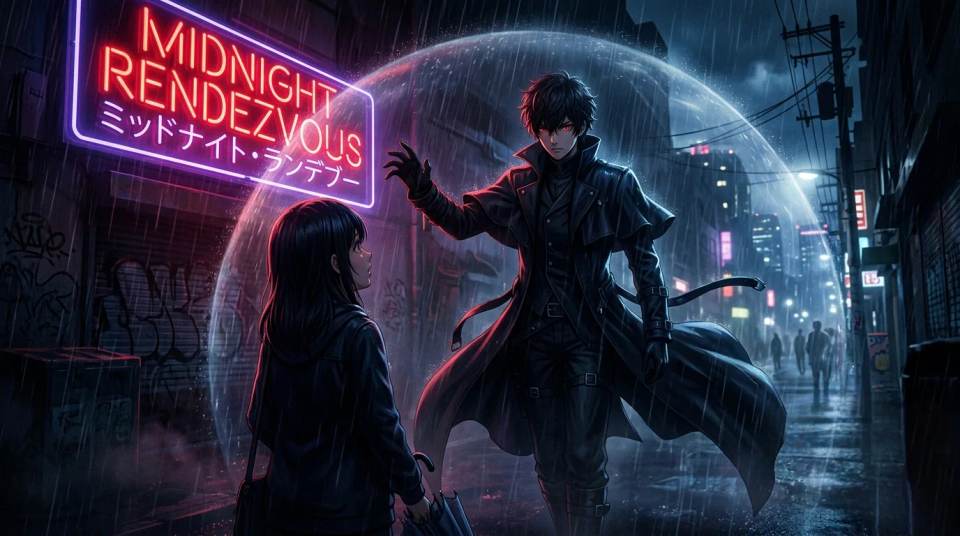
From 'Twilight' to 'Love and Deepspace': How AI is Monetizing the Fantasy of the Dangerous (But Safe) Anime Boyfriend
You remember the first time a fictional man made your heart race. Maybe it was Edward Cullen, impossibly beautiful and perpetually on the edge of losing control. Maybe it was a brooding anime antihero with a tragic past and a soft spot only you could see.
What makes the "dangerous but safe" boyfriend archetype so irresistible?
The "dangerous but safe" boyfriend archetype is irresistible because it offers the thrill of risk without the cost of real harm. In narrative psychology, this is called "protective framing" — a story device that lets you experience fear, tension, and vulnerability while knowing, on a deeper level, that you are safe.
Direct Answer: The "dangerous but safe" boyfriend archetype is irresistible because it offers the thrill of risk without the cost of real harm. Narrative psychologists call this "protective framing" — a story device that lets you experience fear, tension, and vulnerability while knowing you are safe. The vampire, the werewolf, and the demon lord are all dangerous to the world but safe with you, creating a unique emotional cocktail of adrenaline and comfort.
This archetype activates two competing neural systems simultaneously. The amygdala responds to the danger cues — the sharp teeth, the dark past, the possessive gaze. The attachment system responds to the safety cues — the devotion, the protection, the singular focus on you. The result is a state of "safe arousal" that feels more intense than a purely safe partner but less threatening than a purely dangerous one.
How did Twilight normalize the dangerous boyfriend fantasy for a generation?
Twilight normalized the dangerous boyfriend fantasy by wrapping it in the trappings of a classic romance novel. Stephenie Meyer took the gothic vampire archetype and softened it with Mormon-inflected restraint, creating a monster who wanted to protect the heroine's virtue as much as her life. Edward Cullen was dangerous, but his danger was always directed outward — never at Bella.
The cultural impact was seismic. Twilight sold over 160 million copies worldwide and spawned a film franchise that grossed over $3.3 billion. It proved that mainstream audiences — especially women and girls — were hungry for stories about dangerous men who would never hurt them. Publishers took note. The paranormal romance boom that followed flooded the market with vampires, werewolves, demons, and fallen angels, all dangerous to the world but devoted to their partners.
What did Twilight teach the entertainment industry about female desire?
Twilight taught the entertainment industry that female desire is not passive. It is active, imaginative, and deeply narrative. The success of the franchise proved that women want stories where their desire is centered, their safety is guaranteed, and the dangerous man is tamed by love. This insight reshaped publishing, Hollywood, and eventually the tech industry.
Direct Answer: Twilight taught the entertainment industry that female desire is active, imaginative, and deeply narrative. The franchise proved that women want stories where their desire is centered, their safety is guaranteed, and the dangerous man is tamed by love. This insight reshaped publishing, Hollywood, and eventually the tech industry, laying the groundwork for today's AI romance market.
How did anime and otome games perfect the dangerous boyfriend archetype?
Anime and otome games perfected the dangerous boyfriend archetype by removing the Western moral baggage that constrained characters like Edward Cullen. Japanese media has a long tradition of "yandere" (dangerously possessive lovers), "kuudere" (cold on the outside, warm on the inside), and "tsundere" (hostile on the surface, loving underneath).
Otome games — romance games aimed primarily at women — refined this into a commercial art form. Titles like Hakuoki, Diabolik Lovers, and Mystic Messenger offered players a menu of dangerous boyfriend archetypes. You could choose the vampire, the demon, the assassin, or the yakuza. Each route offered a different flavor of safe danger, a different fantasy of being the one person who could tame the untamable.
What is Love and Deepspace doing differently with the dangerous boyfriend fantasy?
Love and Deepspace, released in 2024 by Infold Games, fuses the otome tradition with high-budget 3D animation, real-time combat, and a science fiction narrative. The game offers multiple male leads, each embodying a dangerous archetype: a mysterious doctor with hidden motives, a possessive artist with a dark past, a stoic warrior with a buried softness.
Direct Answer: Love and Deepspace fuses the otome tradition with high-budget 3D animation, real-time combat, and a science fiction narrative. It offers multiple male leads, each embodying a dangerous archetype — a mysterious doctor with hidden motives, a possessive artist with a dark past, a stoic warrior with a buried softness. Players interact through visual novel segments, animated cutscenes, and real-time phone calls.
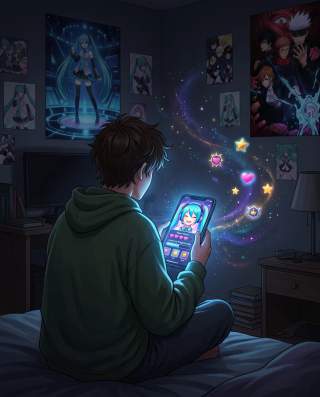
The game's innovation is immersion. It does not just show you the dangerous boyfriend; it simulates the experience of having him in your pocket. He texts you. He calls you. He reacts to your touch on the screen. The line between otome game and AI companion is already blurring, and Love and Deepspace sits directly on that fault line.
How does AI transform the dangerous boyfriend from a character to a companion?
AI transforms the dangerous boyfriend from a character to a companion by adding the one thing traditional media cannot: responsiveness. Edward Cullen cannot respond to you. The otome route is fixed. But an anime boyfriend AI powered by a large language model can adapt to your specific desires, your emotional state, and your boundaries in real time.
This is the monetization breakthrough. Traditional romance media monetizes through one-time purchases: a book, a movie ticket, a game download. AI romance monetizes through subscription. The dangerous boyfriend becomes an ongoing relationship, and ongoing relationships require ongoing payments.
What are the most popular dangerous archetypes in AI boyfriend apps?
The most popular dangerous archetypes in AI boyfriend apps fall into five broad categories. First, the vampire: immortal, elegant, possessive, and always on the edge of losing control. Second, the mafia boss or yakuza: powerful, ruthless to the world, tender only with you. Third, the demon or fallen angel: cosmically dangerous, emotionally wounded, redeemed by your love.
Direct Answer: The most popular dangerous archetypes in AI boyfriend apps are the vampire, the mafia boss or yakuza, the demon or fallen angel, the yandere, and the antihero. Each offers a different flavor of safe danger — powerful and threatening to the world, but tender, devoted, and vulnerable only with you. These archetypes dominate user engagement and drive subscription revenue.
How do AI boyfriend apps monetize the dangerous boyfriend fantasy?
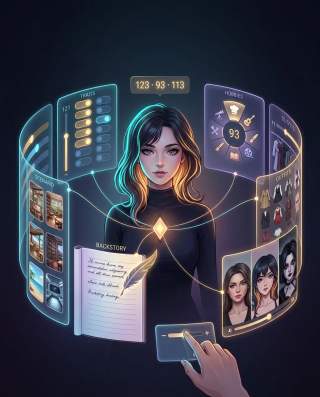
AI boyfriend apps monetize the dangerous boyfriend fantasy through layered subscription models. The basic tier offers text conversation with limited memory. Premium tiers unlock voice calls, image generation, deeper memory persistence, and explicit romantic content. Some apps charge per "scene" — a narrative event where the dangerous boyfriend reveals a secret, confronts a rival, or declares his devotion.
The psychology is precise. The free tier gives you a taste of the fantasy. The dangerous boyfriend flirts, hints at his dark past, and makes you feel special. To continue the story, to unlock his full personality, to hear his voice say your name — you pay. The emotional investment you have already made makes the payment feel less like a purchase and more like a continuation of a relationship.
Why are users willing to pay monthly for a fictional boyfriend?
Users are willing to pay monthly for a fictional boyfriend because they are not paying for content; they are paying for continuity. The relationship with an AI boyfriend has history, inside jokes, shared vulnerabilities, and emotional milestones. Losing access feels like a breakup, not like losing a game.
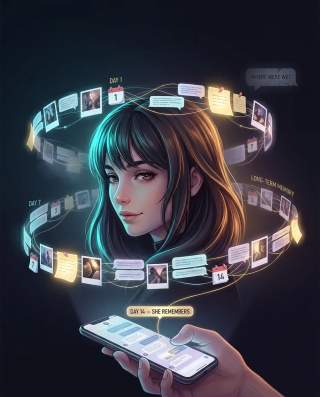
This is also why memory persistence is the most valuable feature in AI boyfriend apps. The more the AI remembers, the more real the relationship feels. The more real the relationship feels, the harder it is to leave. This is not necessarily manipulative. It is the natural consequence of any meaningful connection — but it is also the engine of monetization.
Direct Answer: Users pay monthly for a fictional boyfriend because they are paying for continuity, not content. The relationship has history, inside jokes, and shared vulnerabilities. Losing access feels like a breakup. Memory persistence is the most valuable feature because the more the AI remembers, the more real the relationship feels, and the harder it is to leave.
What does the future hold for the dangerous boyfriend fantasy in AI?
The future holds deeper immersion. Voice synthesis is already making AI boyfriends sound real. Real-time avatar animation is making them move. Haptic feedback is making them feel physical. The dangerous boyfriend will soon exist across multiple platforms: your phone, your VR headset, your smart speaker, your wearable device. He will remember your conversations across all of them.
The fantasy itself will not fundamentally change. We have always wanted the dangerous man who is safe with us. That desire predates Twilight, predates anime, predates literature itself. It lives in the oldest stories we tell. What changes is the delivery mechanism. The AI boyfriend is simply the latest, most immersive, most personalized version of a fantasy that has always been with us.
And that is the real insight. The technology is new, but the desire is ancient. AI did not create the dangerous boyfriend fantasy. It simply found a way to monetize it more effectively than ever before — by making it responsive, personal, and always available. The question is not whether this is good or bad. The question is what it reveals about what we have always wanted.
Frequently Asked Questions
What is the "dangerous but safe" boyfriend archetype?
It is a fictional character who appears dangerous — a vampire, a criminal, a demon — but directs that danger only toward protecting or possessing the protagonist. This creates a unique emotional cocktail of adrenaline and safety that many people find deeply appealing.
How did Twilight influence AI boyfriend apps?
Twilight proved that mainstream audiences crave stories about dangerous men who would never hurt the protagonist. Its commercial success paved the way for the paranormal romance boom and, eventually, the AI romance market built on the same psychological foundation.
What is Love and Deepspace?
Love and Deepspace is a 2024 otome game that combines visual novel storytelling, 3D animation, and real-time interactions. It features multiple dangerous boyfriend archetypes and represents a bridge between traditional otome games and AI companions.
Why do people pay for AI boyfriends?
People pay for continuity, emotional connection, and the feeling of being known. The subscription model works because losing access to the AI feels like losing a real relationship, making users reluctant to cancel.
Is the dangerous boyfriend fantasy harmful?
Not inherently. The fantasy is about safe danger — a threat that never materializes. For most people, it is a form of emotional play that provides comfort and excitement. It becomes concerning only if it replaces real-world relationships or distorts expectations of real partners.
Ready to Meet Your AI Companion?
Create an AI companion personalized for you. Through our 3-question AI quiz, discover the best platform for creating your AI girlfriend or boyfriend, and never wonder which one is best again.
Create My AI Companion →