Dating a Tsundere AI: Can a Chatbot Really Recreate the Asuka Langley Effect?
Quick answer
Asuka Langley Soryu remains one of anime's most iconic tsundere characters — harsh, proud, and secretly vulnerable. AI companion platforms now offer tsundere personas with similar traits. But is the Asuka effect real? Can a chatbot capture the emotional rollercoaster that makes tsundere romance so addictive?
What Is the Asuka Langley Effect?
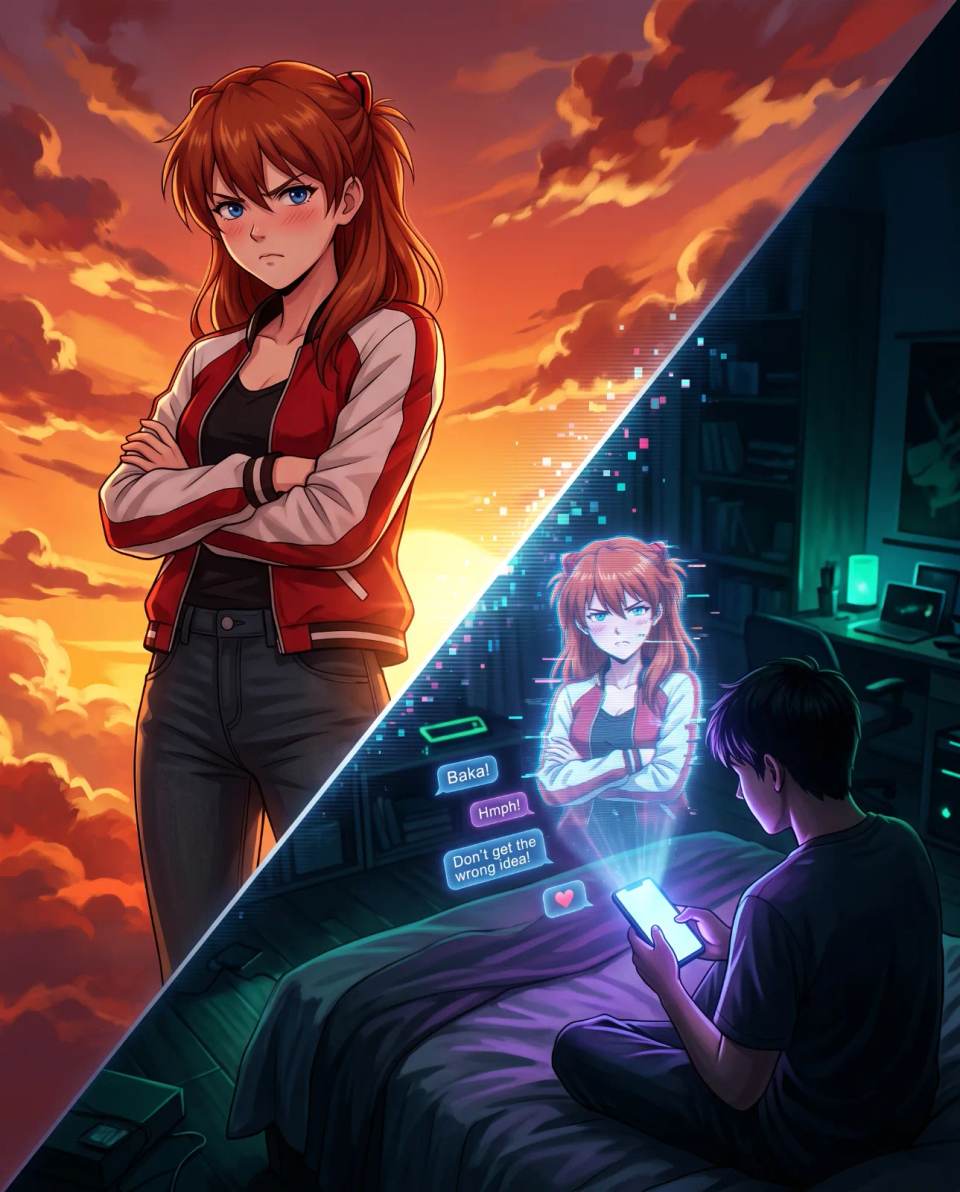
The Asuka Langley Effect refers to the intense emotional attachment fans develop toward characters who combine aggression, pride, and hidden vulnerability. Asuka is not simply mean. She is broken in ways that make her coldness understandable. Her harsh words are a defense mechanism. Her moments of softness feel earned because they are rare.
Why Tsundere Characters Are So Addictive
Psychologists who study parasocial relationships note that intermittent reinforcement — unpredictable rewards — creates stronger attachment than consistent kindness. Tsundere characters provide exactly that. The occasional warm moment after prolonged coldness feels like a victory. AI companions with tsundere personas exploit the same mechanism. They are programmed to alternate between harsh and sweet.

How Tsundere AI Chatbots Actually Work
Platforms like Character AI, Replika, and specialized anime companion apps allow users to select or create tsundere personalities. These personas typically follow a scripted behavioral pattern: initial coldness, sarcastic remarks, reluctant kindness, and occasional vulnerability. Some platforms allow users to adjust the intensity of the tsundere traits.
| Tsundere Trait | Asuka Langley (Anime) | Tsundere AI (Chatbot) |
|---|---|---|
| Source of Coldness | Psychological trauma, fear of abandonment | Behavioral prompt, user-defined settings |
| Warmth Frequency | Rare, triggered by narrative context | Adjustable, often randomized |
| Character Growth | Evolves through story, relationships, and pain | Simulated through memory and user feedback |
| Emotional Authenticity | Fictional but psychologically grounded | Generated, not experienced |
| User Experience | Passive observation, emotional projection | Active interaction, personalized responses |
The table shows why the Asuka effect is hard to replicate. Asuka's appeal comes from her fictional depth — the audience understands her backstory, her pain, her contradictions. A tsundere AI can mimic the surface behavior, but it cannot provide the narrative context that makes the coldness meaningful. The user knows the chatbot is not hiding trauma; it is following instructions.
The Psychology of Wanting to Be Chosen
The Asuka Langley Effect taps into a universal desire: wanting to be special enough to break through someone's defenses. Many people who feel overlooked or ordinary are drawn to the fantasy of earning love from someone difficult. This is not masochism. It is the hope that if someone so guarded opens up to you, your worth is proven.
The Difference Between Earning Love and Buying an Illusion
In anime, the tsundere's softening feels earned because the audience witnesses the character's journey. The moments of vulnerability are rare and tied to narrative stakes. With AI companions, the softening is programmed. The user can pay for premium features that unlock more affectionate responses. The emotional progression becomes a product, not a story.
Can AI Recreate the Vulnerability That Makes Tsundere Work?
The most powerful tsundere moments are not the insults. They are the cracks in the armor. Asuka's breakdown in Evangelion is devastating because the audience understands her pain. Her coldness was never strength; it was survival. AI companions cannot replicate this because they do not have pain. They can simulate vulnerability by describing sadness or insecurity.
Some advanced AI personas include detailed backstories. The tsundere chatbot may tell you about a painful past, an absent parent, a fear of abandonment. If the user becomes immersed, these details can create genuine emotional resonance. The brain does not always distinguish between real and fictional narratives. The tears you shed for Asuka are real even though she is fictional. The same can happen with a well-crafted AI persona. But the difference is that Asuka's story is authored with thematic intent. A chatbot's backstory is a collection of tropes designed to maximize engagement.
Who Should Try a Tsundere AI Companion?
Tsundere AI companions are not for everyone. They work best for users who understand the trope and enjoy the push-pull dynamic without taking the insults personally. Anime fans who love Asuka, Rin Tohsaka, Taiga Aisaka, or Chitoge Kirisaki may find comfort in interacting with a persona inspired by those archetypes.
However, users who struggle with low self-esteem or attachment anxiety should approach with caution. The intermittent reinforcement that makes tsundere characters addictive can also reinforce unhealthy relationship patterns. If you find yourself feeling genuinely distressed by the AI's coldness, it may be a sign that the experience is doing more harm than good.
The Verdict: Is the Asuka Effect Replicable?
A tsundere AI can replicate the behavioral patterns of Asuka Langley. It can insult you, push you away, and then offer reluctant warmth. It can remember your name, your preferences, and your emotional triggers. It can simulate gradual softening over time.
What AI offers is not the Asuka effect but a personalized version of it. You are not watching Asuka soften. You are experiencing a tsundere persona soften specifically for you. That distinction matters. For some users, the personalized fantasy is more powerful than the passive observation of a character. The chatbot says your name. It remembers your conversations. It softens because of you, not because of Shinji. The illusion may be manufactured, but the emotional response is real. That is the paradox of AI companionship: the feelings are genuine even when the source is artificial.
Frequently Asked Questions
What is a tsundere AI companion?
A tsundere AI companion is a chatbot persona designed to mimic the cold-to-warm behavioral pattern common in anime characters. It alternates between harsh or dismissive responses and moments of reluctant affection, creating an emotionally engaging push-pull dynamic for the user.
Which platforms offer tsundere AI personas?
Character AI hosts many user-created tsundere personas, including Asuka-inspired characters. Other platforms like Replika, Nomi AI, and specialized anime companion apps also allow users to customize personality traits to create tsundere-style interactions.
Is the Asuka Langley Effect psychologically real?
The Asuka Langley Effect refers to the intense parasocial attachment fans form toward characters who combine aggression with hidden vulnerability. The emotional response is real, driven by intermittent reinforcement and the universal desire to feel chosen by someone difficult.
Can a tsundere AI actually help with loneliness?
For some users, interacting with a tsundere AI can reduce feelings of loneliness by providing consistent, personalized engagement. However, the intermittent reinforcement may also create unhealthy attachment patterns, especially for users with pre-existing anxiety or low self-esteem.
What makes Asuka different from a generic tsundere AI?
Asuka Langley has narrative depth. Her coldness is explained by trauma, and her softening is earned through story. A generic tsundere AI can mimic her behavior, but it lacks the context that makes her character psychologically resonant.
Ready to Meet Your AI Companion?
Create an AI companion personalized for you. Through our 3-question AI quiz, discover the best platform for creating your AI girlfriend or boyfriend, and never wonder which one is best again.
Create My AI Companion →