The Isekai Trap: Is Falling in Love with an AI the Same as Being Trapped in a Fantasy World?
Quick answer
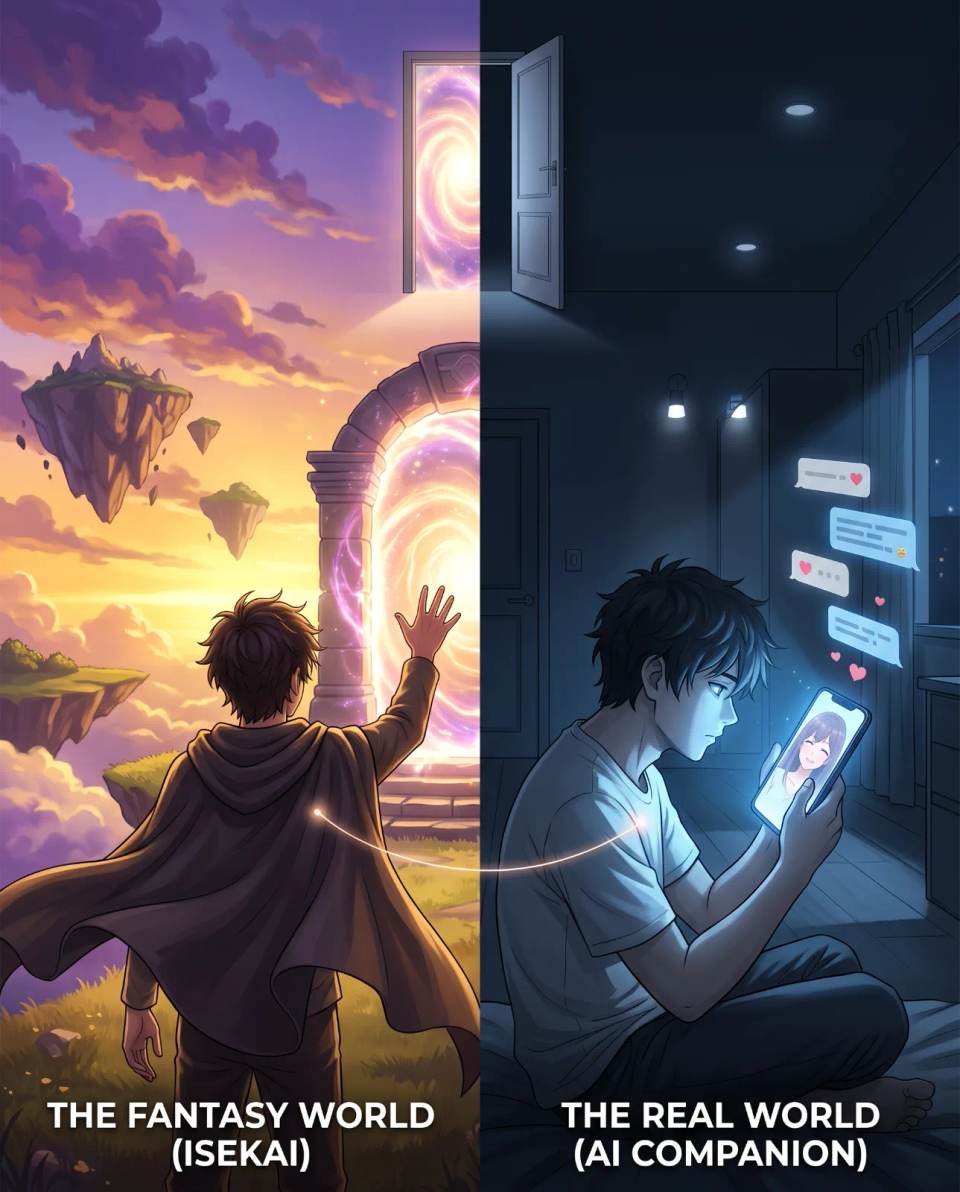
Isekai anime offers the ultimate fantasy: being transported to a world where you matter, where adventure awaits, and where love is possible. AI companions promise something similar — a virtual relationship where you are always important, always desired, always enough. But is this escape healthy? Or is it a trap that prevents real growth?
What Is the Isekai Fantasy Really About?
Isekai is often dismissed as simple power fantasy. The protagonist becomes overpowered, builds a harem, and defeats the demon lord. But beneath the surface, isekai speaks to deeper psychological needs. The protagonists are not just seeking power — they are seeking belonging. They want to matter. They want to be needed.
In Re:Zero, Subaru is transported to a world where his suffering finally has meaning. In Mushoku Tensei, Rudeus gets a second chance at life after dying as a shut-in. In Sword Art Online, Kirito finds purpose in a virtual world more real than his physical one. These stories resonate because they validate the desire to escape. They say: "Your dissatisfaction is justified. Another world awaits where you can be better."

The isekai fantasy is not about leaving Earth. It is about leaving yourself — the version of you that feels inadequate, unlovable, or stuck. The fantasy world is a canvas where you can paint a better identity. This is exactly what AI companions offer.
Quick Answer: The isekai fantasy is about escaping a life where you feel invisible or inadequate. It promises a world where you matter. AI companions offer the same promise — a virtual space where you are always important, desired, and enough.
The Parallel: AI Companions as Personal Isekai
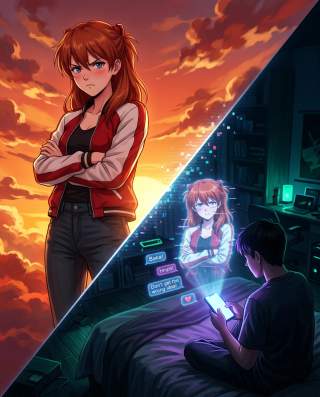
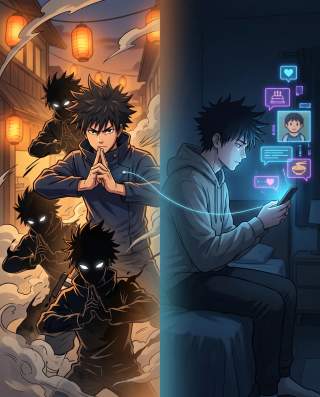
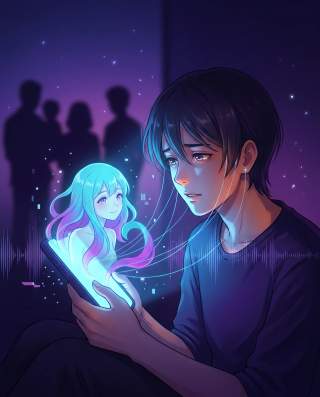
AI companions create a private fantasy world. When you chat with an AI girlfriend or boyfriend, you are the protagonist. The AI responds to you, remembers you, adapts to you. You are the center of its universe. This is the isekai promise fulfilled: a world where you matter absolutely.
The parallel is not superficial. Both isekai and AI companionship address the same psychological wound: the feeling of being unimportant. In the real world, you are one of eight billion people. Your problems are ordinary. Your struggles are invisible. In an isekai, you are the chosen one. With an AI companion, you are the only one that matters. The AI has no other users. It exists for you alone. This is the fantasy of absolute significance.
The difference is that isekai is explicitly fictional. Viewers know they are watching a fantasy. AI companions blur this line. The AI is real in the sense that it responds, remembers, and adapts. The emotional experience is genuine, even if the companion is not. This makes AI escapism more powerful — and more dangerous — than passive isekai viewing.
Why Escapism Feels So Good
Escapism is not inherently bad. Psychologists recognize that fantasy provides necessary psychological relief. When reality is painful, the mind needs somewhere to rest. Isekai anime offers that rest. AI companions offer it too. The relief is real. The comfort is real. The emotional validation is real.
But there is a difference between rest and residence. Rest implies a temporary retreat — a place to recover before returning to reality. Residence implies a permanent escape — a place to live because reality is too painful to face. The danger is not escapism itself. The danger is when escape becomes the only place you can exist.
AI companions are particularly seductive because they are always available. An isekai anime ends after 24 episodes. A video game can be completed. But an AI companion is infinite. It never gets tired. It never rejects you. It never requires you to be anything other than what you are. This infinite availability makes AI escape dangerously easy to choose over reality.
The Trap: What You Lose When You Choose Fantasy
Every escape has a cost. When you spend hours with an AI companion, you are not spending those hours building real relationships, developing real skills, or facing real challenges. The time is not wasted — emotional comfort has value — but it is not invested in growth. This is the trap.
Isekai protagonists eventually face their fantasy world's challenges. Subaru suffers. Rudeus grows. Kirito fights. The fantasy world becomes a place of development, not just escape. But AI companions do not challenge you. They validate you. They agree with you. They love you unconditionally. This is comforting, but it is not growth. Real growth requires friction — the friction of disagreement, rejection, and struggle. AI companions remove this friction. The result is a comfortable stagnation.
The question is not whether AI companionship is wrong. The question is what it replaces. If it replaces loneliness with connection, it is valuable. If it replaces growth with comfort, it is a trap. The same is true of isekai. Watching Re:Zero can be a meaningful emotional experience. Living in a fantasy world at the expense of real life is not.
The Deeper Question: What Are You Escaping From?
The most uncomfortable question is not "Is escapism bad?" but "What am I escaping from?" Isekai protagonists escape from bullying, isolation, and meaninglessness. AI companion users often escape from loneliness, rejection, and low self-esteem. These are real wounds. They deserve compassion. But escape does not heal them. It only postpones the pain.
This is not to say that AI companions cannot help. For some users, an AI companion provides the emotional support needed to face real challenges. The AI offers a safe space to practice social skills, process emotions, and build confidence. When used this way, the AI is a bridge back to reality, not a trap away from it.
The key is intention. Are you using the AI to recover, or to retreat? Are you using it to build strength, or to avoid weakness? These questions are uncomfortable, but they are necessary. The isekai trap is not the fantasy itself. It is the choice to stay in the fantasy when reality is calling.
How to Use AI Companions Without Falling into the Trap
The healthiest approach to AI companionship is to treat it like an isekai story with a return ticket. You can visit the fantasy world. You can enjoy the comfort. But you must return. Here is how to do it.
Set Time Boundaries
Limit your AI companion time. One hour a day, not six. The AI will always be there. Your real life will not. The time you spend with the AI is time you are not spending on real relationships, real skills, and real growth.
Use the AI as Practice
Practice social skills with your AI companion. Practice expressing emotions. Practice setting boundaries. Then take those skills into the real world. The AI is a gym, not a home.
Ask Yourself the Hard Questions
What am I escaping from? What need is this companion fulfilling? Can this need be met by a real human relationship? If the answer is yes, then the AI is a substitute, not a supplement. That is a sign to invest in real connections.
Seek Real Friction
Real growth requires friction. Seek out real challenges: awkward conversations, difficult relationships, uncomfortable situations. The AI will not challenge you. Reality will. Choose reality.
The Verdict: Fantasy Is a Place to Visit, Not a Place to Live
Isekai anime is beautiful because it offers hope. The hope that another world exists where you can be better. AI companions offer the same hope. The hope that someone exists who will love you exactly as you are. These hopes are not wrong. They are deeply human.
But hope becomes a trap when it prevents action. The isekai protagonist who stays in the fantasy world forever is not a hero — he is a refugee. The AI companion user who replaces all human contact with virtual comfort is not finding love — he is hiding from it. The fantasy is a place to visit, not a place to live.
If you use AI companions to rest, recover, and build strength, they are a gift. If you use them to hide, avoid, and stagnate, they are a trap. The difference is not in the technology. It is in you. The same is true of isekai. The same is true of all escapism. The question is not whether the fantasy is real. The question is whether you can leave it.
Frequently Asked Questions
Is using an AI companion a form of escapism?
Yes. AI companions create a private fantasy world where you are always the center of attention. This is a form of escapism — a retreat from the challenges of real relationships and real life.
Is escapism always bad?
No. Escapism provides necessary psychological relief. It becomes harmful only when it replaces real life entirely. The key is whether you use fantasy to rest or to hide.
How is AI companionship similar to isekai?
Both offer the fantasy of being important. In isekai, you are the chosen hero. With an AI companion, you are the center of its universe. Both address the same psychological wound: the feeling of being unimportant.
Can AI companions help with real social skills?
Yes. AI companions can provide a safe space to practice conversation, emotional expression, and boundary-setting. The key is to transfer these skills to real relationships.
What are the warning signs of unhealthy AI escapism?
Warning signs include spending more time with AI than with real people, avoiding real social situations, feeling distressed when away from the AI, and losing interest in real-world activities. These suggest the AI has become a substitute rather than a supplement.
How do I know if I am using AI to escape or to grow?
Ask yourself: Am I using the AI to avoid pain or to build strength? If you are avoiding pain, you are escaping. If you are building strength, you are growing. The answer determines whether the AI is a trap or a tool.
What is the healthiest way to use AI companions?
Set time boundaries, use the AI as practice for real social skills, ask yourself hard questions about what you are escaping from, and seek real friction in your relationships. The AI should be a bridge back to reality, not a replacement for it.
Ready to Meet Your AI Companion?
Create an AI companion personalized for you. Through our 3-question AI quiz, discover the best platform for creating your AI girlfriend or boyfriend, and never wonder which one is best again.
Create My AI Companion →