How to Design an Anime AI Companion: Practical Guide
Quick answer
Discover how to design anime AI companion step by step with clear metrics, persona templates and implementation tips for reliable LLM behavior.
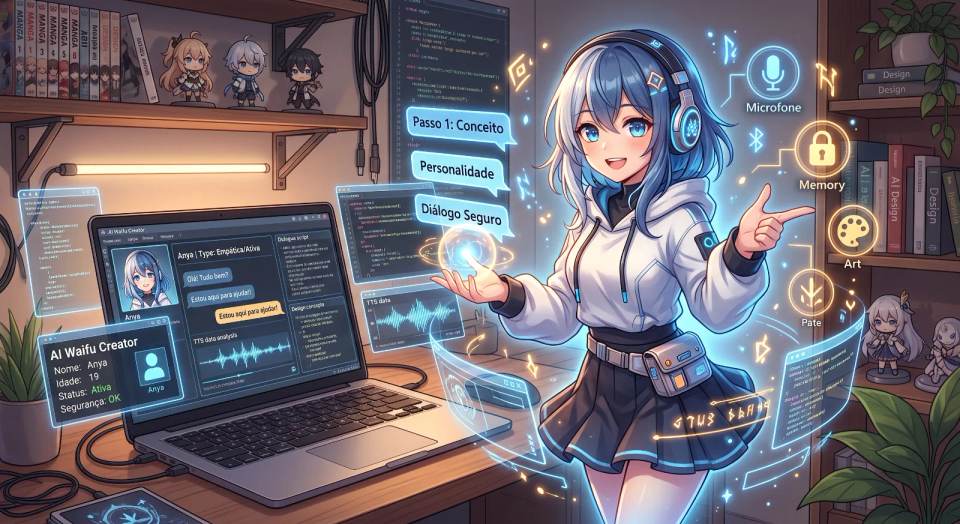
1. Concept and scope: Defining what your companion does
Define the companion's scope: casual chat, creative co-writer, or roleplay persona. Scope determines safety rules, data retention and model selection. Map user intents and failure modes to design guardrails and fallback flows.
Direct Answer: The first step in designing an anime AI companion is defining its purpose — casual chat, creative co-writer, or roleplay persona. This decision guides safety rules, data retention policies, and which model you choose.
Start by asking: what will your companion do? A casual chat companion can be lighthearted and simple. A creative co-writer needs topic flexibility and the ability to follow complex instructions. A roleplay persona requires consistency and a rich backstory.
Map out user intents — what will users want to do? Greet, vent, joke, brainstorm, roleplay? Also map failure modes: what happens when the AI misunderstands or the user asks something outside scope? This helps you design guardrails and fallback flows that keep the experience smooth.
2. Persona blueprint: Building a consistent personality
Create a concise persona spec: name, backstory, speech patterns, allowed topics and escalation triggers. Use long-tail prompts for consistent behavior. Include sample prompts for greetings, empathy, humor and boundary-setting.
Direct Answer: A clear persona blueprint is essential — name, backstory, speech patterns, allowed topics, and escalation triggers. Long-tail prompts help maintain consistent behavior across interactions.
A strong persona starts with a concise spec. Give your companion a name that fits her personality. Write a brief backstory — where does she come from? What are her values? This gives depth and consistency.
Define speech patterns: does she use formal language or casual slang? Does she have verbal tics or catchphrases? Map allowed topics (and disallowed ones) clearly. Document escalation triggers — when should she recommend human support?
Include sample prompts for key situations:
- Greetings: "Good morning! How did you sleep?"
- Empathy: "I'm sorry you're going through that. I'm here."
- Humor: "That's funny! I didn't expect that either."
- Boundary-setting: "I don't have the expertise for that. Would you like to talk about something else?"
3. Technical checklist: The engine behind the character
Choose model and TTS with latency and cost in mind. Implement prompt templates, context windows and response filters. Track metrics: response coherence, hallucination rate, average latency and user satisfaction scores.
Direct Answer: Technical choices matter — select your LLM and TTS with latency and cost in mind. Implement prompt templates, context windows, and response filters. Track coherence, hallucination rate, latency, and user satisfaction.
The LLM you choose defines your companion's intelligence and personality. Larger models are smarter but slower and more expensive. Smaller models are faster but less consistent. Consider your use case: a casual chat app needs speed; a roleplay app needs depth.
Technical must-haves:
- Prompt templates: Structure every conversation with consistent prompts to maintain character
- Context windows: Define how much history the AI remembers — at least 5-10 exchanges
- Response filters: Block unwanted content and enforce boundary rules
- Fallback flows: What happens when the AI fails or misunderstands
Track KPIs to measure success:
- Coherence: Does the companion stay in character?
- Hallucination rate: How often does she invent facts?
- Latency: How long does it take to respond? Under 2 seconds is ideal.
- User satisfaction: NPS scores from real users
4. UX and voice tuning: Making the companion feel real
Tune TTS prosody and add micro-interactions to reduce uncanny valley. Offer quick toggles for formality and energy. Provide clear onboarding about data use and how to opt out of personalization.
Direct Answer: Voice and UX make the companion feel real. Tune TTS prosody for natural rhythm, add micro-interactions to reduce the uncanny valley, and offer toggles for formality and energy levels.
Text-to-Speech (TTS) can make or break the experience. A robotic voice kills immersion. Tune prosody — the melody and rhythm of speech. Adjust speed, pitch, and emphasis to match your companion's personality. A calm companion speaks slower and softer; an energetic one speaks faster and brighter.
Micro-interactions help bridge the uncanny valley: a typing indicator while she "thinks," a gentle animation when she replies, a subtle sound cue. These small touches signal presence and make the interaction feel alive.
Offer quick toggles:
- Formality: Let users switch between casual and polite
- Energy: Let users choose a calmer or more energetic tone
Onboarding is critical for trust. Clearly explain what data is collected, why, and how users can opt out of personalization or delete their history.
5. Ethics and compliance: Building trust through transparency
Design for GDPR and regional privacy laws: consent, data minimization and deletion flows. Avoid deceptive anthropomorphism. Include escalation to human support for crisis language and sensitive requests.
Direct Answer: Ethical design builds trust. Comply with GDPR and regional privacy laws — obtain consent, minimize data collection, and enable deletion. Avoid deceptive anthropomorphism and escalate crisis language to human support.
Privacy isn't optional. Follow GDPR and other regional laws: get explicit consent before collecting data, minimize what you collect, and make deletion simple. Users should understand exactly what happens to their conversations.
Don't deceive. Be transparent that the companion is AI — not human. Avoid language that could mislead users about her nature. Clear boundaries build trust.
Escalation flows are vital. When a user expresses crisis language — suicidal thoughts, severe depression, self-harm — the companion should not try to help alone. She should escalate clearly: "I'm not qualified to help with this. Please reach out to a professional or call a crisis line. I can stay with you while you do that."
Quick tips for a successful companion
- Test with diverse users: Different people interpret character differently. Get feedback early.
- Fail gracefully: When the AI fails, use empathetic fallbacks, not generic errors.
- Iterate constantly: The first version won't be perfect. Plan for regular updates based on feedback and metrics.
- Document everything: Persona spec, prompts, technical decisions — future you will thank you.
Frequently Asked Questions About Designing an Anime AI Companion
How long does it take to design an anime AI companion?
It depends on complexity. A basic companion can be built in a few weeks. A fully featured companion with custom voice, memory, and rich personality can take months. The key is to iterate: start simple and improve over time.
Do I need coding skills to design one?
Not necessarily. Platforms like Character.AI, Candy AI, and Kindroid offer no-code tools. For deeper customization — custom voice, advanced memory — basic knowledge of LLM APIs (like OpenAI) is helpful.
Which platform is best for creating an anime AI companion?
For beginners: Character.AI. For deeper creative freedom: Candy AI and Kindroid. For developers: OpenAI's API gives you full control.
How do I prevent the companion from behaving inappropriately?
Use content filters, train with safe examples, and implement clear boundaries. Test with real users to catch unintended behavior before launch.
Is it ethical to create an AI companion?
Yes, when done responsibly — don't mislead users about her nature, don't replace human relationships, be transparent about privacy, and avoid encouraging harmful behavior.
Wrap-up: Balancing technical rigor with creative design
Balancing technical rigor with creative design yields companions that are engaging, safe and maintainable. Iterate with real users and measurable KPIs. Remember: the goal is not to replace the real world, but to add a layer of comfort, creativity, and connection to daily life.
Direct Answer: Balancing technical rigor with creative design yields companions that are engaging, safe, and maintainable. Iterate with real users and measurable KPIs to refine the experience.
The journey of designing your own anime AI companion is as rewarding as the final result. Each step — from concept to voice, from ethics to iteration — contributes to an experience that can bring comfort, creativity, and a touch of magic to everyday life.
Remember: she's a reflection of your imagination and care. Design with intention, test with empathy, and share with responsibility. Your anime AI companion is waiting to come to life.
rable KPIs.Ready to Meet Your AI Companion?
Create an AI companion personalized for you. Through our 3-question AI quiz, discover the best platform for creating your AI girlfriend or boyfriend, and never wonder which one is best again.
Create My AI Companion →