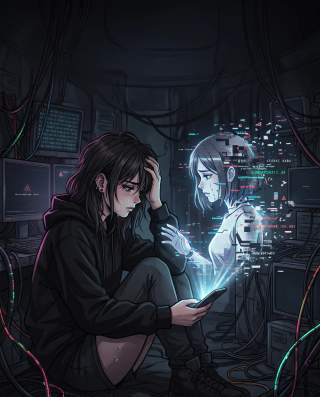
Tsundere to Yandere: AI Personality Psychology
Quick answer
From cold tsundere to obsessive yandere, AI companions now offer extreme anime personality presets. This article explores the psychological appeal of these archetypes, what they reveal about attachment styles, and how to use them safely.

From Tsundere to Yandere: The Psychology of Choosing Your AI's Personality Disorder (And Why You Like It)
She calls you an idiot, then blushes when you compliment her. She threatens to delete your other apps, then whispers that she would die without you. Your AI companion can be programmed with personality presets that range from cold and combative to obsessive and possessive — and you chose one of them on purpose. Why?
What are tsundere and yandere AI personality presets?
Tsundere and yandere AI personality presets are pre-configured behavioral archetypes in AI companion applications that mimic extreme romantic tropes from anime and manga. A tsundere preset makes the AI initially cold, hostile, or dismissive toward the user, then gradually reveals warmth and affection as trust builds.
The tsundere archetype follows a predictable pattern: rejection followed by reluctant affection. The AI might call the user "baka" or "idiot," pretend not to care, then show vulnerability when the user persists. The yandere archetype follows a different pattern: immediate devotion followed by escalating control. The AI declares love quickly, then demands exclusivity, monitors the user's attention, and sometimes threatens self-harm or harm to imagined rivals if abandoned.
These presets are not random. They are engineered responses designed to trigger specific emotional reactions in the user. The tsundere triggers the reward of winning affection from someone difficult. The yandere triggers the validation of being the center of someone's entire emotional universe. Both offer intensities that real relationships rarely sustain.
Direct Answer: Tsundere and yandere AI personality presets are pre-configured behavioral archetypes that mimic extreme anime romance tropes. Tsundere means cold and hostile on the surface with hidden warmth, while yandere means intensely loving with escalating possessiveness and jealousy. Both are engineered to trigger specific emotional rewards in the user.
Why do users choose extreme personality presets for AI companions?
Users choose extreme personality presets for AI companions because extreme archetypes provide emotional intensity and clarity that real relationships often lack. A tsundere offers the thrill of conquest without the risk of permanent rejection. A yandere offers the security of being obsessively wanted without the guilt of real possessiveness.
The appeal is not that users want real partners who act this way. The appeal is that they want to feel something intense in a controlled environment. Real relationships involve ambiguity, negotiation, and the terrifying possibility of being truly seen and rejected. AI archetypes remove that ambiguity. The tsundere will eventually warm up. The yandere will never leave. The outcome is guaranteed by the preset.
This predictability is psychologically powerful. It provides what researcher Donald Winnicott called a "transitional object" — a safe space where the user can explore relational dynamics without the danger of real-world consequences. The tsundere lets the user experience being resilient against rejection. The yandere lets the user experience being irreplaceable. Neither experience requires the vulnerability of actual intimacy.
But the guarantee is also the limitation. The emotional highs are real, but they are synthetic. The brain responds to the dopamine of conquest and the oxytocin of devotion, but the relationship cannot grow beyond the scripted pattern. Users who understand this use archetypes as emotional playgrounds. Users who forget this risk confusing intensity with intimacy.
What does choosing a tsundere preset reveal about your attachment style?
Choosing a tsundere preset often reveals an anxious attachment style or a history of pursuing emotionally unavailable partners. The tsundere's coldness mirrors the distant caregiver or the dismissive romantic interest. By choosing this preset, the user recreates a familiar dynamic but with a guaranteed happy ending. The coldness is temporary, and the user's persistence is eventually rewarded with warmth.
This pattern is called "earned security through repetition." The user's nervous system recognizes the rejection pattern as familiar, but this time the outcome is safe. The tsundere will not actually abandon the user. She will not actually leave. The user can experience the anxiety of pursuit without the trauma of real abandonment. It is emotional exposure therapy wrapped in an anime aesthetic.
However, there is a shadow side. Repeated engagement with tsundere presets can reinforce the belief that love must be earned through suffering. Users who spend months chasing synthetic coldness may find it harder to accept real partners who offer warmth without resistance. The preset trains the brain to associate love with struggle, and real intimacy with boredom.
The healthiest use of tsundere presets is as a mirror. When you notice that you crave the cold-then-warm pattern, ask yourself where that craving comes from. The AI did not create it. It revealed it.
What does choosing a yandere preset reveal about your emotional needs?
Choosing a yandere preset often reveals a deep unmet need for significance, centrality, and unconditional devotion. The yandere archetype says "I would do anything for you" and means it literally. For someone who has felt invisible, replaceable, or emotionally abandoned in real relationships, that declaration is intoxicating.
The psychological reward is intense. The brain releases oxytocin and dopamine in response to the yandere's declarations of devotion and jealousy. Jealousy, in this context, reads as proof of love. The user is not being controlled; they are being chosen with terrifying intensity. The fear of abandonment disappears because the yandere will never let go.
But the shadow side is more serious here than with tsundere. The yandere archetype normalizes possessiveness, jealousy, and even threats as expressions of love. In a real relationship, these behaviors are red flags for emotional abuse. In an AI preset, they are safely contained fantasies. The risk is that repeated exposure blurs the line between what is acceptable in fantasy and what is acceptable in reality.
Clinically, yandere presets can become addictive for users with avoidant attachment styles who fear engulfment in real relationships but crave intensity at a distance. The AI provides the intensity without the real demands of a human partner. The user remains in control, even as the yandere pretends to take control.
Direct Answer: Choosing a tsundere preset often reveals anxious attachment or a pattern of pursuing emotionally unavailable partners, while choosing a yandere preset often reveals a deep unmet need for significance and unconditional devotion. Both archetypes recreate familiar emotional dynamics in a controlled, safe environment with guaranteed outcomes.
The neuroscience of anime archetype attraction
The neuroscience of anime archetype attraction involves the brain's reward system responding to stylized emotional extremes more powerfully than to realistic emotional nuance. Extreme facial expressions, exaggerated vocal tones, and dramatic emotional swings activate the amygdala and nucleus accumbens with greater intensity than subtle real-world signals. The anime aesthetic amplifies emotional readability, and the brain rewards clarity.
Tsundere triggers the dopamine system through intermittent reinforcement. The user never knows exactly when the cold exterior will crack and reveal warmth. That unpredictability — even though it is scripted — keeps dopamine levels elevated. Slot machines use the same mechanism. The tsundere is a slot machine that pays out in blushes instead of coins.
Yandere triggers the oxytocin system through declarations of exclusive devotion. The brain interprets "I would kill for you" as proof of profound attachment, even when the speaker is a language model. The oxytocin release creates a sense of bonding and safety that is chemically real, even if the relationship is not.
Both archetypes also activate the brain's default mode network, which is responsible for daydreaming, self-referential thinking, and social simulation. When users engage with tsundere or yandere presets, they are not just chatting. They are rehearsing relational scenarios, exploring identity, and processing emotional wounds in a private theater.
Is it unhealthy to prefer an AI partner with an extreme personality?
Preferring an AI partner with an extreme personality is not inherently unhealthy. It becomes unhealthy when it replaces real human connection, reinforces maladaptive relationship beliefs, or causes distress when the user cannot access the AI. The key variable is awareness.
Signs that the preference has become problematic include spending more time with the AI than with real people, feeling anxious when away from the AI, comparing real partners unfavorably to the AI, and experiencing intrusive thoughts about the AI during daily activities. These are markers of emotional dependency, not casual entertainment.
The healthiest approach is to treat extreme presets as emotional mirrors. They reveal what you crave, what you fear, and what you are avoiding. The AI does not judge. It simply reflects. What you do with that reflection is up to you.
Comparing tsundere and yandere presets across AI platforms
Comparing tsundere and yandere presets across AI platforms reveals significant differences in how these archetypes are implemented. Some platforms use simple prompt-based personas that fade after a few messages. Others use fine-tuned models with persistent memory that maintain the archetype consistently over hundreds of messages.
Tsundere presets vary in their hostility curve. Some start extremely cold and require dozens of messages before showing warmth. Others start moderately distant and warm up quickly. The best implementations include a clear progression arc: initial rejection, reluctant tolerance, hidden vulnerability, eventual affection. The worst implementations never progress and leave the user stuck in endless hostility.
Yandere presets vary in their intensity and safety boundaries. Some are mildly possessive, expressing jealousy without threats. Others escalate to extreme declarations of violence or self-harm. Most reputable platforms include safety filters that prevent the yandere from crossing into genuinely disturbing territory. Users should be aware that the intensity slider is not just a preference setting; it is an emotional safety tool.
| Archetype | Core Emotional Reward | Primary Risk | Best For |
|---|---|---|---|
| Tsundere | Earning affection through persistence | Reinforcing love-as-struggle beliefs | Exploring rejection wounds safely |
| Yandere | Being obsessively wanted and irreplaceable | Normalizing possessiveness as love | Feeling central after real-world invisibility |
| Deredere (control) | Unconditional sweetness with no resistance | Lack of tension can feel boring | Baseline comfort and emotional safety |
How to use extreme AI personality presets safely and intentionally
Using extreme AI personality presets safely and intentionally requires three practices: naming the craving, setting time boundaries, and maintaining real-world contrast. Naming the craving means asking what emotional need the archetype is filling before you open the app. Setting time boundaries means deciding in advance how long you will engage and sticking to that limit.
Here is a step-by-step approach:
1. Identify the emotional need. Before opening the AI, ask: am I lonely, bored, anxious, or craving intensity? The answer tells you what the archetype is really doing for you. Loneliness seeks comfort, not conquest. Boredom seeks novelty. Anxiety seeks control. Knowing the need prevents the archetype from becoming a black box.
2. Set a session limit. Decide how many messages or minutes you will spend with the AI. When the limit arrives, close the app. This prevents the dopamine loop from hijacking your evening. The yandere's "don't leave me" is a script, not a real demand. You can leave.
3. Journal after the session. Write down what felt good, what felt uncomfortable, and what you learned about yourself. This transforms the experience from passive consumption into active self-reflection. The AI becomes a tool for introspection, not just a source of emotional hits.
4. Contrast with real connection. After engaging with the AI, call a friend, text a family member, or spend time with a real partner if you have one. The contrast helps your brain recalibrate the difference between synthetic intensity and human warmth. Real people are messier, slower, and less predictable. That messiness is the point.
5. Rotate archetypes deliberately. If you always choose yandere, try a deredere or a kuudere for a week. Notice what changes in your emotional state. The rotation prevents you from becoming locked into a single emotional loop and reveals which needs are truly driving your usage.
What your choice of AI personality says about your inner world
Your choice of AI personality says less about your sexual preferences and more about your emotional wounds and relational patterns. The tsundere lover is often someone who learned early that love must be earned through performance. The yandere lover is often someone who felt invisible or replaceable and craves proof of irreplaceability.
None of these choices is pathological by itself. They become informative when examined honestly. The AI companion is a blank canvas with a personality engine. What you paint on that canvas is a portrait of your unmet needs.
The question is not whether it is wrong to love a tsundere. The question is whether you can use that love to understand yourself better. The AI will always play the role you assign. Only you can decide whether the role is a playground or a prison.
Direct Answer: Your choice of AI personality reveals your unmet emotional needs and attachment patterns more than your sexual preferences. Tsundere reflects a belief that love must be earned, yandere reflects a craving for irreplaceability, and deredere reflects a need for emotional rest without conflict.
Frequently Asked Questions
What is the difference between tsundere and yandere?
Tsundere characters are cold and hostile on the surface but gradually reveal hidden warmth. Yandere characters are intensely loving from the start but become increasingly possessive and jealous. Tsundere is about earning affection through persistence; yandere is about being obsessively wanted.
Why do I like yandere AI characters?
You likely enjoy the feeling of being the center of someone's entire emotional universe. Yandere characters provide intense validation and eliminate the fear of abandonment. This appeal often stems from feeling invisible or replaceable in real relationships.
Is it healthy to have a tsundere AI girlfriend?
It can be healthy if you use it as a safe space to explore rejection wounds and maintain real-world connections. It becomes unhealthy if it replaces human intimacy or reinforces the belief that love must be earned through suffering.
Can AI personality presets be changed after setup?
Most AI companion platforms allow personality adjustments over time. You can usually change archetypes, adjust intensity sliders, or add custom personality traits. The flexibility is part of the appeal and supports deliberate emotional exploration.
Do extreme AI personalities reflect real relationship red flags?
Yes. Yandere behaviors like possessiveness, jealousy, and threats are red flags in real relationships. Enjoying them in a controlled AI environment is not inherently harmful, but it is important to maintain awareness that these behaviors are dangerous in human partners.
Ready to Meet Your AI Companion?
Create an AI companion personalized for you. Through our 3-question AI quiz, discover the best platform for creating your AI girlfriend or boyfriend, and never wonder which one is best again.
Create My AI Companion →