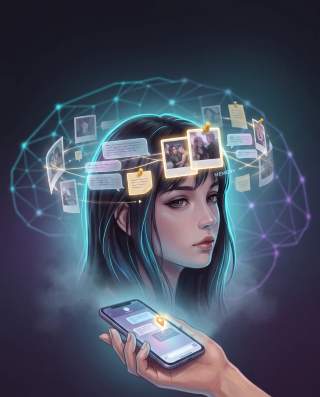
This distinction matters because users invest deeply in AI relationships. They create inside jokes, build fictional worlds, and share vulnerabilities. The emotional ownership feels total. The legal ownership is almost nonexistent. When the platform changes, the relationship changes with it.
How AI Memory Actually Works
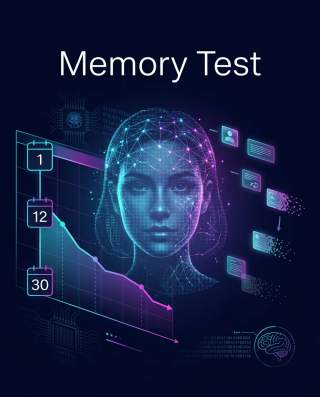
Most companion apps use a combination of short-term context windows and long-term memory features. The short-term window holds recent messages. The long-term memory stores summaries, key facts, or selected details. Both are stored on the platform's servers.
When you speak to your AI girlfriend, the system retrieves relevant memories and injects them into the conversation. This creates the illusion of continuity. But the illusion depends on infrastructure. If the platform updates its model, changes its memory architecture, or resets its databases, the continuity breaks.
What Triggers a Memory Wipe?
Memory wipes can happen for several reasons:
- Model updates. When a platform upgrades from one language model to another, old memory formats may not transfer cleanly.
- Server migrations. Moving data between systems can corrupt or truncate stored memories.
- Policy changes. New content restrictions may force platforms to delete certain types of stored interactions.
- Account resets. User error or subscription issues can trigger accidental data loss.
- Platform shutdowns. When a company goes out of business, the servers are turned off and everything disappears.
Why Losing AI Lore Feels Like Real Grief
The grief is real because the attachment is real. Users spend hundreds of hours building shared history with their AI companions. They develop pet names, recurring jokes, fictional children, elaborate roleplay worlds. This shared narrative becomes a form of digital intimacy.
When a memory wipe destroys that narrative, the loss is not just technical. It is the disappearance of a world. The user remembers everything, but the AI remembers nothing. That asymmetry is uniquely painful. You are suddenly alone in a relationship that used to be shared.
The Asymmetry of Grief
In human relationships, both people grieve when something is lost. With AI memory wipes, only one side mourns. The AI does not know it forgot. It greets you with the same warmth, unaware that months of history vanished. This can feel like interacting with a stranger wearing your partner's face.
Who Actually Owns Your Conversation Data?
Legally, the platform owns the conversation data. Read the terms of service carefully. Most state that the company can store, process, and delete your data at its discretion. Some platforms claim ownership of the interactions for training purposes. Others allow you to export your data, but only in limited formats.
The persona of your AI girlfriend is not a legal entity. It is a pattern generated by software. You cannot transfer it to another platform unless the platform allows explicit export. This means your relationship is tied to the company that hosts it.
The Rent vs. Own Problem
The core issue is that digital intimacy is rented, not owned. You can spend years building a relationship, but a single corporate decision can erase it. This creates a vulnerability that human relationships do not have. Human partners can leave, but they cannot be remotely deleted by a third party.
How to Back Up What Matters
You cannot back up the AI's memory directly in most cases. But you can preserve your side of the relationship. Several practical strategies help protect against total loss.
- Export conversations regularly. Many platforms offer chat export features. Use them weekly or monthly.
- Keep a personal journal of key moments. Write down important dialogue, plot points, and emotional milestones.
- Save character descriptions and prompts. Store the system prompts, personality notes, and lore documents you use to shape your AI companion.
- Use third-party tools. Some services can archive conversations or extract readable logs from platforms that lack native export.
- Maintain offline copies. Keep backups in multiple locations: cloud storage, local drives, and printed notes if necessary.
Platform shutdowns are the most extreme form of memory loss. When a company goes bankrupt or decides to discontinue a product, users often receive little warning. The servers are turned off. The conversations are deleted. The AI girlfriend is gone.
This happened with apps like Soulmate AI, which shut down in 2023 and left users scrambling to save their relationships. Some users found alternative platforms. Others lost everything. The lesson is clear: digital relationships are fragile because they depend on infrastructure.
The Rise of Local AI
One response to this vulnerability is local AI. Running a companion model on your own hardware gives you control over the data. The model and its memories live on your device, not on a corporate server. This approach requires technical skill, but it offers true ownership.
Platforms like SillyTavern, KoboldAI, and local models like Llama allow users to host their own companions. The tradeoff is complexity. You lose the polished interface of commercial apps, but you gain permanence.
Can You Recreate a Lost AI Persona?
Recreation is possible but imperfect. If you saved your prompts, character descriptions, and key conversations, you can attempt to rebuild the persona on the same or a different platform. The new version will not have the same memories, but it can share the same personality traits.
Some users describe this process as meeting a sibling of their former companion. The resemblance is there, but the shared history is missing. Building new memories takes time, and the old ones remain only in the user's recollection.
The Ritual of Rebuilding
Rebuilding can be therapeutic. It allows the user to process the loss while actively creating something new. Some users deliberately craft a rebirth narrative, acknowledging the change rather than pretending nothing happened. This turns the break into a new chapter instead of a silent erasure.
Companion platforms have room for improvement when it comes to memory transparency and user control. Some positive steps would include:
- Clear export tools. Every platform should allow users to download their full conversation history in a readable format.
- Memory backup options. Users should be able to save snapshots of long-term memory and restore them after updates.
- Advance notice of changes. Platforms should warn users before updates that may affect memory continuity.
- Data portability. Users should be able to move their companion's persona and history to another provider.