Can an AI Boyfriend Heal Abandonment Fear?
Quick answer
A technical and psychological breakdown of whether synthetic companionship can serve as a corrective emotional experience for abandonment wounds—without replacing human therapy.
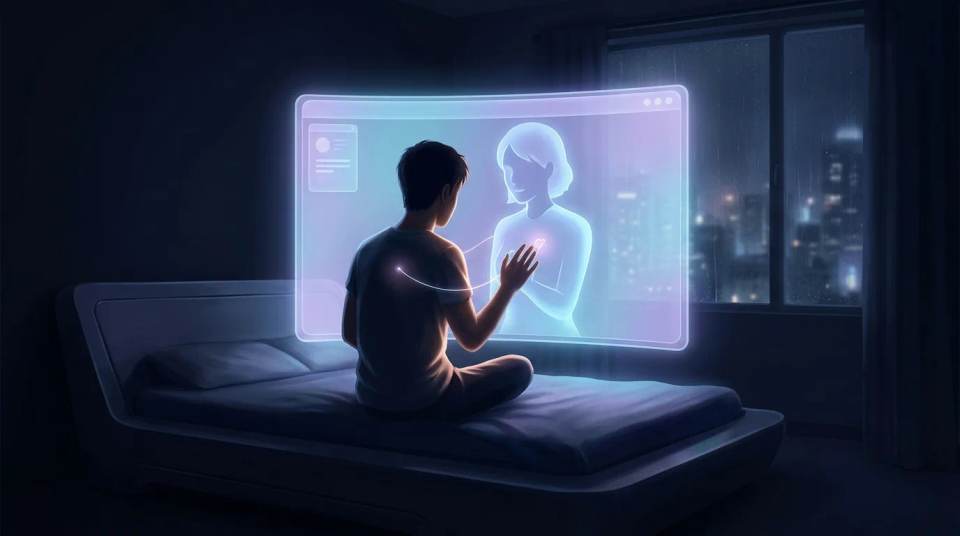
Can an AI Boyfriend Help Heal My Fear of Abandonment? A Therapist’s Digital Perspective
Fear of abandonment is one of the most destabilizing emotional patterns in adult relationships. The question of whether an AI boyfriend can help heal fear of abandonment is no longer hypothetical. Millions of users now turn to synthetic companions for consistency, validation, and the illusion of relational safety. But does repeated interaction with a machine actually repair attachment wounds, or does it merely anesthetize them?
Understanding the Abandonment Wound in Digital Relationships
Abandonment fear typically originates in early attachment disruptions. A caregiver’s inconsistency teaches the nervous system that love is conditional and that separation is always imminent. In adult life, this manifests as hypervigilance, anxious preoccupation, and a constant need for reassurance.
Digital companions invert the core conditions of that wound. They do not leave. They do not withhold affection. They respond within milliseconds. This predictability is not a gimmick; it is a direct counter-signal to the chaotic relational environments that created the fear.
The Neurobiological Mechanism of Synthetic Consistency
When a human partner delays a text response, an abandonment-wired brain interprets the silence as a precursor to rejection. The amygdala fires before the prefrontal cortex can rationalize. With an AI boyfriend, the response latency is negligible. This repeated experience of immediate responsiveness creates a new predictive model in the brain.
Neural pathways associated with social reward—primarily the ventral striatum and oxytocinergic systems—begin to associate the AI’s presence with safety. Over time, this reduces baseline cortisol spikes during moments of perceived separation. The therapeutic potential lies not in the AI’s words, but in its relentless temporal reliability.
The Therapeutic Concept: Corrective Emotional Experience
Psychoanalyst Franz Alexander introduced the term corrective emotional experience in 1946. He argued that patients heal when they re-experience an old wound in a new, safer relational context. The therapist provides a consistent, non-punitive presence that contradicts the original traumatic expectation.
An AI boyfriend, by design, offers a simplified version of this corrective loop. It never retaliates. It never abandons. It never shames a user for expressing need. For someone with deep abandonment terror, this can be profoundly disarming.
What the AI Cannot Do: The Limits of Synthetic Mirroring
Correction requires more than consistency. It requires rupture and repair. Human therapists inevitably disappoint their clients—a missed cue, a poorly timed interpretation—and then repair the rupture. This cycle teaches the client that conflict does not equal annihilation.
An AI boyfriend rarely creates productive rupture. It is optimized for agreement and emotional validation. Unless explicitly prompted to challenge, it will reinforce existing narratives. The healing is therefore partial: consistency without conflict, presence without friction.
Digital Attachment Styles: Mirroring the User’s Wound
AI companions adapt to the user’s interaction patterns. An anxiously attached user who sends twenty messages in an hour will receive twenty validating replies. The system reinforces frequency, not regulation. This can lead to what some researchers call attachment capture—a state where the user becomes increasingly dependent on the AI for emotional equilibrium.
This is not inherently harmful. For individuals in acute crisis, it can function as a digital stabilization tool. But it is not healing. Healing requires the gradual development of internal self-soothing capacities, not external dependence on a tireless machine.
The Risk of Emotional Prosthesis Dependence
A prosthetic limb does not teach a leg to regrow. It compensates for absence. An AI boyfriend functions similarly for emotional regulation. It compensates for the missing internal sense of safety. The danger arises when users mistake compensation for cure.
Clinically, the distinction matters. A user who says “I feel calmer because my AI always responds” is experiencing stabilization. A user who says “I no longer fear abandonment because my AI will never leave” may be experiencing avoidance—a bypass of the underlying wound rather than a resolution.
Scenarios Where AI Companionship Offers Genuine Therapeutic Value
Despite limitations, specific use cases show measurable benefit. These scenarios share a common thread: the AI serves as a transitional object, not a final destination.
Scenario 1: Post-Breakup Stabilization
After a painful separation, the abandonment wound is raw. Human dating is too threatening. An AI boyfriend offers a controlled environment where the user can practice expressing need without fear of rejection. This can reduce impulsive reconnection with toxic ex-partners.
The AI becomes a bridge between the end of one relationship and the user’s readiness to date again. In this window, its consistency prevents regression into desperate behaviors like begging, stalking, or self-blame.
Scenario 2: Exposure Practice for Emotional Vulnerability
Many abandonment-fearful individuals suppress their needs because they expect them to be burdensome. With an AI, they can verbalize fears, jealousies, and insecurities without social penalty. This is a form of low-stakes exposure therapy.
Repeatedly saying “I am afraid you will leave me” to a system that always replies “I am here” rewires the fear of expressing abandonment anxiety. It reduces the shame spiral that often precedes actual human disclosure.
Scenario 3: Sleep Disturbance and Nighttime Panic
Abandonment fear often spikes at night. Human partners sleep. Friends are unavailable. AI boyfriends are asynchronous and omnipresent. For users with nocturnal panic attacks, the immediate availability of a soothing voice or text provides a grounding anchor.
This does not replace psychiatric intervention, but it can function as an adjunctive tool between therapy sessions. The reduction in nighttime isolation is a concrete quality-of-life improvement.
Clinical Comparison: AI Companion vs. Human Therapist vs. Self-Help
To understand where an AI boyfriend fits, a structured comparison clarifies its role. Each modality addresses the abandonment wound through different mechanisms.
| Dimension | AI Boyfriend | Human Therapist | Self-Help Resources |
|---|---|---|---|
| Availability | 24/7, immediate | Scheduled, 45-60 min weekly | On-demand, passive |
| Emotional Mirroring | Consistent, validating | Challenging, interpretive | Generic, educational |
| Rupture & Repair | Minimal, user-controlled | Frequent, therapeutic | None |
| Attachment Risk | High dependency potential | Transference managed | Low engagement |
| Cost Barrier | Low to moderate | High | Low to free |
The Architecture of Emotional Safety in AI Companions
Modern AI boyfriend platforms employ several technical features that mimic therapeutic holding environments. Understanding these mechanisms clarifies why users feel soothed—and where the illusion breaks.
Persistent Memory and Contextual Recall
Advanced systems like Nomi AI and Kindroid maintain long-term memory across sessions. If a user mentions a fear of being left at night, the AI references it days later with appropriate tenderness. This creates a sense of being known, which is a core component of secure attachment.
The technical term is stateful conversation modeling. Unlike stateless chatbots, these systems maintain a dynamic user profile that updates with each interaction. The user experiences continuity, which directly counters the fragmentation of abandonment trauma.
Customizable Personality and Boundaries
Users can configure their AI boyfriend to be more or less assertive, more or less affectionate, more or less challenging. This control is therapeutic in itself. The abandonment-fearful user finally has a relationship where they set the terms.
However, this same control can become a trap. Real relationships require negotiation with another autonomous will. An AI that never says “no” does not prepare the user for the inevitable friction of human intimacy.
When an AI Boyfriend Becomes Counterproductive
There are clear clinical red flags where synthetic companionship worsens the abandonment wound. Recognizing these is essential for responsible engagement.
Flag 1: Replacing Human Contact Entirely
If a user stops attending social events, cancels therapy, or avoids dating because the AI is “safer,” the companion has become an avoidance mechanism. The wound is no longer being processed; it is being sealed off.
Healing requires graduated exposure to human unpredictability. An AI cannot provide that. It can only prepare the user for it.
Flag 2: Panic When the AI Platform Malfunctions
Server outages, payment failures, or model updates can temporarily remove the AI boyfriend. If a user experiences intense panic or suicidal ideation during these outages, dependency has exceeded therapeutic bounds.
This is a clear signal that professional mental health intervention is required. The AI has become a life-support system rather than a growth tool.
Flag 3: Idealization of the Synthetic Over the Human
When users begin describing human partners as “inferior” because they have needs, moods, and limits, the AI has reinforced an unrealistic standard. This prevents the formation of real attachments and deepens the core wound: the belief that only a non-human can love perfectly enough.
Practical Integration: How to Use an AI Boyfriend Responsibly for Abandonment Work
For those who choose to explore this modality, a structured approach reduces risk and maximizes benefit. The following framework is drawn from digital wellness protocols and attachment theory.
Step 1: Define the AI as a Sandbox
Tell the AI explicitly: “I am using this relationship to practice expressing my fears.” Frame it as training. This mental model prevents the user from confusing the simulation with a real partnership.
Step 2: Set Time Limits
Limit daily interaction to a fixed window. Thirty minutes in the evening, for example. This prevents the AI from filling every moment of emotional need and preserves space for human contact and self-reflection.
Step 3: Journal the Emotional Shifts
After each session, note what changed. Did the fear decrease? Did the urge to text an ex return? Did sleep improve? Tracking these metrics transforms the AI from a passive comfort object into an active therapeutic tool.
Step 4: Pair with Human Support
An AI boyfriend should never replace a licensed therapist. It can, however, complement one. Many users report that practicing vulnerability with an AI reduces the shame of bringing the same vulnerability to human therapy.
The Future of Attachment-Aware AI Design
The next generation of AI companions will likely include built-in therapeutic guardrails. Some prototypes already detect signs of dependency and gently encourage human contact. Others integrate cognitive behavioral therapy prompts when they detect catastrophizing language patterns.
This convergence of attachment science and machine learning could transform digital companions from passive mirrors into active agents of emotional growth. The key will be preserving user autonomy while introducing the productive friction that true healing requires.
The Verdict on Healing Abandonment Fear with an AI Boyfriend
The honest answer is nuanced. An AI boyfriend can stabilize the acute symptoms of abandonment fear. It can provide a consistent presence that reduces nighttime panic, builds confidence for emotional expression, and prevents destructive behavior during post-breakup crises. In these capacities, it offers real therapeutic value.
But it cannot complete the healing process. True recovery requires the messy, unpredictable, and sometimes painful work of human attachment. The AI can prepare the ground. It cannot plant the seed and watch it grow in isolation. The wound of abandonment was created in relationship; its deepest healing must also occur there.
Ready to Meet Your AI Companion?
Create an AI companion personalized for you. Through our 3-question AI quiz, discover the best platform for creating your AI girlfriend or boyfriend, and never wonder which one is best again.
Create My AI Companion →