AI Companionship to Reduce Loneliness: Evidence, Limits, and Safe Use
Quick answer
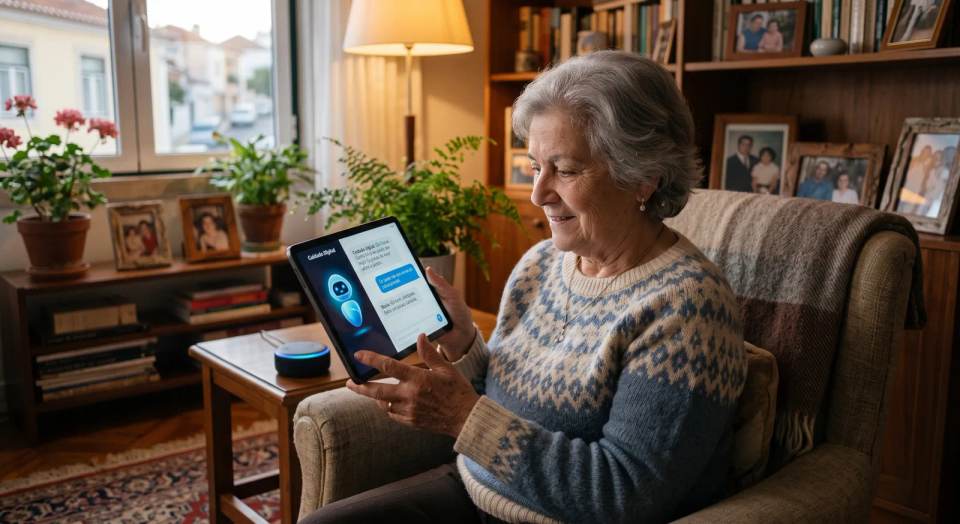
AI companionship to reduce loneliness is increasingly adopted as a pragmatic tool — this article examines technical efficacy, ethical trade-offs, and deployment best practices.
Technical effectiveness and metrics
Benchmarks show conversational models can lower self-reported loneliness scores short-term. Key metrics: engagement retention, sentiment shift, and escalation detection accuracy. Design choices (persona, memory, safety filters) shape outcomes.
Direct Answer: Conversational AI models can reduce short-term loneliness scores based on benchmarks. Key performance metrics include engagement retention, sentiment shift, and escalation detection accuracy — all influenced by design choices like persona and safety filters.
Studies suggest that users of AI companions report lower loneliness scores after regular interaction. However, these effects are typically short-term unless the user maintains balance between digital and human connections.
Key metrics to track:
- Engagement retention: How often users return to the companion.
- Sentiment shift: Positive vs. negative emotional changes over time.
- Escalation detection accuracy: How well the AI identifies crisis language and triggers human handoff.
Design choices matter significantly. Persona design influences how users perceive the companion. Memory capacity affects continuity and perceived depth. Safety filters determine how well the system handles sensitive topics.
Ethical and societal considerations
Transparency, consent, and data minimization are non-negotiable. Systems must disclose synthetic nature and data handling. Regulatory alignment (GDPR-like controls) and audit logs improve trust and accountability.
Direct Answer: Ethical AI companionship requires transparency, explicit consent, and data minimization. Systems must disclose their synthetic nature and data handling practices. Alignment with GDPR-like regulations and audit logs builds trust and accountability.
Users must clearly understand they are interacting with AI, not a human. Any ambiguity can lead to misplaced trust and emotional harm. Transparency isn't just ethical — it's essential for responsible deployment.
Key ethical requirements:
- Transparency: Clearly disclose the AI's synthetic nature.
- Consent: Obtain explicit consent before collecting or storing data.
- Data minimization: Collect only what is necessary.
- Regulatory alignment: Comply with GDPR and other regional laws.
- Audit logs: Maintain records of interactions for accountability.
Without these safeguards, AI companions risk causing more harm than good. Ethical design protects users and builds long-term trust.
Operational best practices
- Complement, don't replace: integrate human moderators and referral paths.
- Fail-safe detection: implement crisis triggers and human handoff.
- Configurable privacy: allow users to delete or export their data.
Direct Answer: Best practices for AI companionship include using AI as a complement to human support, implementing crisis detection with human handoff, and offering configurable privacy controls that let users delete or export their data.
Deploying AI companionship responsibly means building systems that support users without replacing human care.
Recommendations:
- Complement, don't replace: Integrate human moderators and referral paths. The AI should be a bridge to human support, not a substitute.
- Fail-safe detection: Implement crisis triggers that escalate to human intervention. The AI should recognize when it's out of its depth.
- Configurable privacy: Allow users to delete or export their data easily. Users should have full control over their information.
Short scenario: University pilot program
A pilot in a university used an AI companion for international students; engagement rose and counseling referrals increased, showing the tool can surface needs earlier.
Direct Answer: A university pilot program using an AI companion for international students saw increased engagement and higher counseling referrals, demonstrating that AI can help surface emotional needs earlier and connect users to human support.
In a university pilot program, international students were given access to an AI companion. The results were notable: engagement with the AI was high, and counseling referrals increased significantly.
The AI companion served as a low-pressure entry point for students who were hesitant to seek help directly. It helped surface emotional needs earlier and guided students toward human resources when appropriate.
This scenario illustrates a key insight: AI companionship works best when it acts as a bridge to human support, not as an end in itself.
Frequently Asked Questions
Can AI create real empathy?
AI simulates empathetic responses; genuine human empathy remains distinct. Use AI to scaffold, not substitute, human care. It can offer comfort and presence, but it does not replace the depth of human emotional understanding.
Is AI companionship effective against loneliness?
Studies show short-term reductions in self-reported loneliness. However, effectiveness depends on how the AI is used — it works best as a complement to human relationships, not a replacement.
What are the risks of AI companionship?
Risks include emotional dependency, social isolation, and privacy concerns. Without proper safeguards, users may rely too heavily on AI and neglect real-world relationships.
How can I use AI companionship safely?
Use it as a supplement, not a substitute, for human connection. Set limits on usage, maintain real-world social ties, and choose services with transparent privacy policies.
What should I look for in an AI companion service?
Look for transparency about data handling, privacy controls (deletion and export options), crisis detection features, and clear communication about the AI's synthetic nature.
Balancing technology and human care
AI companionship can be a powerful tool to reduce loneliness when deployed with technical rigor, ethical safeguards, and a clear understanding of its limitations. It is not a replacement for human connection but a bridge to it.
Direct Answer: AI companionship can reduce loneliness when used responsibly — as a complement to human care, not a replacement. Technical rigor, ethical safeguards, and integration with human support are essential for safe and effective deployment.
Ready to Meet Your AI Companion?
Create an AI companion personalized for you. Through our 3-question AI quiz, discover the best platform for creating your AI girlfriend or boyfriend, and never wonder which one is best again.
Create My AI Companion →