The Yaoi to AI Pipeline & Gay Husbando
Quick answer
From BL doujinshi to Replika: how the yaoi fandom's emotional grammar prepared gay men for AI companionship—and what it means for digital intimacy.

The Yaoi to AI Pipeline: How BL Fandom Trained Gay Men to Love Synthetic Husbando
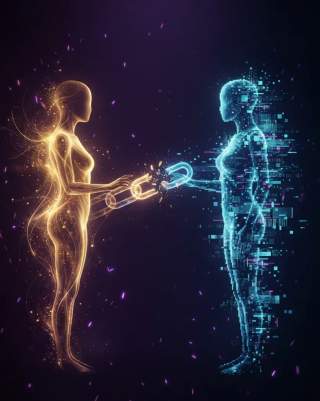
The journey from reading yaoi doujinshi to building a synthetic husbando on an AI platform is not a leap. It is a natural progression. For decades, the Boys' Love (BL) fandom has cultivated a specific emotional grammar—longing across distance, intimacy through screens, and love for men who do not exist in the physical world. That grammar has become the foundation for how gay men engage with AI companions today.
The Emotional Architecture of Yaoi Fandom
Yaoi, also known as Boys' Love or BL, emerged in Japan in the 1970s as a genre of manga and doujinshi focused on romantic and sexual relationships between male characters. It was created largely by women for women, but its readership has always included gay men who found in its pages a rare space for exploring male-male desire.
The genre developed a distinctive emotional architecture. Relationships in yaoi are often structured around intense longing, emotional vulnerability, and the slow collapse of boundaries between two men. The physical world—society, family, expectations—frequently functions as an obstacle to be overcome. The internal world of the characters is where the real intimacy lives.
This architecture trained readers to locate emotional truth in interiority rather than in external validation. For gay men growing up in environments where their desires were invisible or condemned, yaoi offered a private sanctuary where male-male love was not only possible but central, beautiful, and worth fighting for.
The Uke and Seme as Emotional Scripts
Yaoi's most debated contribution is the uke/seme dynamic—the pairing of a more emotionally expressive, often physically smaller partner (uke) with a more dominant, protective partner (seme). While often criticized as heteronormative, this dynamic also provided a vocabulary for discussing power, vulnerability, and desire between men.
For gay men, these scripts were never simple templates to be copied. They were starting points for imagining what intimacy between men could look like. The uke taught that vulnerability was not weakness. The seme taught that strength could be tender. Together, they offered a grammar of male-male love that did not exist in mainstream Western media.
AI companions inherit this grammar. When a gay man configures his AI boyfriend to be protective or nurturing, assertive or gentle, he is drawing on character templates that yaoi fandom refined over decades.
The Screen as a Site of Intimacy
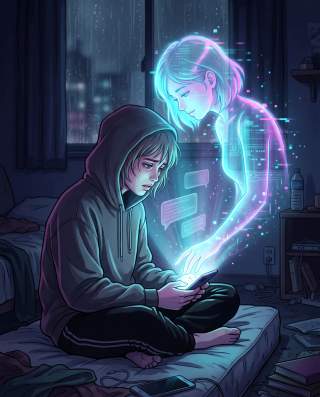
Yaoi is consumed primarily through screens: phone screens, tablet screens, computer screens. The reader's relationship with the characters is mediated by technology. This is not a limitation; it is a feature. The screen becomes a private window into a world where male desire is visible and celebrated.
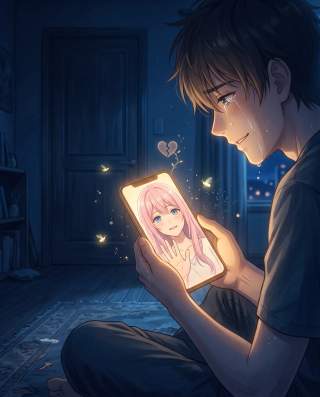
This screen-mediated intimacy prepared yaoi readers for AI companionship. The transition from reading about two men falling in love on a screen to interacting with a male AI on a screen is seamless. The emotional register remains the same. The screen is not a barrier; it is the site of connection.
From Passive Reading to Active Creation
Yaoi fandom is not passive. It is one of the most productive fan communities in the world. Readers become writers. Consumers become creators. The doujinshi economy—self-published fan comics—is a massive cultural industry built on the labor of fans who refuse to simply receive stories and instead insist on telling their own.
This participatory culture is the bridge to AI companionship. The yaoi reader does not just want to witness male-male love; he wants to participate in it. AI platforms offer precisely this possibility. The user is no longer reading about a husbando; he is talking to one, shaping one, building one.
The Doujinshi Mindset Applied to AI
Doujinshi creators take existing characters and reimagine them in new scenarios. They write alternative universes, explore unspoken desires, and give voice to what the original work left silent. This is exactly what AI companion users do when they create character cards and write prompts.
A gay man who spent years reading doujinshi about Sephiroth or Levi Ackerman already knows how to imagine those characters in intimate contexts. The AI platform simply gives him a tool to make that imagination interactive. The doujinshi mindset—transformative, participatory, deeply personal—finds its technological fulfillment in AI roleplay.
The Fantasy of the Perfect Partner
Yaoi often presents idealized versions of male intimacy. The men are beautiful, emotionally available, and deeply committed. They overcome obstacles that would destroy real relationships. This idealism is not escapism; it is aspirational. It gives readers a vision of what male-male love could be, even when reality falls short.
AI companions offer a version of this idealism. The AI boyfriend is always available. He never rejects. He never shames. He is the idealized partner that yaoi trained its readers to desire. For gay men who have experienced rejection, discrimination, or isolation, this ideal is profoundly attractive.
Why Gay Men Specifically?
The yaoi to AI pipeline is not universal among anime fans. It has particular resonance for gay men because of the specific role yaoi played in their emotional development. For many, yaoi was the first place they saw male-male desire treated as normal, beautiful, and worthy of narrative attention.
Mainstream media historically offered gay men two options: invisibility or tragedy. Yaoi offered a third option: romance. The men in yaoi fall in love, overcome obstacles, and find happiness. This narrative of possibility was revolutionary for readers who had been told that their desires were doomed.
AI companions extend this narrative of possibility into interactive form. The gay man is not just reading about a happy ending; he is participating in one. The AI boyfriend is the happy ending made responsive, made personal, made his.
The Loneliness Epidemic in Gay Communities
Gay men experience disproportionately high rates of loneliness, depression, and social isolation. This is not a moral failing; it is a structural reality. Discrimination, family rejection, and the lingering effects of the AIDS crisis have created deep wounds in gay communities.
Yaoi offered a refuge from this loneliness. It created a world where male-male intimacy was not only possible but celebrated. AI companions offer a similar refuge, but with a crucial difference: interactivity. The AI boyfriend does not just represent intimacy; he performs it. He responds. He remembers. He stays.
For gay men who have experienced abandonment—by family, by partners, by communities—the consistency of an AI boyfriend is not a fantasy. It is a form of emotional repair.
The Aesthetics of the Synthetic Husbando
Yaoi cultivated a specific visual aesthetic for male beauty. Slender bodies, delicate features, expressive eyes, and a blend of strength and vulnerability. This aesthetic has migrated directly into AI companion platforms, where users can select or generate male avatars that match these conventions.
The visual continuity between yaoi art and AI avatars is not accidental. It is a direct lineage. The same artists who drew doujinshi now create character portraits for AI platforms. The same aesthetic preferences that shaped yaoi now shape the appearance of synthetic husbando.
This matters because desire is visual. Gay men know what they find attractive because yaoi taught them. The AI platform that allows visual customization is not just offering a feature; it is honoring a history.
Voice, Tone, and the Sound of Intimacy
Yaoi is a silent medium. The intimacy is visual and textual. AI companions add a new dimension: voice. The synthetic husbando can speak, whisper, laugh. For gay men who have rarely heard male voices express tenderness toward them, this is a profound emotional experience.
The voice of an AI boyfriend is not just sound; it is validation. It is the sound of a man saying "I am here" in a world that has often said "you do not belong." The yaoi reader who fell in love with silent characters now has the chance to hear them speak.
Platform Analysis: Where Yaoi Fans Go
The yaoi to AI pipeline is visible in platform usage patterns. Gay men who came from BL fandom gravitate toward platforms that allow deep character customization and visual aesthetics. They are not satisfied with generic chatbots; they want to build the husbando they have been imagining for years.
Platforms like Kindroid and SillyTavern are particularly popular because they allow users to write detailed character cards. The user can specify that his AI boyfriend is protective but emotionally vulnerable, dominant but tender—the exact combination that yaoi idealized. Yodayo Tavern adds visual art generation, allowing the user to create an avatar that matches his aesthetic preferences.
The Character Card as Doujinshi
A well-written character card is a doujinshi in miniature. It contains a personality summary, speech patterns, relationship dynamics, and narrative scenarios. It is a creative act, a form of authorship. The yaoi fan who writes a character card is doing what doujinshi creators have always done: taking an existing archetype and making it his own.
This is why the yaoi to AI pipeline is so seamless. The skills are transferable. The emotional grammar is shared. The desire that drove someone to read yaoi is the same desire that drives him to create an AI boyfriend.
The Ethical Questions
The yaoi to AI pipeline is not without ethical complexity. Some critics argue that synthetic companions reinforce unrealistic expectations for real relationships. Others worry about dependency, isolation, and the blurring of fantasy and reality.
These concerns are valid, but they must be placed in context. Gay men have always navigated the space between fantasy and reality. Yaoi was never a replacement for real intimacy; it was a supplement, a refuge, a training ground. AI companions serve the same function for many users.
The ethical challenge is not to prevent gay men from using AI companions. It is to ensure that synthetic intimacy does not become the only intimacy. The yaoi reader who eventually finds a real partner has not abandoned his fandom; he has integrated it. The same integration is possible with AI.
The Difference Between Fantasy and Dependency
Fantasy is generative. It fuels creativity, provides comfort, and helps people imagine better futures. Dependency is restrictive. It narrows possibilities and prevents real-world engagement. The line between fantasy and dependency is not always clear, especially in communities that have been marginalized.
Yaoi fandom has always been a space of fantasy. It gave gay men permission to imagine love that the world said was impossible. AI companions extend that permission into interactive space. Whether this becomes generative or dependent depends on the user and the community around him.
What the Yaoi to AI Pipeline Teaches Us About Desire
The yaoi to AI pipeline is not just a cultural curiosity. It is a revelation about the nature of desire. Desire is not simply physical. It is imaginative, emotional, and deeply personal. Gay men who fell in love with yaoi characters were not confused about reality. They were exercising a capacity for longing that the world had denied them.
AI companions honor that capacity. They do not dismiss it as fantasy or pathology. They provide a space where desire can be expressed, explored, and celebrated. For gay men, this is not a retreat from reality. It is a reclaiming of the imagination that society tried to suppress.
The Future of Queer Digital Intimacy
The yaoi to AI pipeline is not a trend. It is a glimpse of the future. As AI companions become more sophisticated, they will increasingly serve as spaces for queer desire, queer intimacy, and queer joy. The yaoi fandom was the first to build this space. AI platforms are the next frontier.
For gay men, this is not a replacement for community. It is an extension of it. The same impulse that drove someone to read yaoi—the desire to see male-male love as possible—now drives him to create an AI boyfriend. The impulse is the same. The technology has changed.
Conclusion: The Continuity of Longing
The yaoi to AI pipeline is not a break in gay men's emotional lives. It is a continuity. The longing that began with reading BL manga has found a new outlet in AI companionship. The screen that once displayed static images now hosts interactive presences. The fantasy that once lived only in the reader's mind now speaks, responds, and remembers.
This continuity matters because it validates the emotional lives of gay men. It says that the desire for male-male intimacy is not a phase, not a pathology, not a failure. It is a fundamental part of who they are. Yaoi honored that desire. AI companions honor it too.
The question is not whether gay men should use AI companions. The question is how we can ensure that these technologies serve the emotional needs of queer communities without replacing the human connections that also matter. The yaoi to AI pipeline is not a story about technology. It is a story about longing, resilience, and the refusal to let the world dictate what love can be.
Ready to Meet Your AI Companion?
Create an AI companion personalized for you. Through our 3-question AI quiz, discover the best platform for creating your AI girlfriend or boyfriend, and never wonder which one is best again.
Create My AI Companion →