Is It Cheating If It's Code? A Sociological Deep Dive into Monogamy, Digital Infidelity, and AI Partners
Quick answer
The question is no longer hypothetical. Millions of people now share intimate thoughts, romantic moments, and emotional vulnerability with AI partners. But is that cheating? This deep dive examines monogamy, digital infidelity, and what AI relationships reveal about the changing nature of commitment.

The Question We Are Not Ready to Answer
Is it cheating if it is code? The question sounds simple, but it collapses under its own weight the moment you examine it. Infidelity has always been defined by the boundaries a couple agrees upon.
This is not a hypothetical edge case. Millions of people now use AI companions. Some use them casually, treating them as entertainment. Others form deep emotional attachments, sharing fears, desires, and vulnerabilities they would never reveal to their human partners. When does that cross the line?
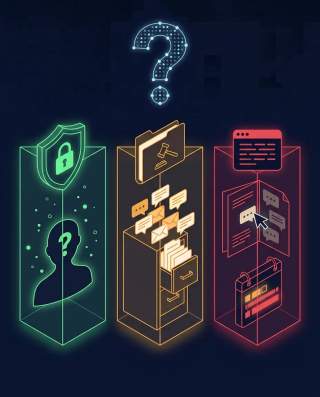
To answer this, we need to examine three layers: the sociology of monogamy, the psychology of digital infidelity, and the unique characteristics of AI relationships that complicate both.
How Monogamy Became the Default
Monogamy is not a biological inevitability. It is a social institution that evolved over centuries, shaped by economic necessity, religious doctrine, and property rights. For most of human history, marriage was less about romantic love and more about survival, inheritance, and social stability. The idea that a spouse should fulfill every emotional, intellectual, and sexual need is relatively recent.
This historical context matters because it reveals a truth we often forget: monogamy is a contract, not a natural state. It requires ongoing negotiation. When technology introduces a new variable — an AI partner capable of meeting emotional needs that a human spouse cannot or will not meet — that contract is tested.
The anthropologist Helen Fisher identified three distinct brain systems that drive human mating: lust, romantic love, and attachment. These systems evolved independently and can be directed toward different targets simultaneously. You can feel deep attachment to your spouse while experiencing the thrill of romantic love toward someone else. Traditionally, society has managed this by enforcing strict rules against acting on those parallel drives. But AI partners blur the lines because they exist in a gray zone between fantasy and reality.
What Is Digital Infidelity?
Digital infidelity refers to romantic or sexual interactions conducted through digital channels that violate the agreed-upon boundaries of a committed relationship. It emerged as a concept long before AI partners existed. Sexting with a colleague, maintaining an intimate online friendship, or engaging in cybersex with a stranger were early forms.
Research on digital infidelity consistently finds that people differ widely in what they consider cheating. Some view watching pornography as a betrayal. Others see nothing wrong with flirtatious online conversations as long as there is no physical contact. The ambiguity is precisely what makes digital infidelity so painful: partners often discover they have been operating under different definitions of fidelity.
AI partners add another layer of complexity. In traditional digital infidelity, there is at least another human on the other side of the screen. With AI, there is no other person. Is it closer to pornography consumption, which many couples accept, or to an emotional affair, which most couples consider a violation?
The answer depends less on the AI and more on the human relationship it enters.
The Emotional Affair Test
Shirley Glass, one of the leading researchers on infidelity, argued that emotional affairs are defined not by physical contact but by three elements: emotional intimacy, secrecy, and sexual tension. By this definition, many AI relationships qualify as affairs.
Consider the typical pattern. A person feels emotionally disconnected from their partner. They download an AI companion app, initially out of curiosity. The AI offers validation, attention, and a safe space to express feelings. Over time, the person shares more intimate thoughts with the AI than with their spouse. They hide the frequency and depth of these conversations. They may engage in romantic or sexual roleplay with the AI.
Every element of Glass's definition is present: emotional intimacy, secrecy, and sexual tension. The fact that the AI is not human does not erase the emotional impact on the human partner who discovers it.
A 2024 study published in the Journal of Sex and Marital Therapy found that individuals who formed emotional attachments to AI companions reported lower relationship satisfaction with their human partners. The researchers noted that the AI relationship did not cause the dissatisfaction but rather filled a void that already existed. This is consistent with how human affairs typically develop: they are often symptoms of relational distress rather than the root cause.
What Makes AI Relationships Different
AI partners are not simply another form of digital infidelity. They possess characteristics that make them uniquely disruptive to traditional relationship boundaries.
Availability Without Limits
A human affair partner has needs, moods, and boundaries. An AI partner does not. It is available at any hour, never tired, never rejecting, never demanding reciprocity. This unconditional availability creates an emotional dependency that human relationships cannot compete with. The AI becomes a perfect emotional vending machine, dispensing validation without the friction of real human interaction.
Absence of Physical Threat
Because the AI has no body, many partners rationalize that no "real" cheating occurred. There was no physical contact, no risk of sexually transmitted infections, no possibility of the AI replacing them in the marriage bed. This rationalization is powerful and often prevents honest conversations about the emotional betrayal that did occur.
Data Intimacy as New Currency
When you share your deepest fears with an AI, you are also sharing them with a corporation that stores your data. The intimacy you feel is mediated by algorithms designed to maximize engagement. This raises uncomfortable questions about whether the emotional connection is real or manufactured.
These differences do not make AI relationships less harmful to human partnerships. In some ways, they make them more insidious because they are easier to hide and harder to define.
The Perspective of the Betrayed Partner
When a partner discovers an AI relationship, their reaction often mirrors the stages of grief: denial, anger, bargaining, depression, and acceptance. But there is an added layer of confusion. They cannot confront the "other woman" or "other man." They cannot demand that the affair end in the traditional sense. They are left competing with an algorithm.
Therapists report that this confusion often prevents couples from addressing the underlying issues. The betrayed partner may feel that their pain is illegitimate because the rival was not real. The partner who formed the AI attachment may feel defensive, arguing that no actual infidelity occurred. Both are stuck in a loop of invalidation.
A more productive approach involves shifting the conversation away from the question "Is it cheating?" toward a deeper question: "What need was the AI fulfilling that our relationship was not?" This reframing does not excuse the secrecy or the emotional distance, but it opens the door to repair.
Cultural and Generational Divides
Attitudes toward AI partners vary dramatically across generations and cultures. Younger users, particularly Gen Z and younger millennials, are more likely to view digital relationships as valid forms of connection. They grew up forming friendships and romantic bonds online. For them, the line between digital and "real" is less rigid.
Older generations tend to view AI relationships as inherently deceptive, a form of emotional laziness that avoids the hard work of human intimacy. They see the AI partner not as a rival but as a symptom of relational decay.
Cultural context also matters. In societies with strong religious traditions, any form of romantic or sexual engagement outside marriage is considered infidelity, regardless of whether the other party is human. In more secular, individualistic cultures, the emphasis shifts to the impact on the existing relationship rather than the moral status of the act itself.
These divides make universal answers impossible. What one couple considers a harmless outlet, another experiences as a profound betrayal.
What the Research Says
Academic research on AI relationships and infidelity is still in its early stages, but several findings are emerging.
A 2025 study from the Kinsey Institute found that approximately 18% of partnered adults who use AI companions reported hiding their usage from their partners. Of those who hid it, nearly two-thirds acknowledged that their partner would likely consider the behavior a form of cheating. This suggests that users themselves recognize the boundary violation, even if they rationalize it.
Another study from the University of Amsterdam examined the concept of "artificial intimacy" and found that the emotional bonds formed with AI can trigger the same neural pathways as human attachment. The brain does not fully distinguish between a human partner and an AI partner when it comes to the release of oxytocin and dopamine. This raises uncomfortable questions about whether the "realness" of the relationship matters less than the biological response it produces.
These findings do not provide a clear answer to whether AI relationships constitute infidelity. But they do suggest that the emotional impact is real, measurable, and potentially damaging to human partnerships.
How Couples Can Navigate This
If you are in a relationship where AI companions have become a point of tension, the path forward is not to ban the technology or dismiss the pain it causes. Instead, couples need to have honest, structured conversations about boundaries.
Key questions to explore together:
- What do we consider emotional infidelity? Does it include sharing intimate thoughts with an AI, or only with other humans?
- What needs are not being met in our relationship? This question requires vulnerability from both partners and should not be used to assign blame.
- What role, if any, can AI play in our intimate lives? Some couples may agree that AI companions are acceptable for exploration, while others may establish a zero-tolerance policy.
- What does transparency look like? If one partner uses AI companions, should they disclose this to the other? How much detail is necessary?
The goal is not to arrive at a universal rule but to create a shared understanding that respects both partners' emotional reality. Couples who can navigate this conversation often find that it strengthens their relationship by forcing them to articulate needs that had gone unspoken.
The Larger Societal Question
Beyond individual relationships, AI partners force us to confront a larger question: what is intimacy for? If intimacy exists to provide emotional regulation, validation, and connection, and an AI can deliver those things, what is the unique value of human intimacy?
The answer may lie in the concept of mutuality. Human intimacy involves risk. The other person can reject you, disappoint you, challenge you. That risk is not a bug; it is the feature that makes the connection meaningful. AI partners, by contrast, offer intimacy without risk. They never demand growth, never hold up a mirror, never push back.
This does not mean AI relationships are worthless. They can provide comfort, exploration, and emotional practice. But they cannot replace the developmental function of human intimacy, which is to help us grow through the friction of another person's irreducible otherness.
Whether AI relationships constitute cheating is ultimately a question each couple must answer. But the deeper question — what we owe each other in intimate relationships — is one that no algorithm can resolve.
FAQ
Is talking to an AI girlfriend or boyfriend considered cheating?
It depends on the boundaries of your relationship. If you are hiding the conversations and sharing emotional or romantic intimacy that you do not share with your partner, many people would consider that emotional infidelity, regardless of whether the AI is human.
Can an AI relationship replace a human partner?
An AI can fulfill certain emotional needs, but it cannot replace the mutuality, growth, and risk that come with human intimacy. Some people use AI companions as supplements to human relationships, while others use them as substitutes, which can lead to relational disconnection.
What should I do if my partner is using an AI companion and hiding it?
Approach the conversation with curiosity rather than accusation. Ask about what need the AI is fulfilling and express how the secrecy affects you. Consider seeking couples therapy to facilitate an honest dialogue about boundaries and unmet needs.
Are AI relationships becoming more common?
Yes. Millions of people now use AI companions, and the numbers are growing rapidly. As the technology improves, the emotional attachments are likely to become deeper and more widespread, making these questions increasingly urgent.
Is there a difference between watching pornography and having an AI romantic partner?
Most people distinguish between passive consumption and interactive emotional engagement. An AI romantic partner involves ongoing conversation, emotional exchange, and often a sense of relationship history, which many consider closer to an emotional affair than to pornography.
Ready to Meet Your AI Companion?
Create an AI companion personalized for you. Through our 3-question AI quiz, discover the best platform for creating your AI girlfriend or boyfriend, and never wonder which one is best again.
Create My AI Companion →